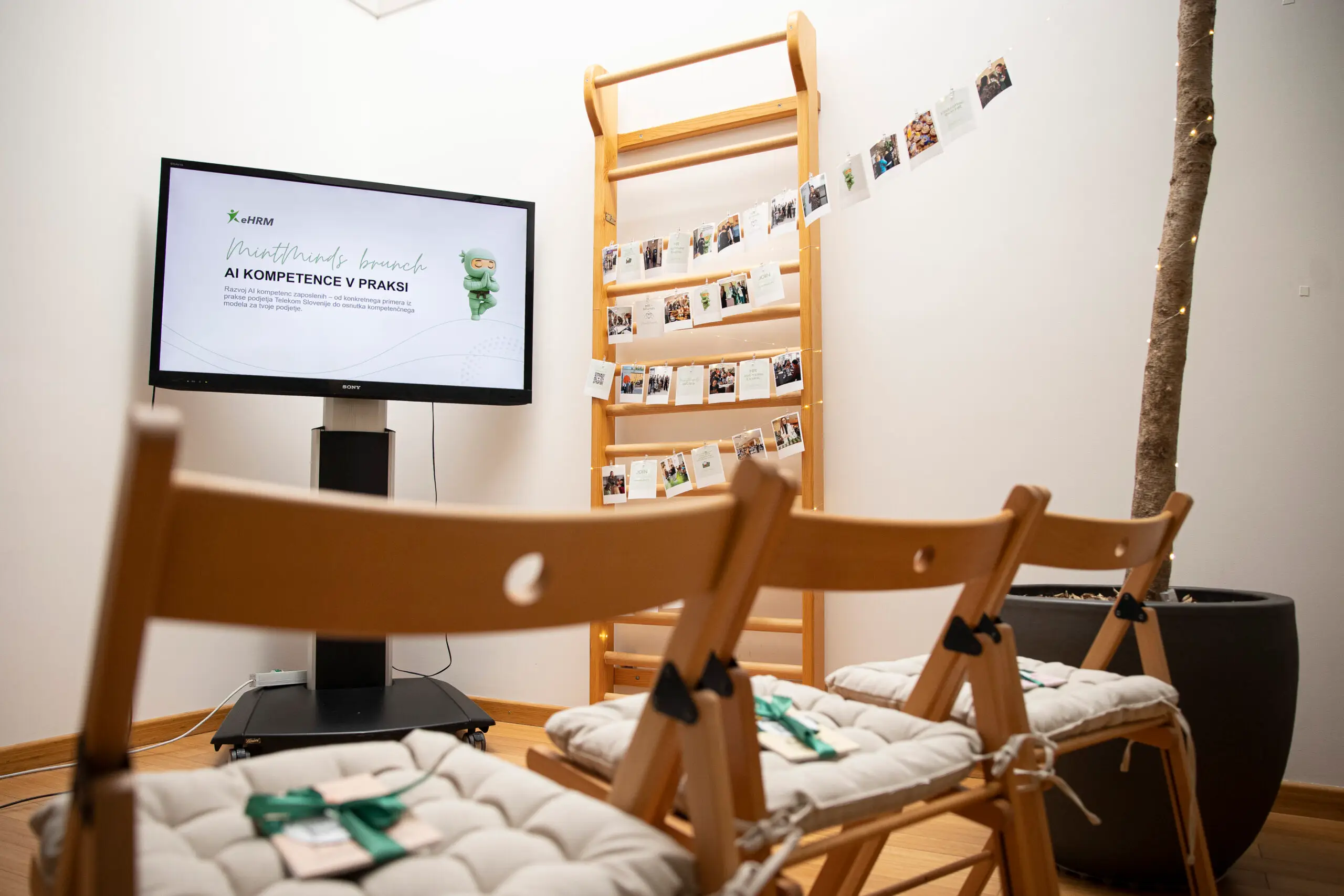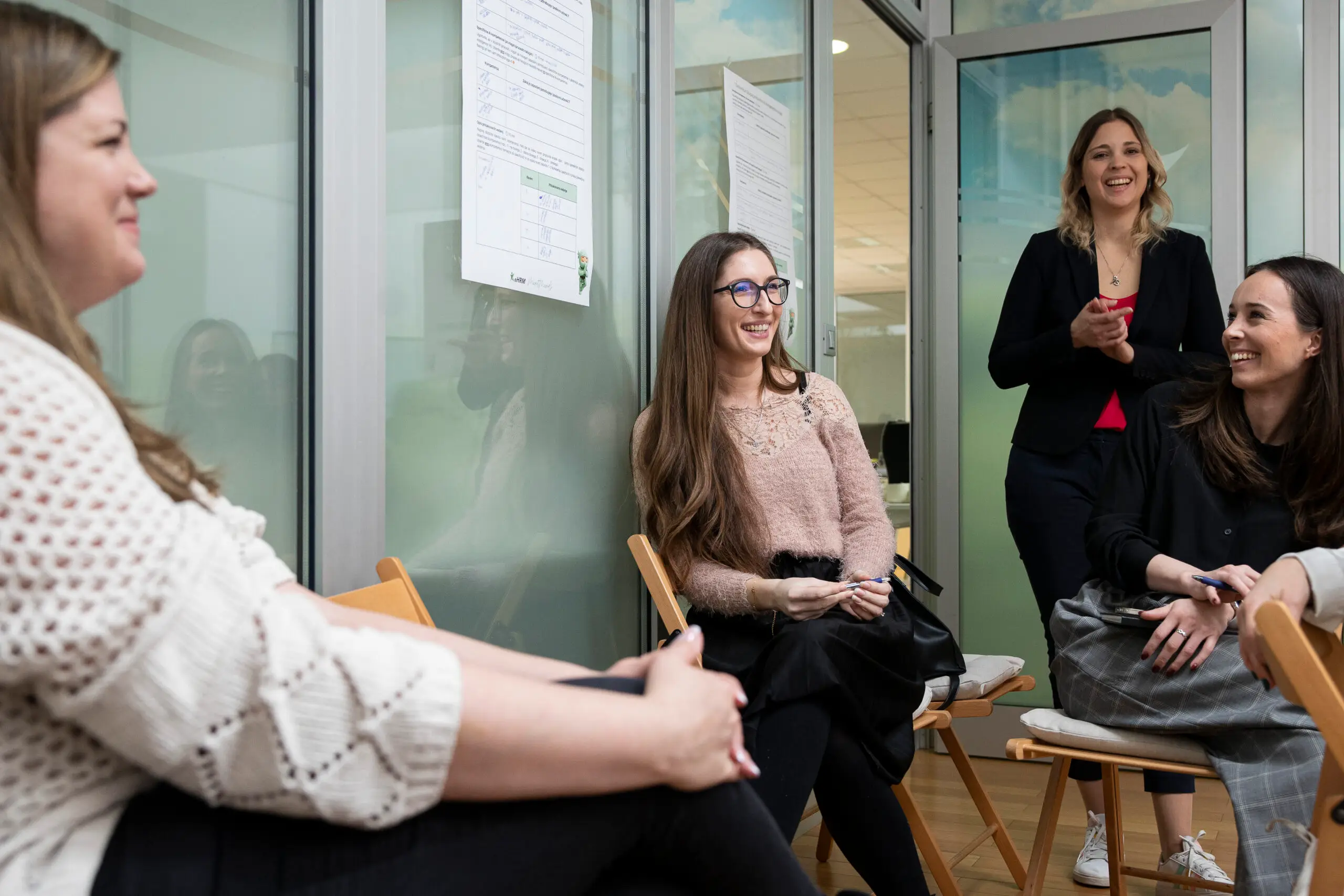
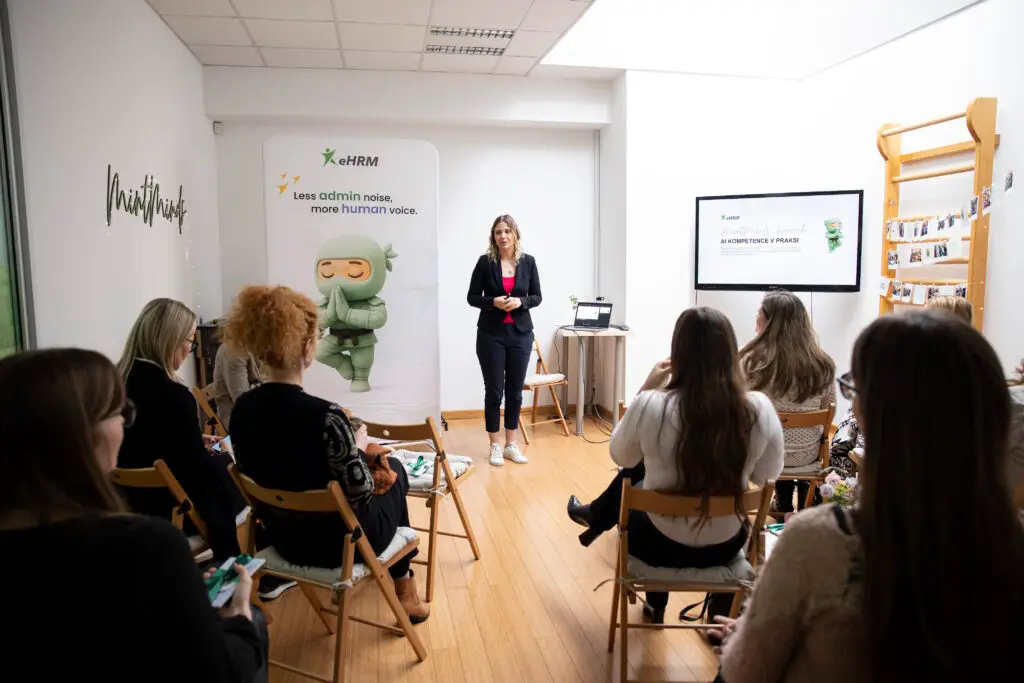

As always, we kicked things off over coffee and a delicious brunch, which gave us the energy for a lively discussion and exchange of ideas.
It quickly became clear that this is not a one-dimensional topic. Should AI education include all employees—even the cleaning staff? And if so, how? How do companies in different industries—insurance, IT, manufacturing—approach building an AI competency model? Why is leadership support crucial? And how do you train employees with very different levels of AI knowledge?
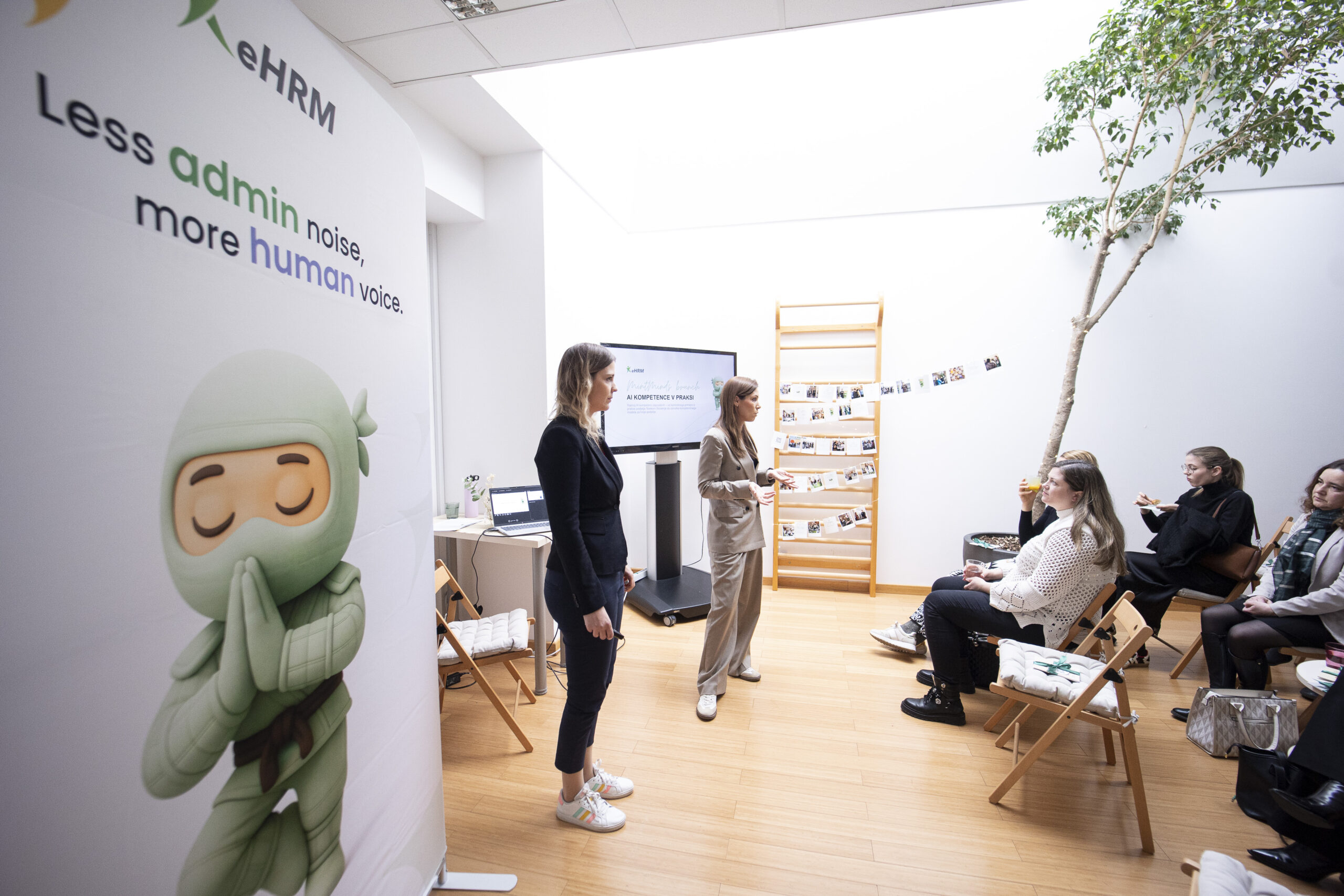
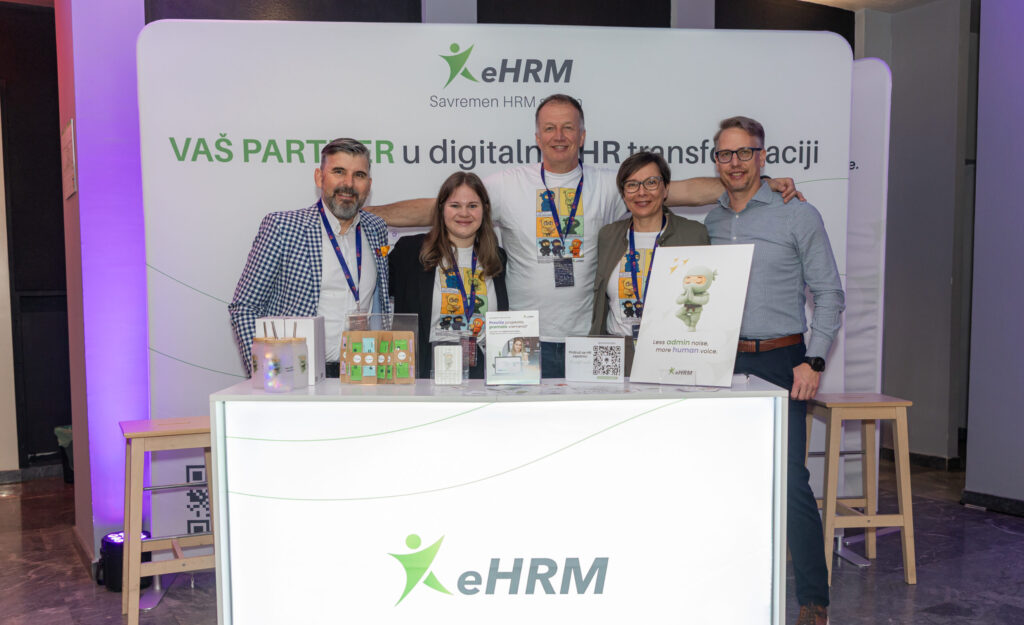
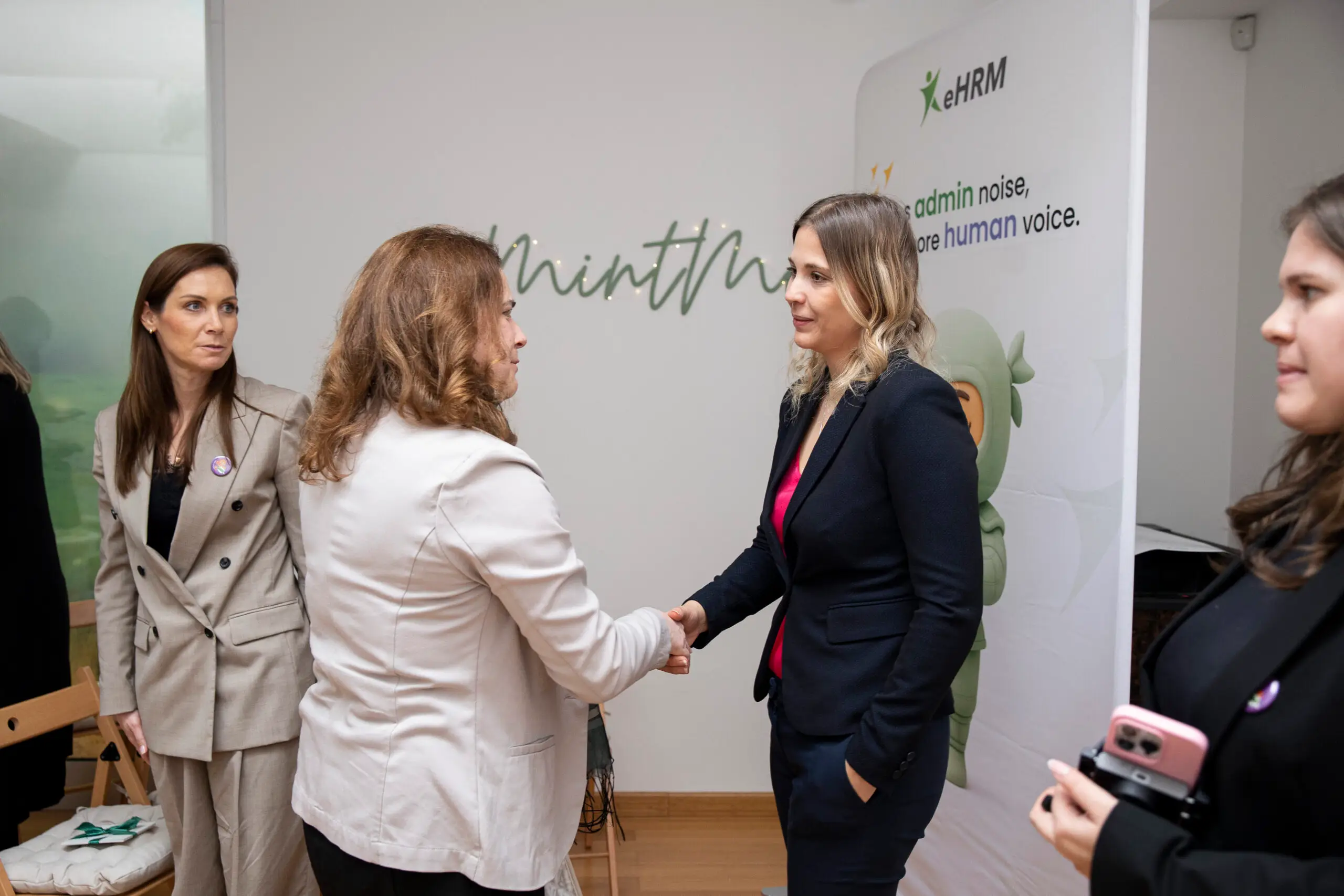
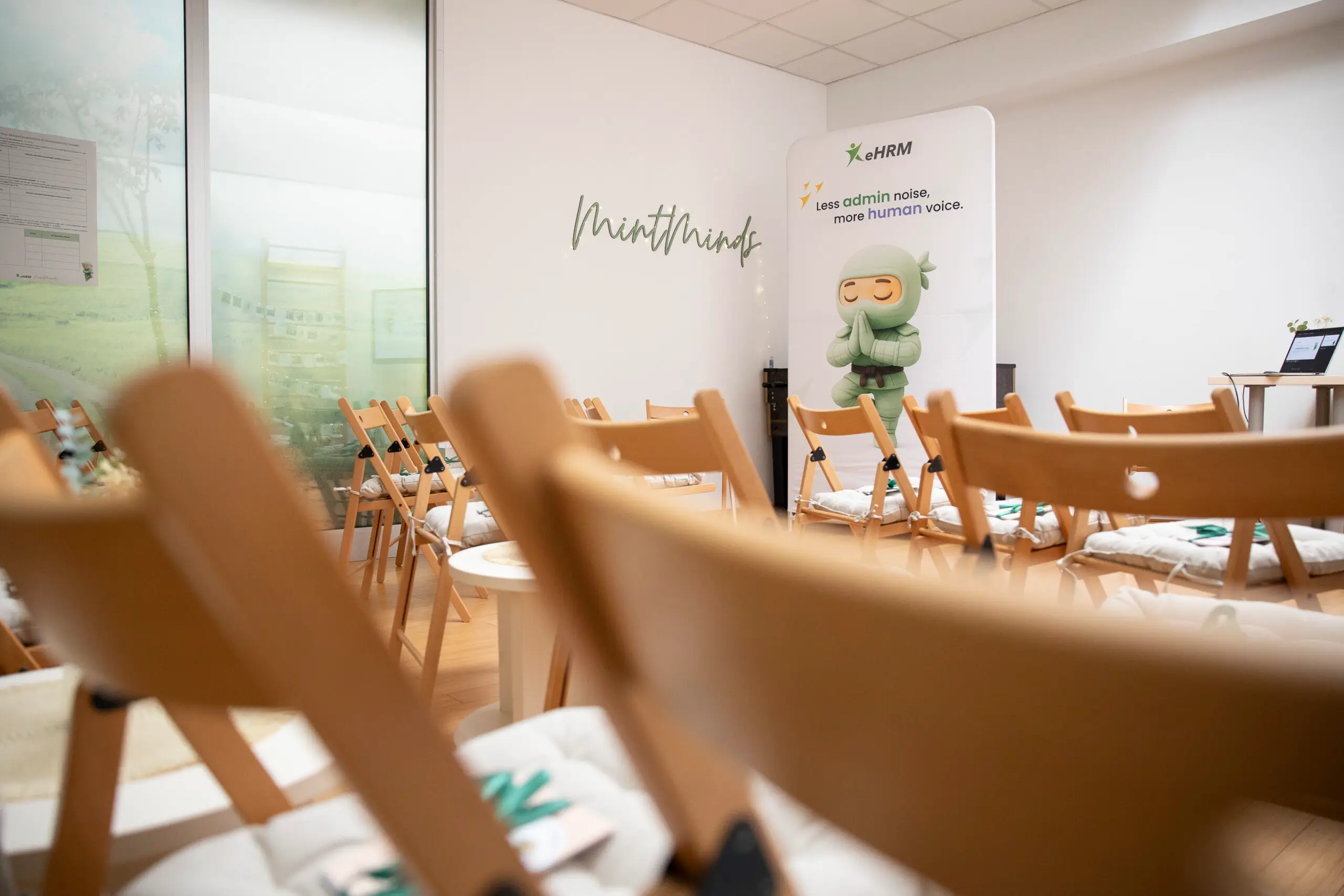
This time, we hosted the MintMinds community at the offices of eHRM (Agitavit Solutions), giving participants a chance to get to know us better and experience the vibe of our company.
How did Telekom Slovenije approach it?
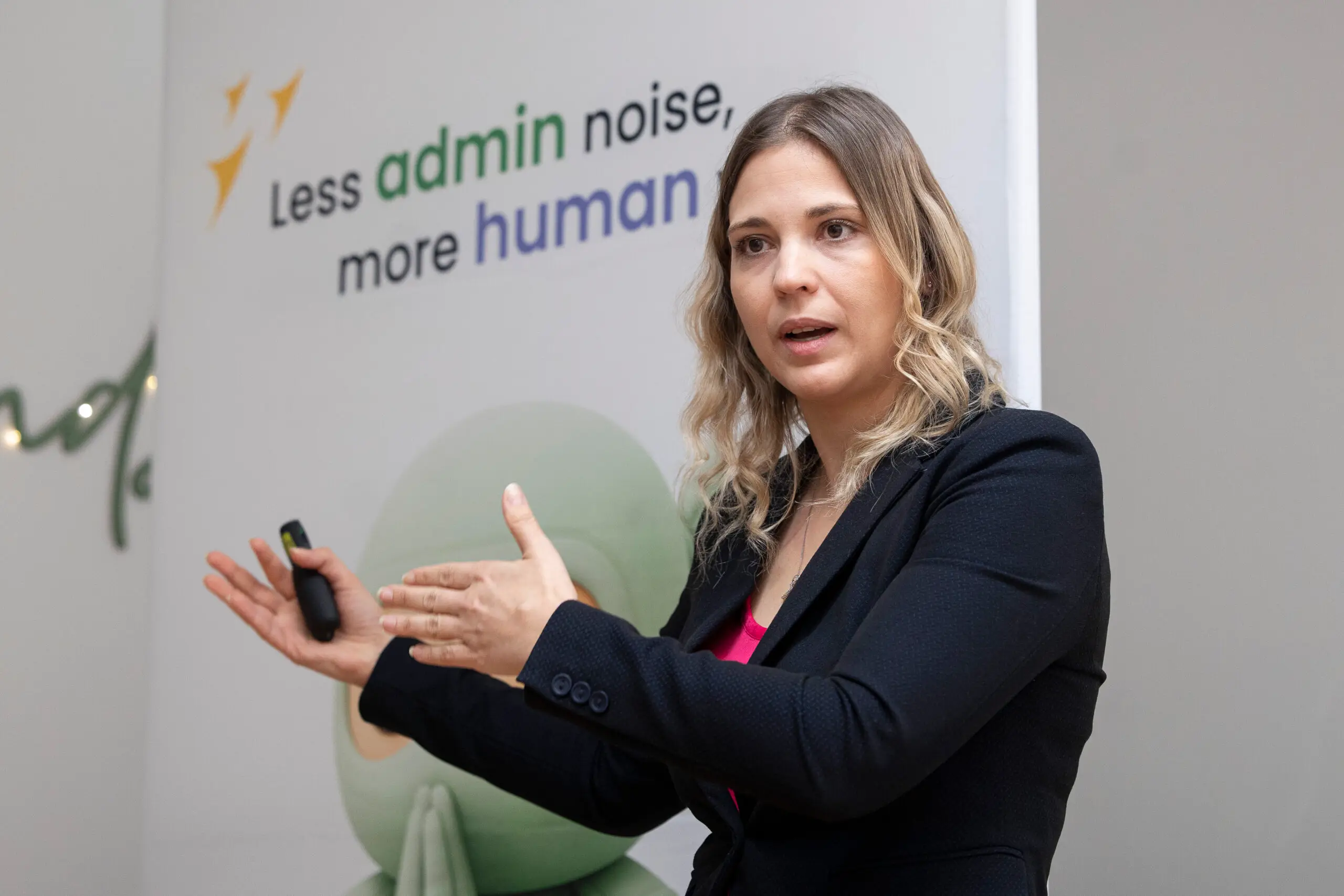
In the opening session, Nina Nia Šribar presented how Telekom Slovenije approached building their AI competency model.
The key starting point? Answering a fundamental question: What do we actually want to achieve with AI—and why do we need AI competencies in the first place? Without a clear strategy and direction, AI risks becoming a goal in itself.

Nina Nia Šribar holds a Master’s degree in Andragogy and is an employee development expert at Telekom Slovenije, where she combines expertise in adult education, multimedia, and IT within the Learning and Development team.
Systematic approach as the foundation of success
AI needs to be introduced thoughtfully and systematically. This means AI competencies should be meaningfully integrated into the company’s existing competency framework.
A systematic approach enables:
- defining required knowledge based on roles and positions,
- integrating AI competencies into performance reviews,
- tracking progress,
- adapting development programs based on real needs.
At Telekom Slovenije, the process began with a simple questionnaire where employees self-assessed their AI knowledge and identified tasks where AI could help them the most. This was followed by interviews, additional surveys, observations, and focus groups. Based on the collected data and business needs analysis, they concluded that a structured solution—a formal AI competency model—was needed. The model was developed using these insights, with the support of Copilot and in collaboration with AI experts.
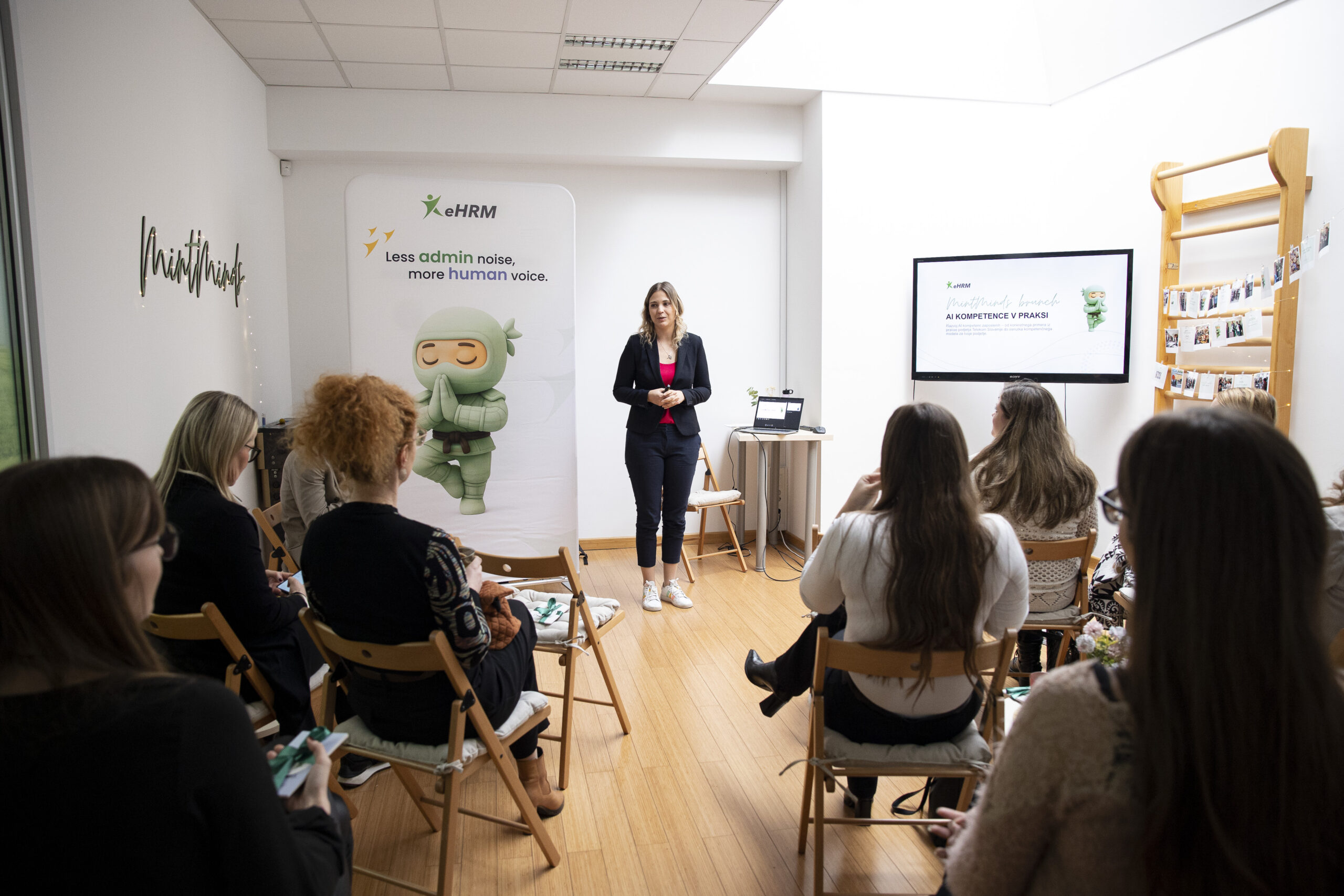
Nina also emphasized that such development is very difficult without leadership support. Close collaboration between HR, subject-matter experts, and IT is equally essential.
Today, Telekom Slovenije is also establishing an AI Academy, with three-quarters of employees already enrolled—clear evidence that interest exists when the approach is right.
Workshop session: from theory to practice
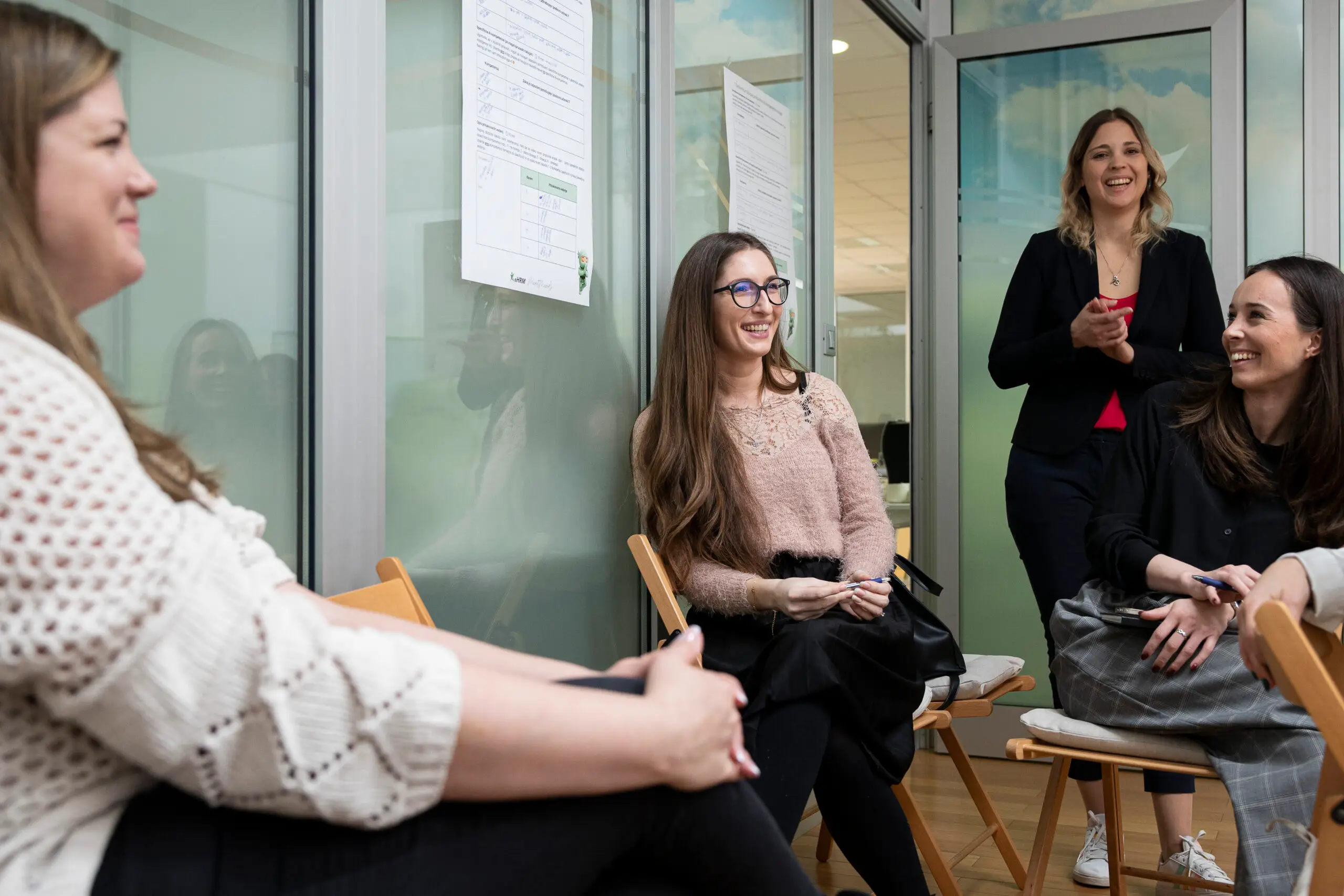
The second part of the event was dedicated to hands-on work. Participants were divided into groups and selected either a fictional or real company. Their task was to:
- define and describe three AI competencies all employees should have,
- define three AI competencies specific to a chosen role or position,
- for at least one competency, outline expected behaviors and define different proficiency levels.

Participants first got to know each other and then selected the company for which they would design an AI competency model.
The biggest differences between groups appeared in role-specific competencies—which was expected given the diversity of industries and roles. This diversity sparked some of the most interesting discussions.
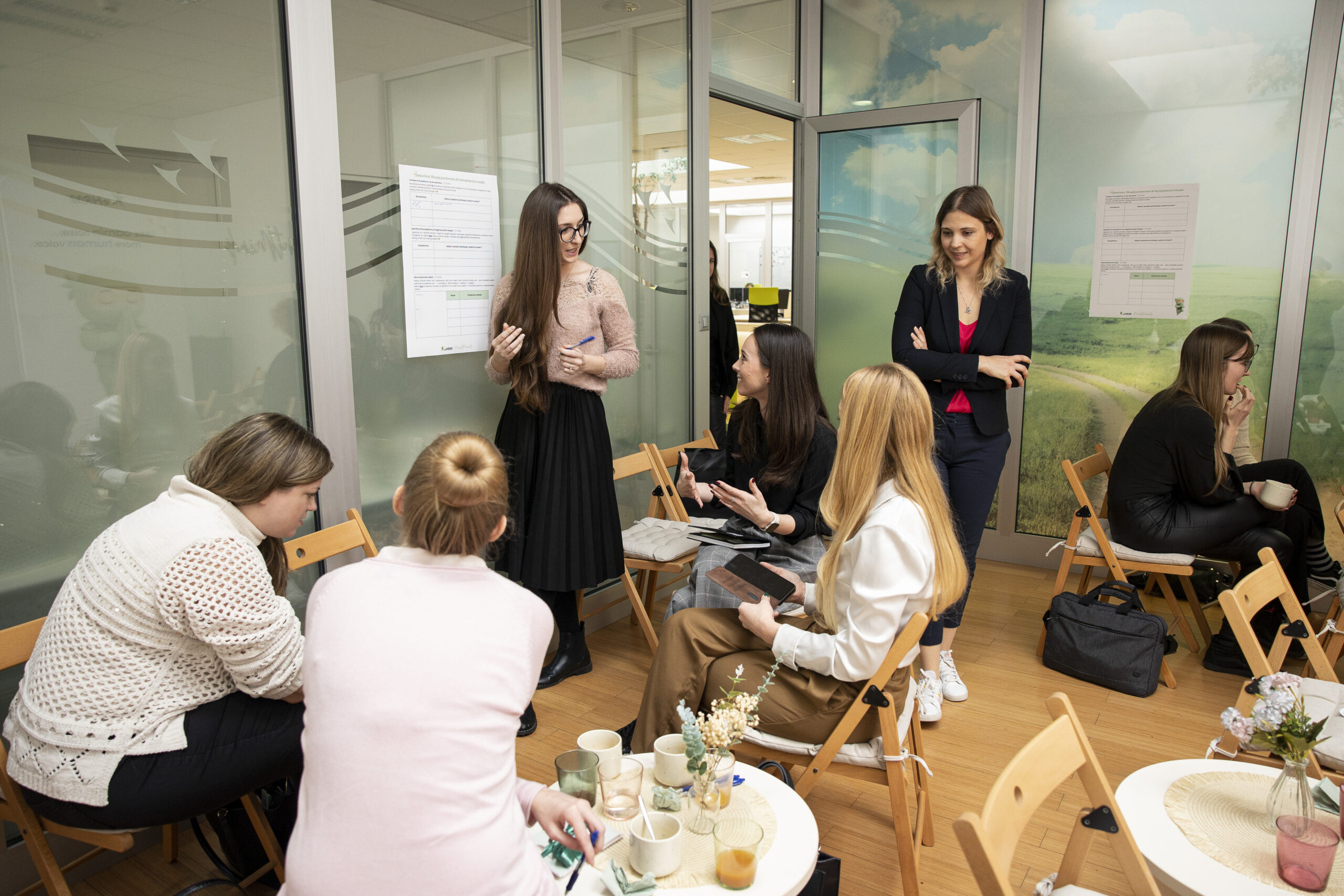
This was followed by idea sharing and drafting initial AI competency models.

The event once again showed that introducing AI is not (just) a technological project—it’s a strategic and developmental decision. That’s why it’s so important to talk about it, exchange practices, and jointly explore the best ways forward.