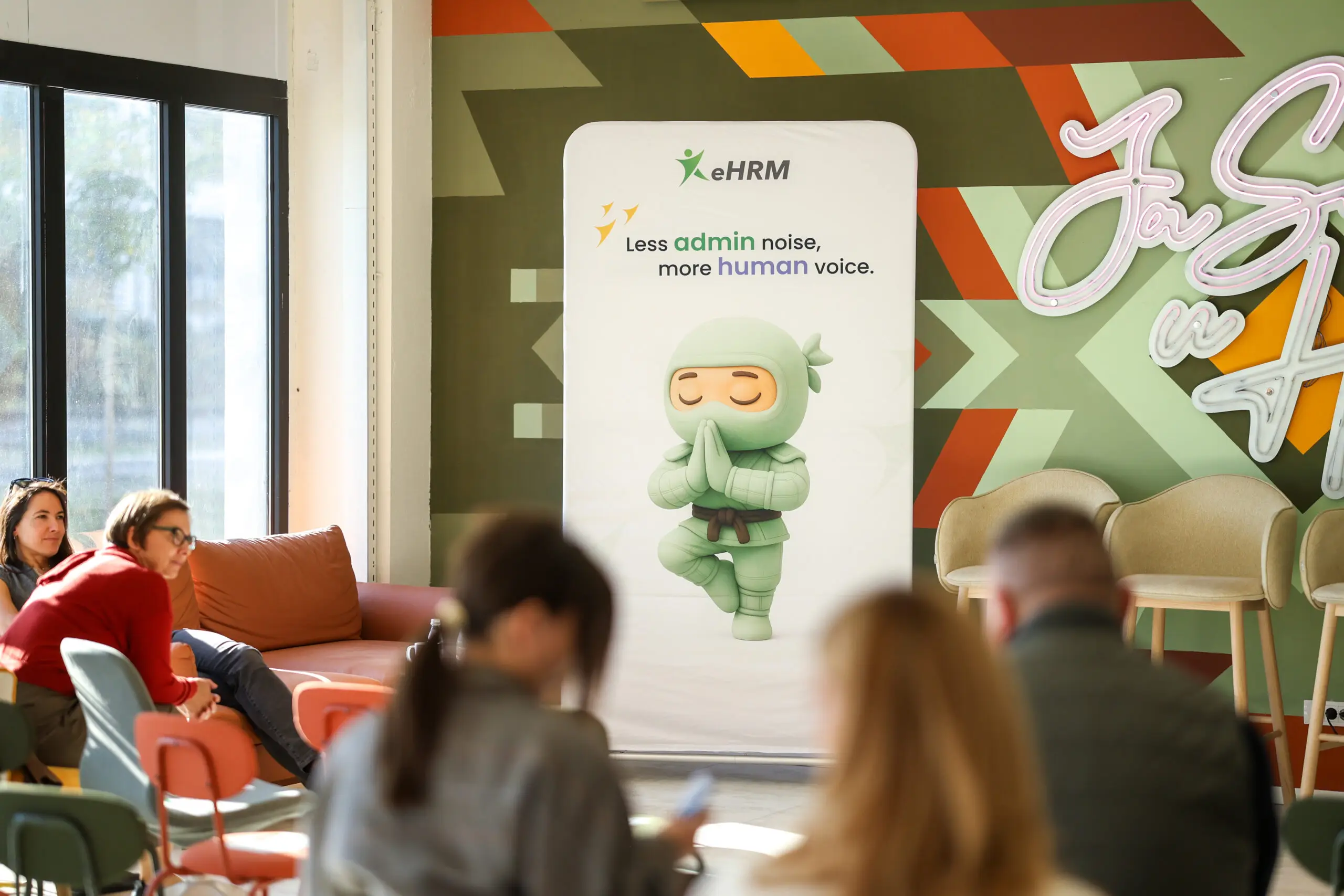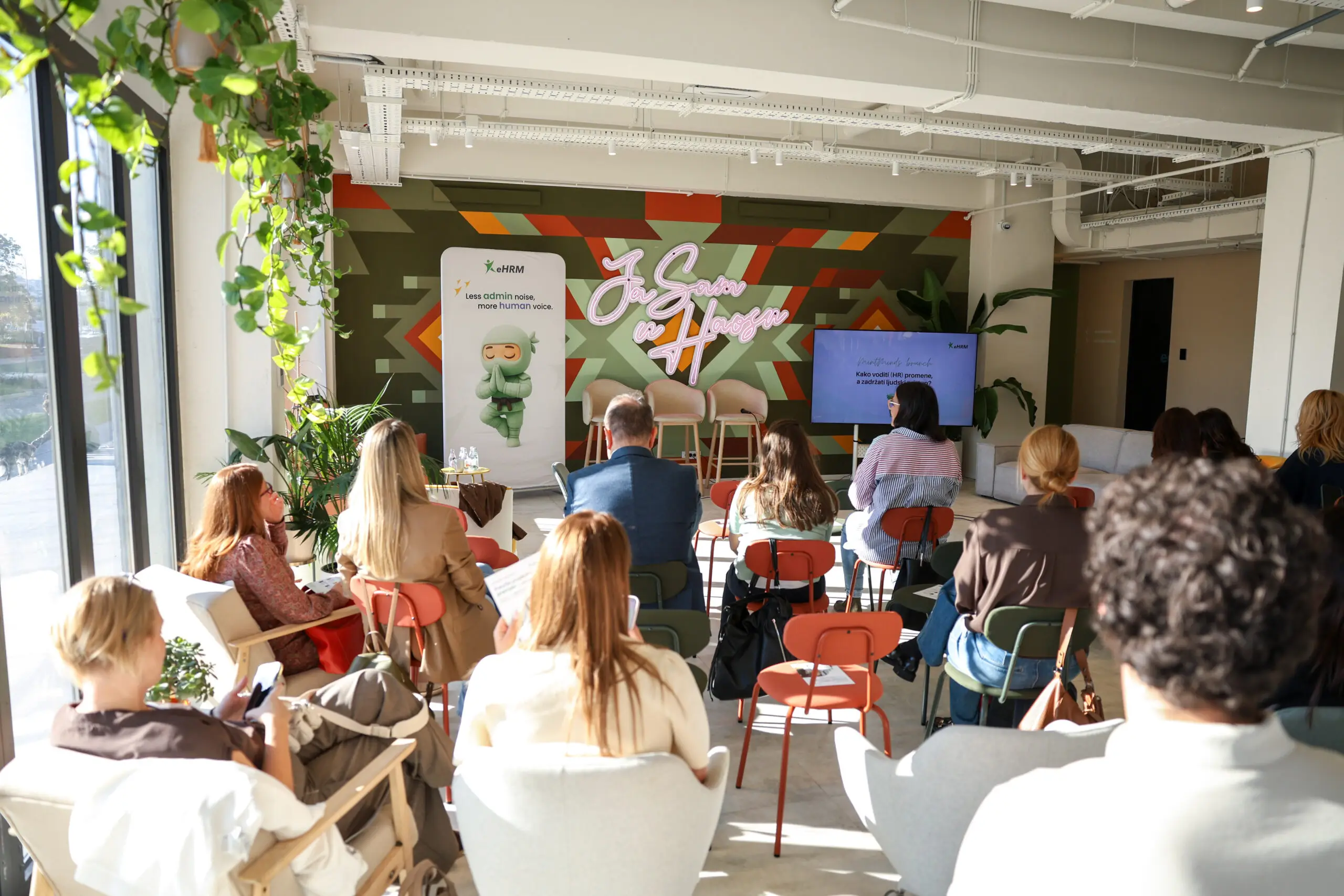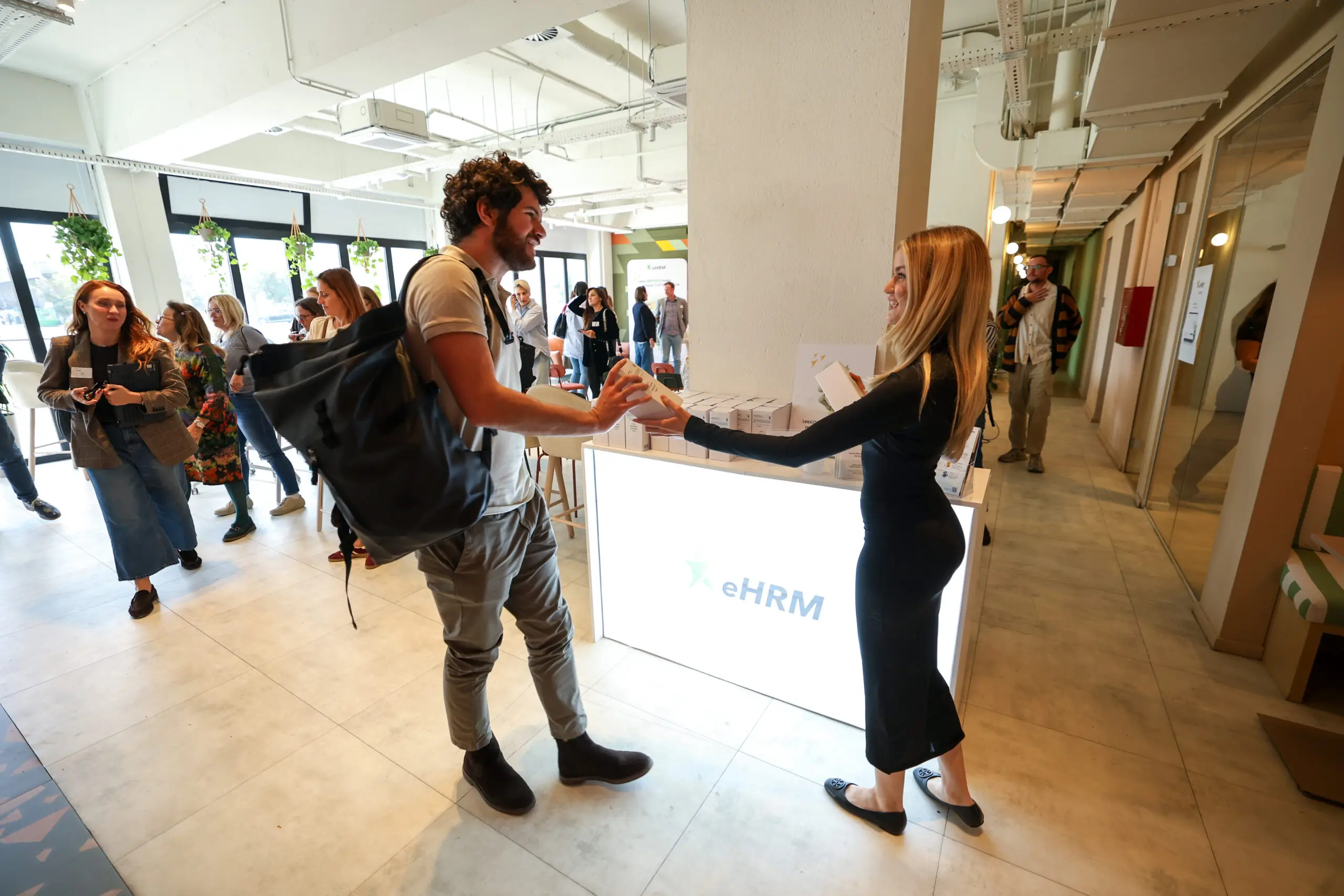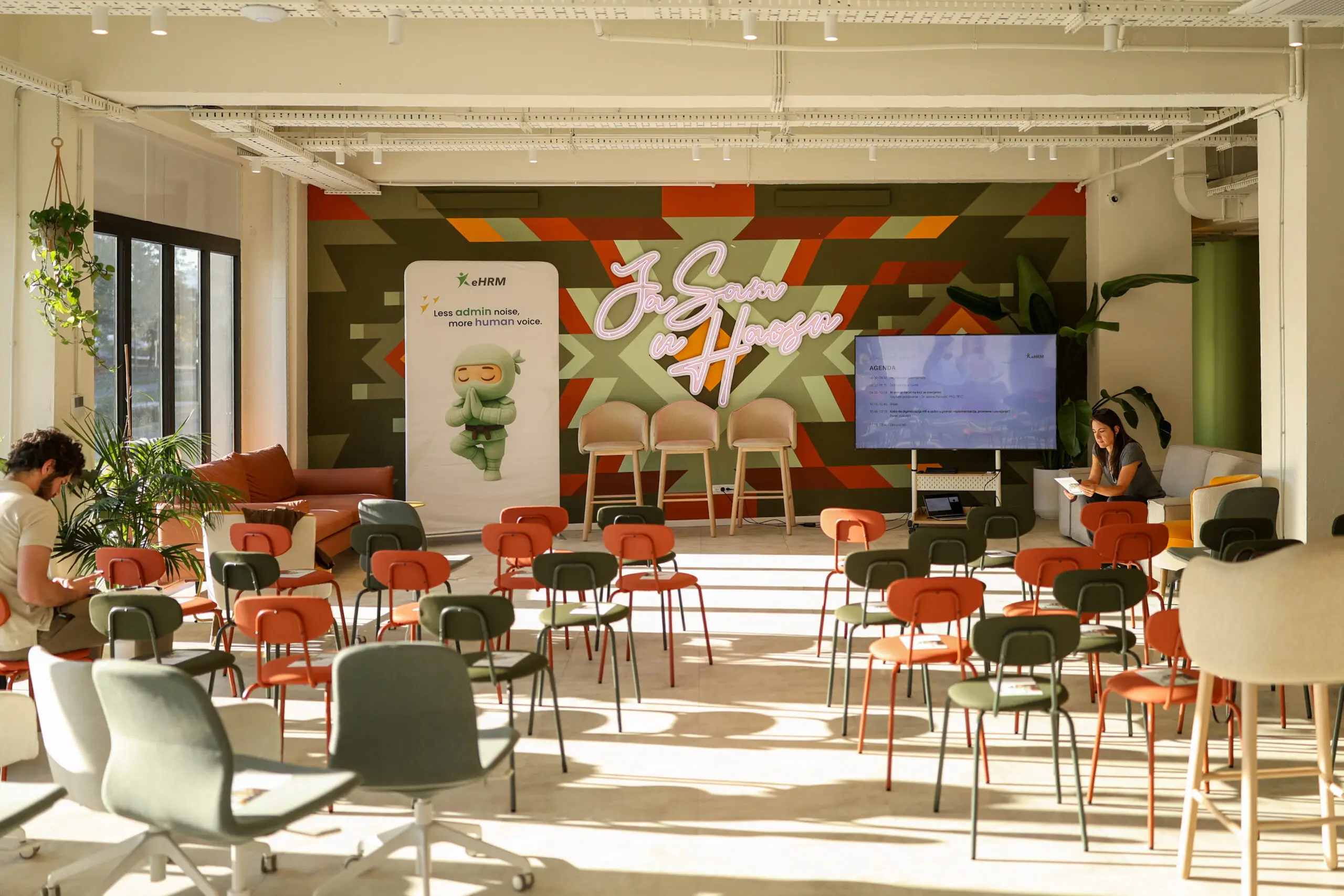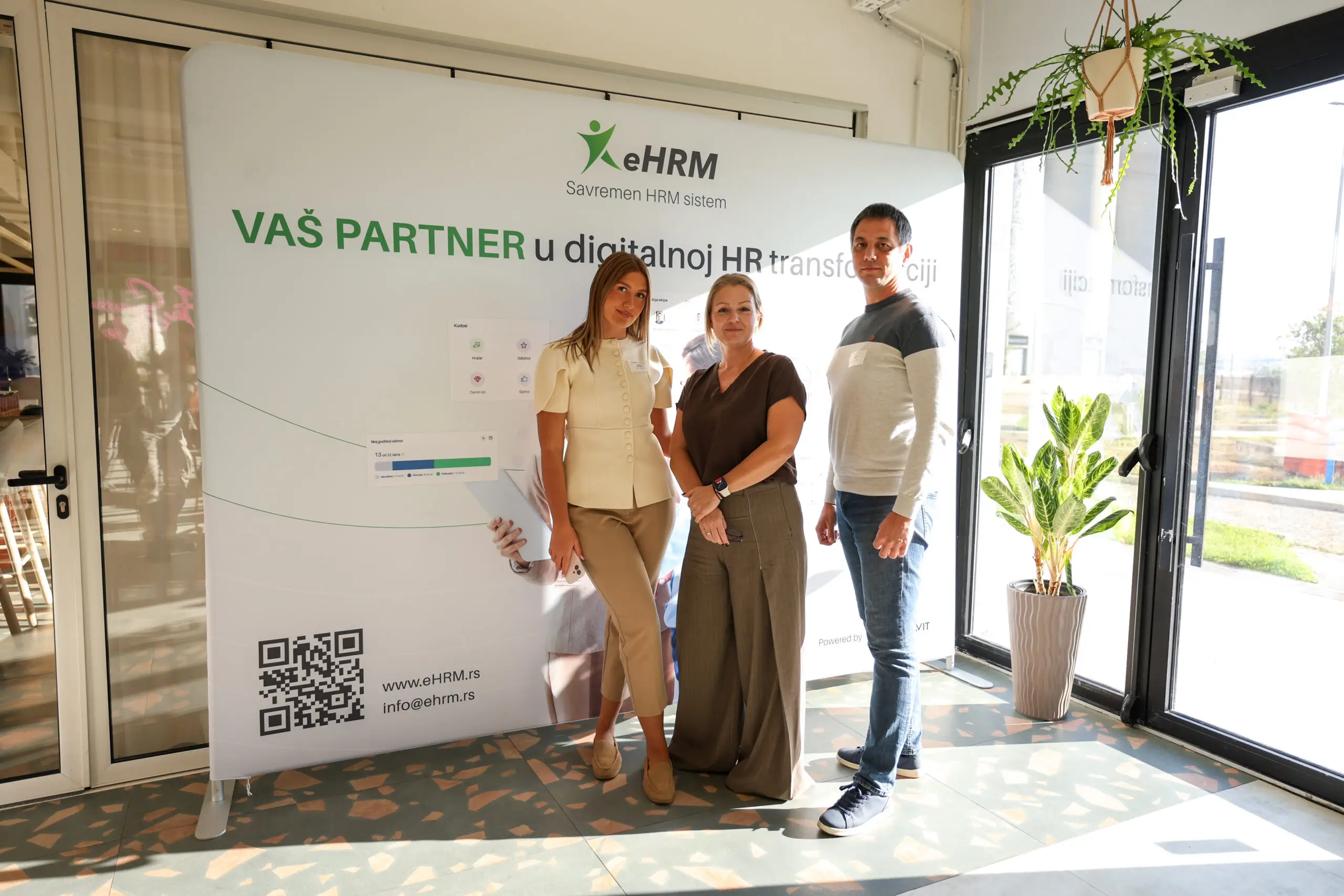
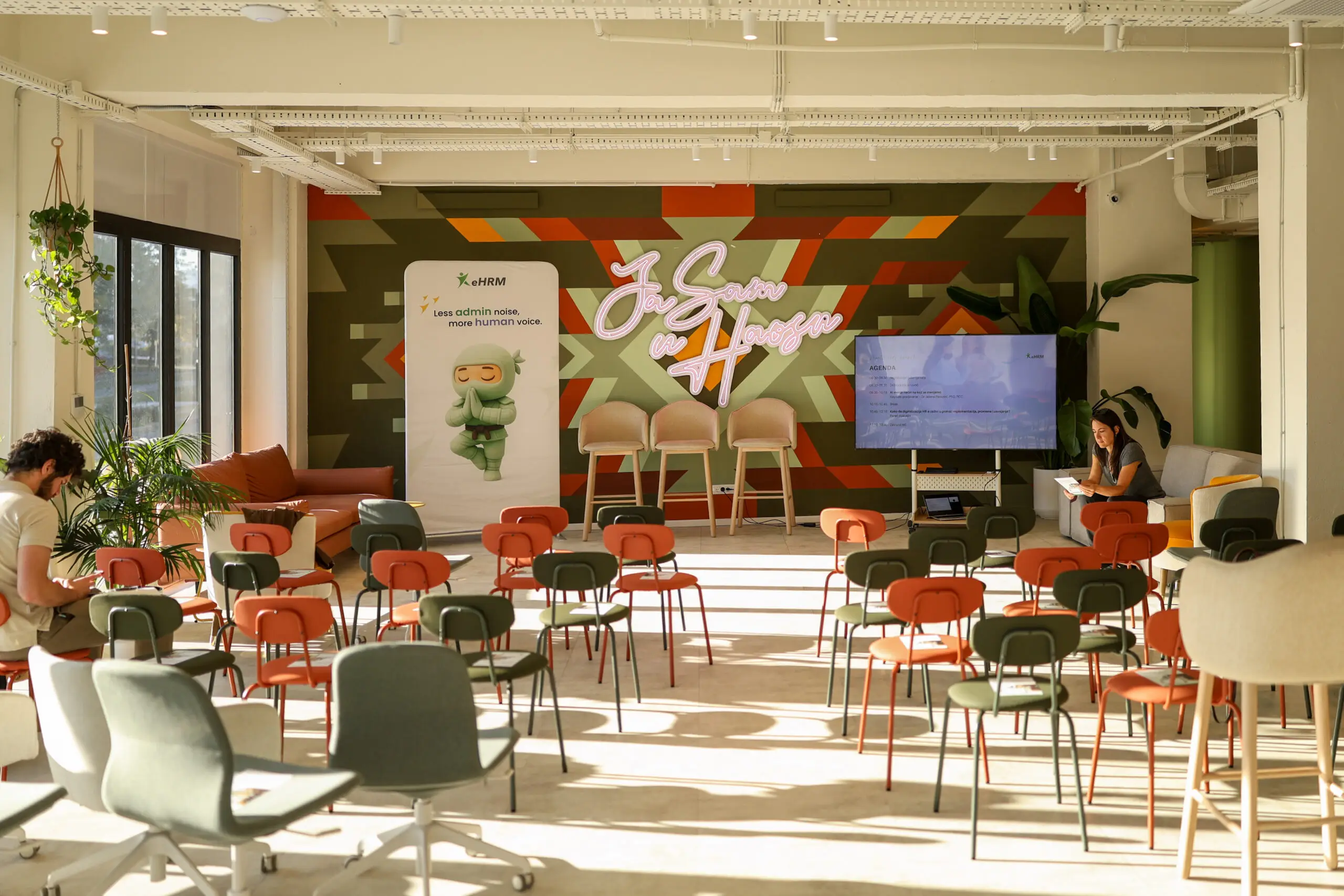
Haos Artklasa – the perfect setting for our first Mint Minds Brunch in Belgrade.
On October 14, we gathered with HR professionals at Haos Artklasa to discuss how to successfully navigate change while keeping the human side in focus. Through a keynote session, a panel with HR experts from two of our clients, Proton System and IMLEK, and open conversations over coffee and brunch, we explored what it really takes to make change work.
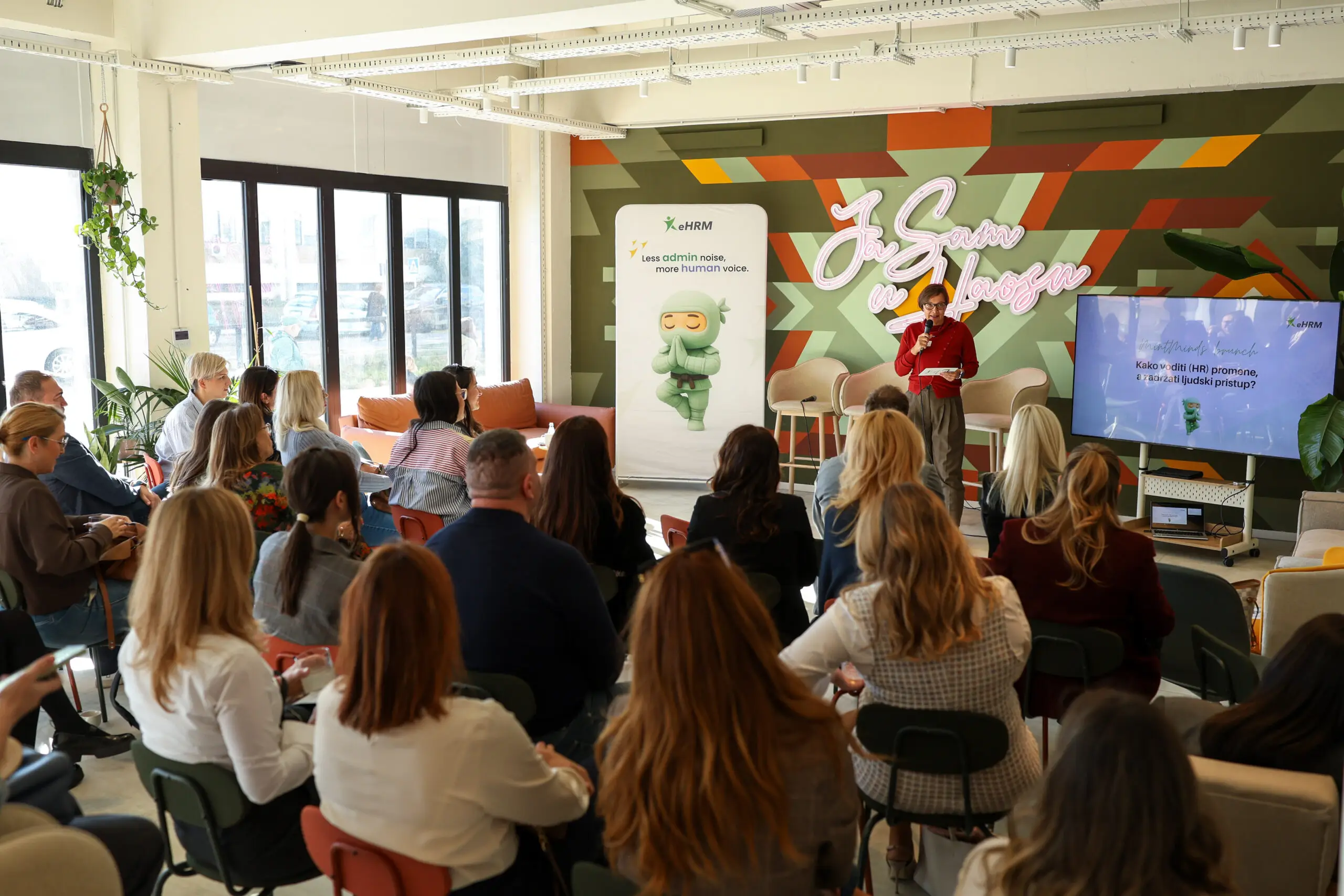
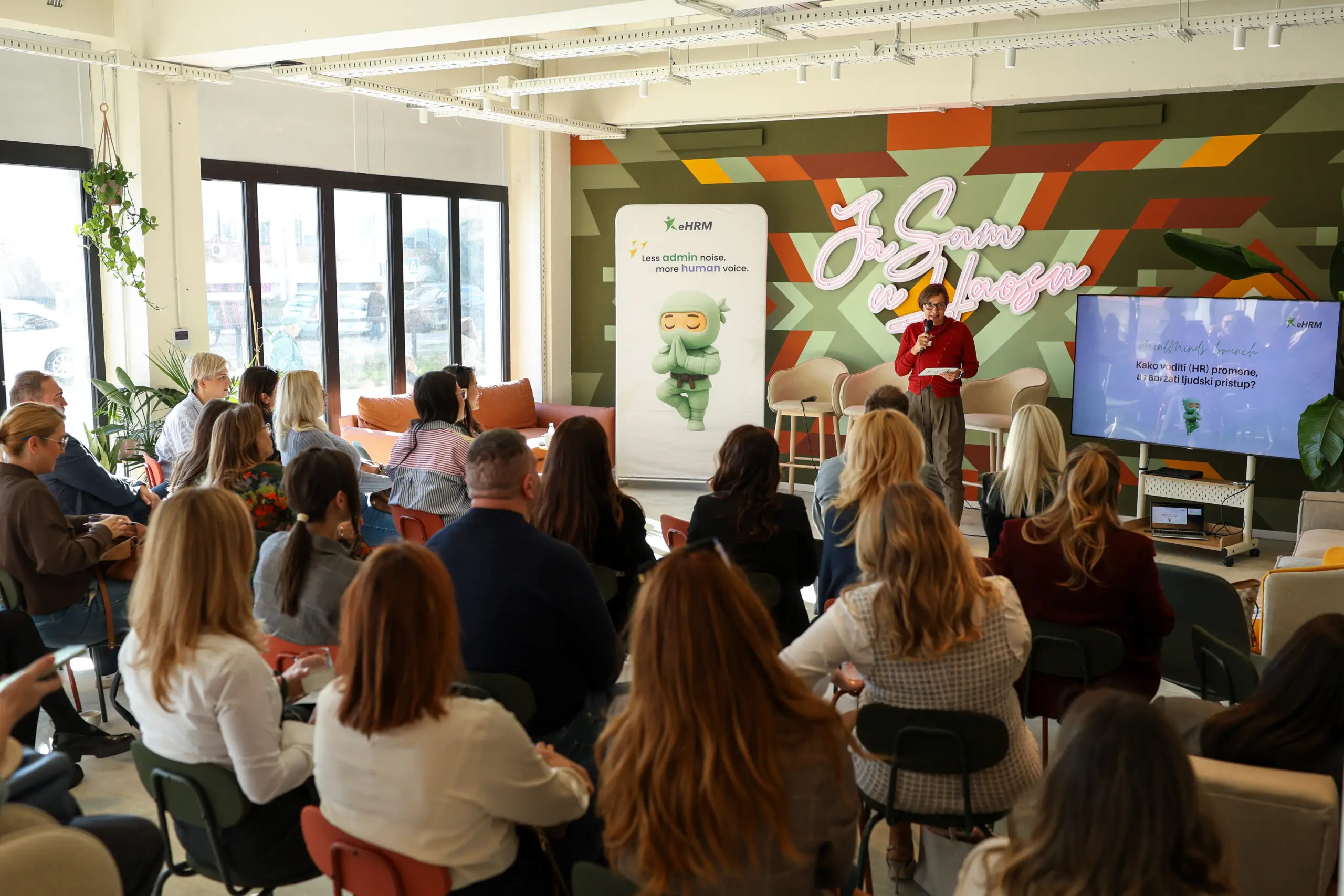
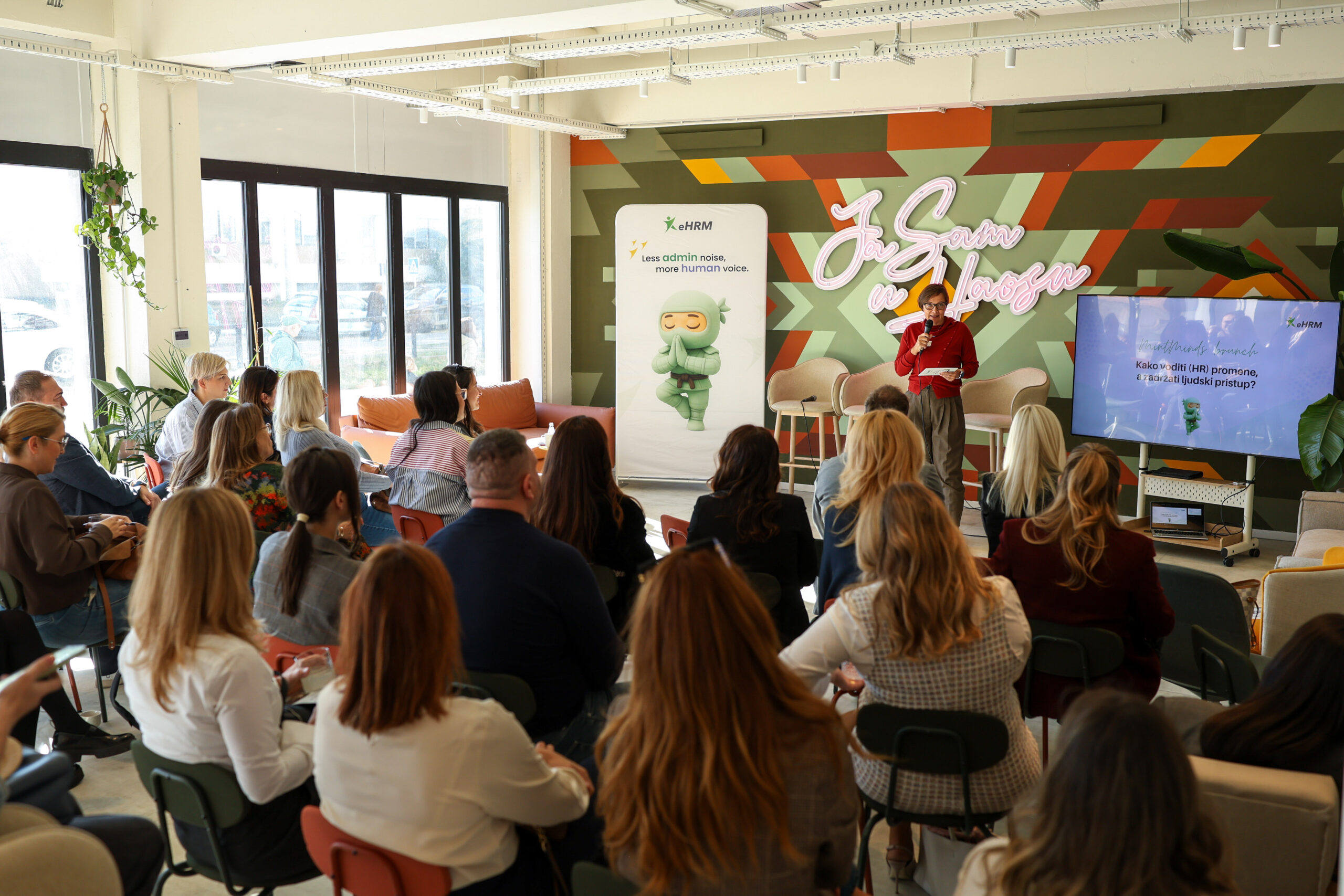 Nataša Dremelj, Product Consultant at eHRM, opened our first MintMinds event in Belgrade.
AI is changing the way we change
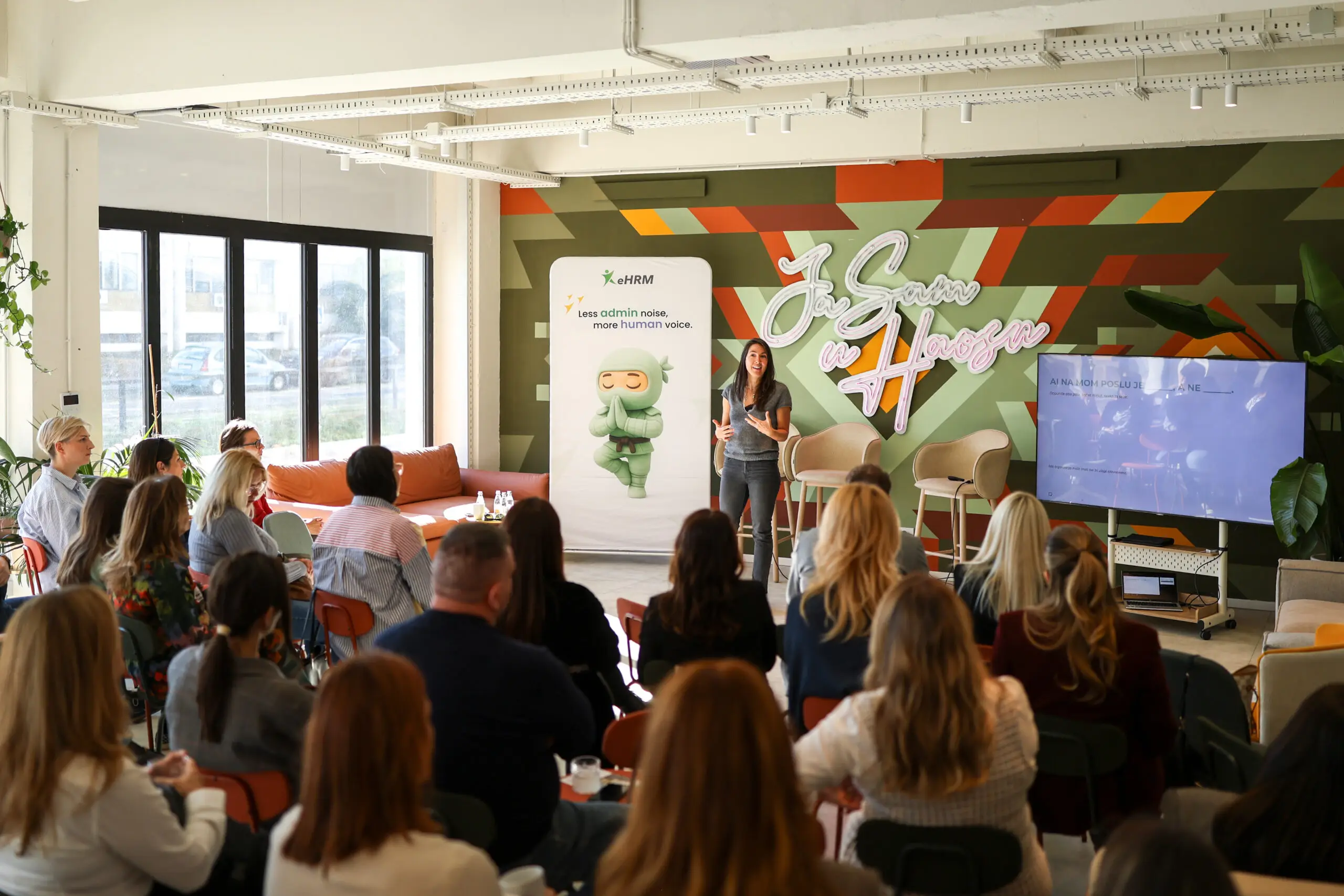
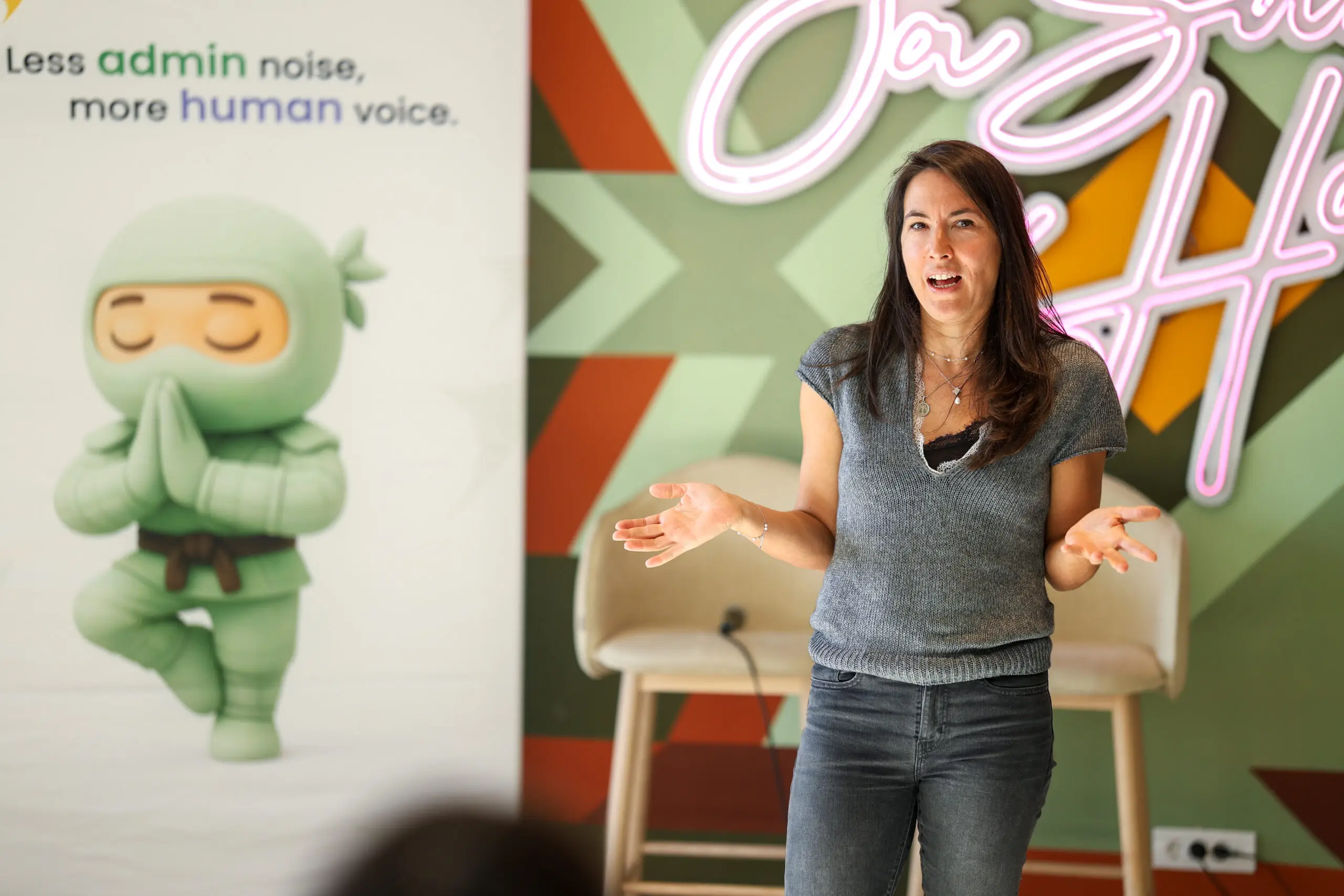
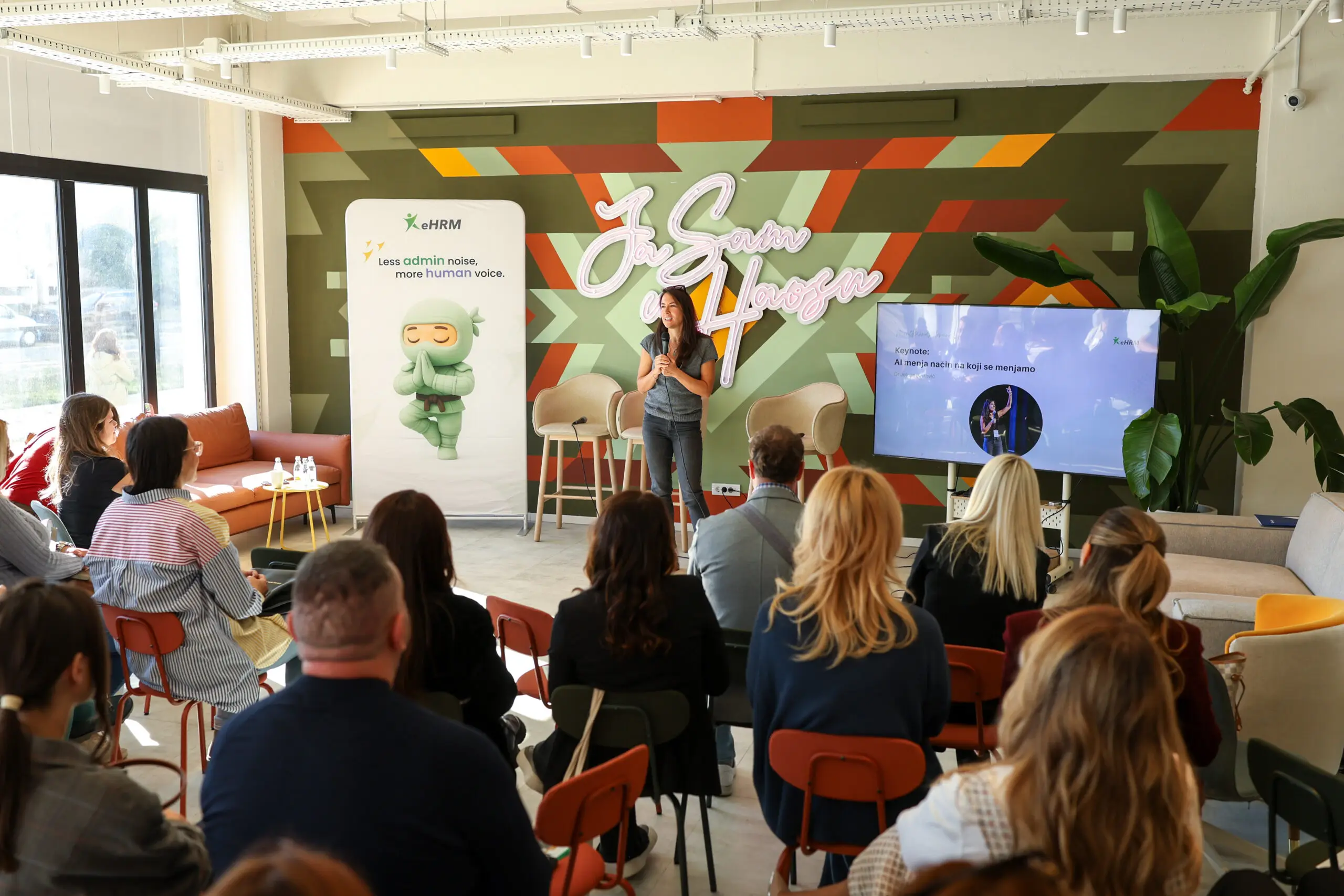
We kicked off the morning with a keynote by Dr. Jelena Pavlović, PhD, PCC, titled AI Is Changing the Way We Change.
Jelena explored the different roles artificial intelligence plays in organizational change. AI can help us manage change faster and more effectively, but it is also a change in itself, introducing new processes, requiring new skills, and reshaping employee roles. With new technologies constantly emerging, AI can also contribute to change fatigue.
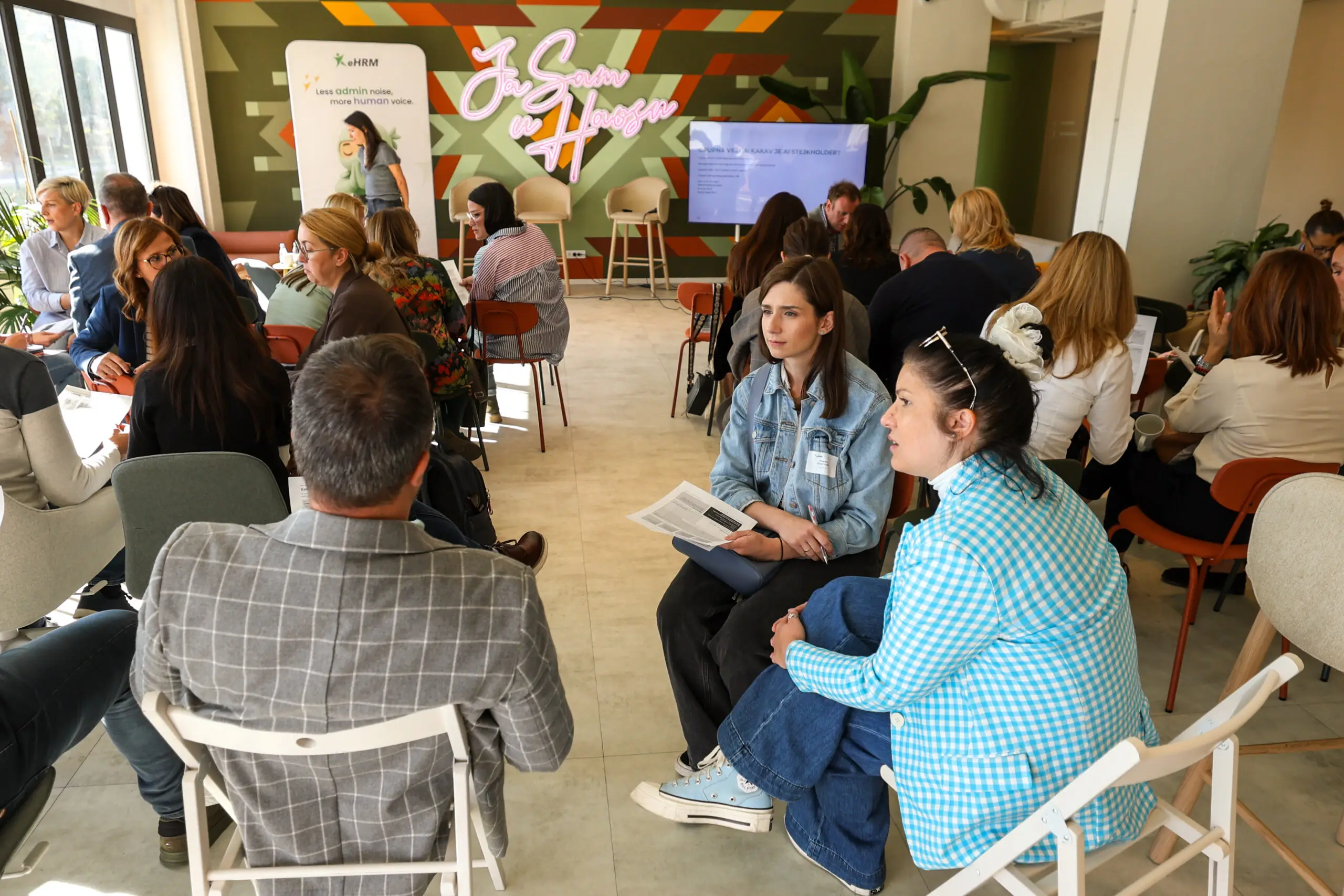
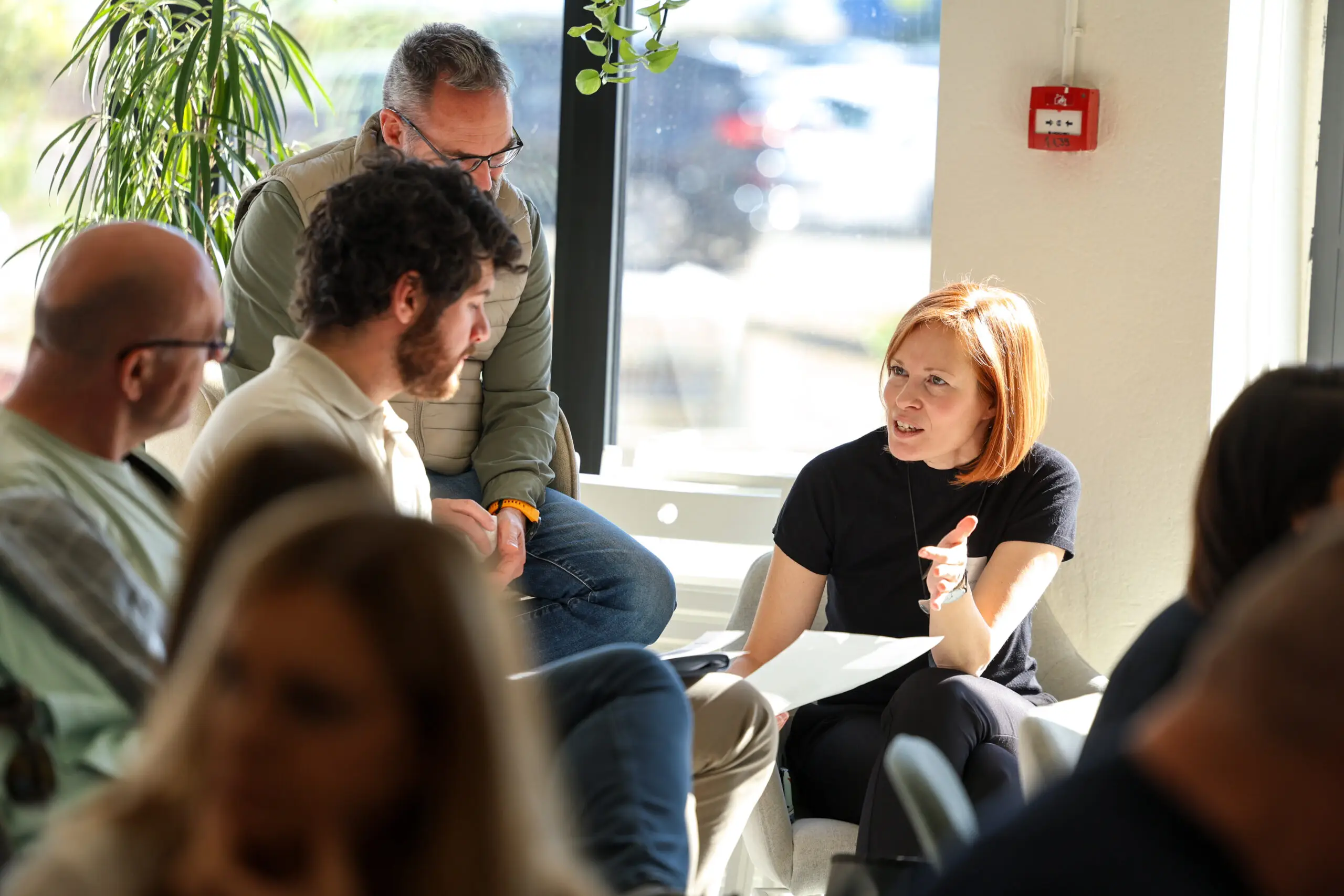
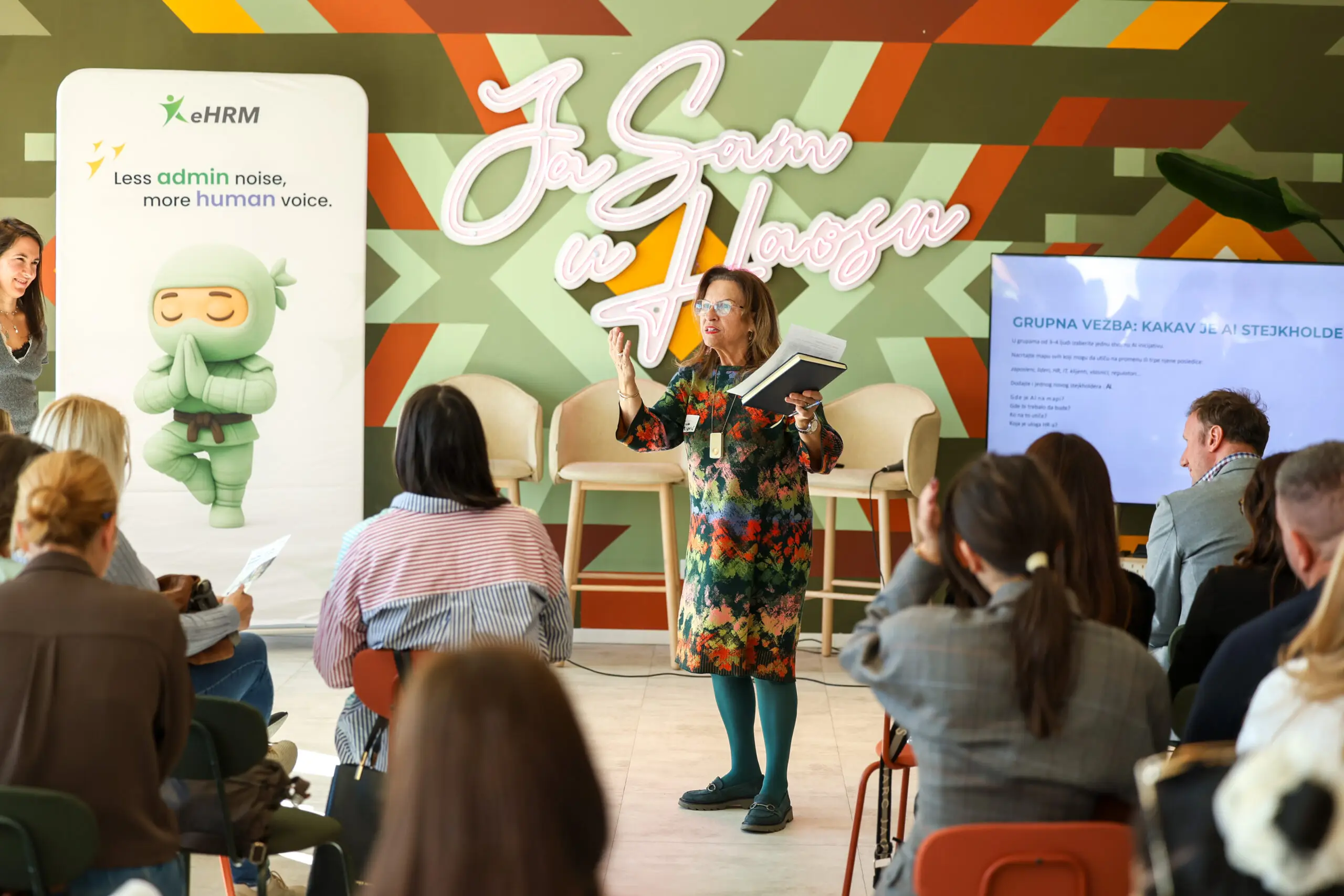
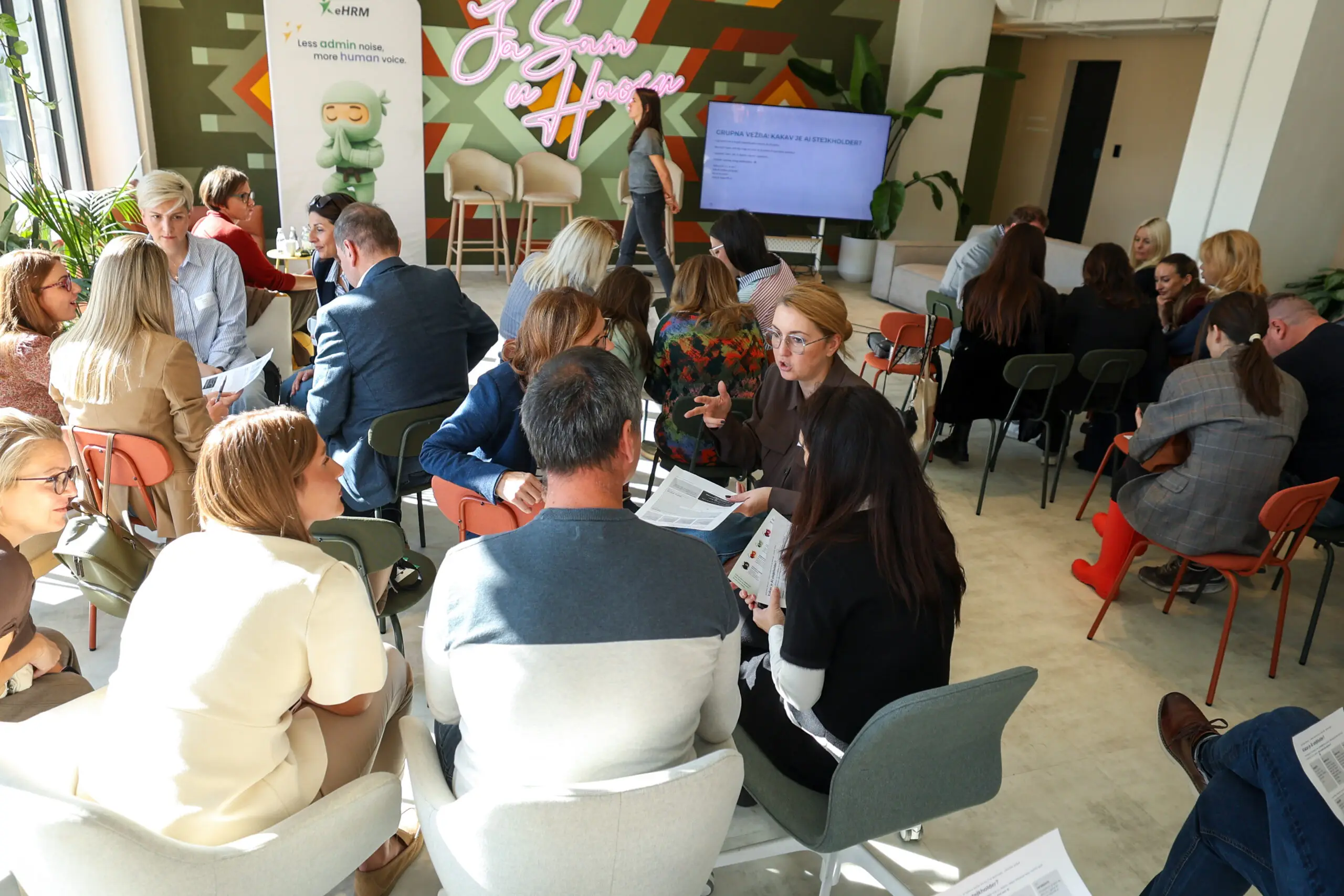
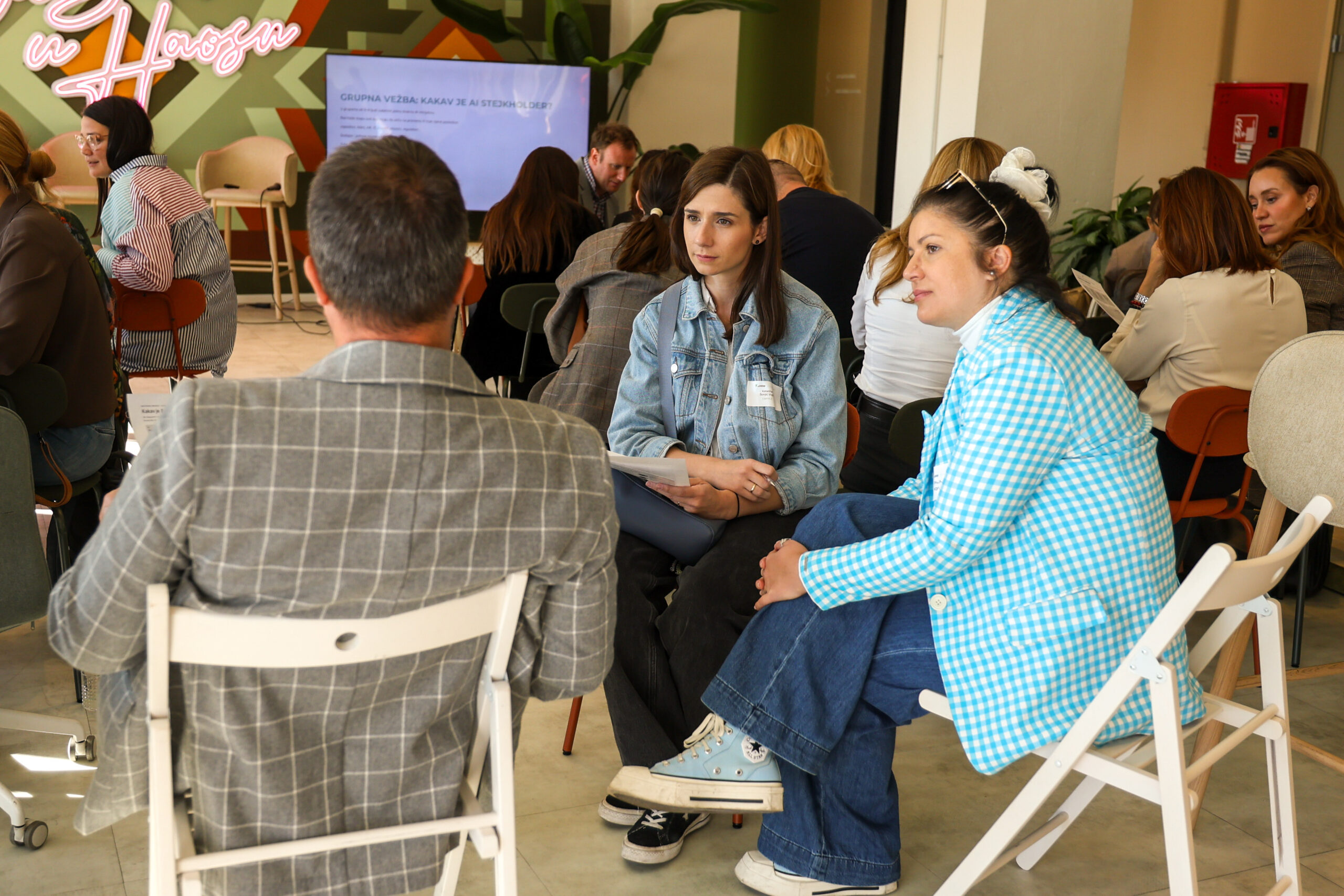
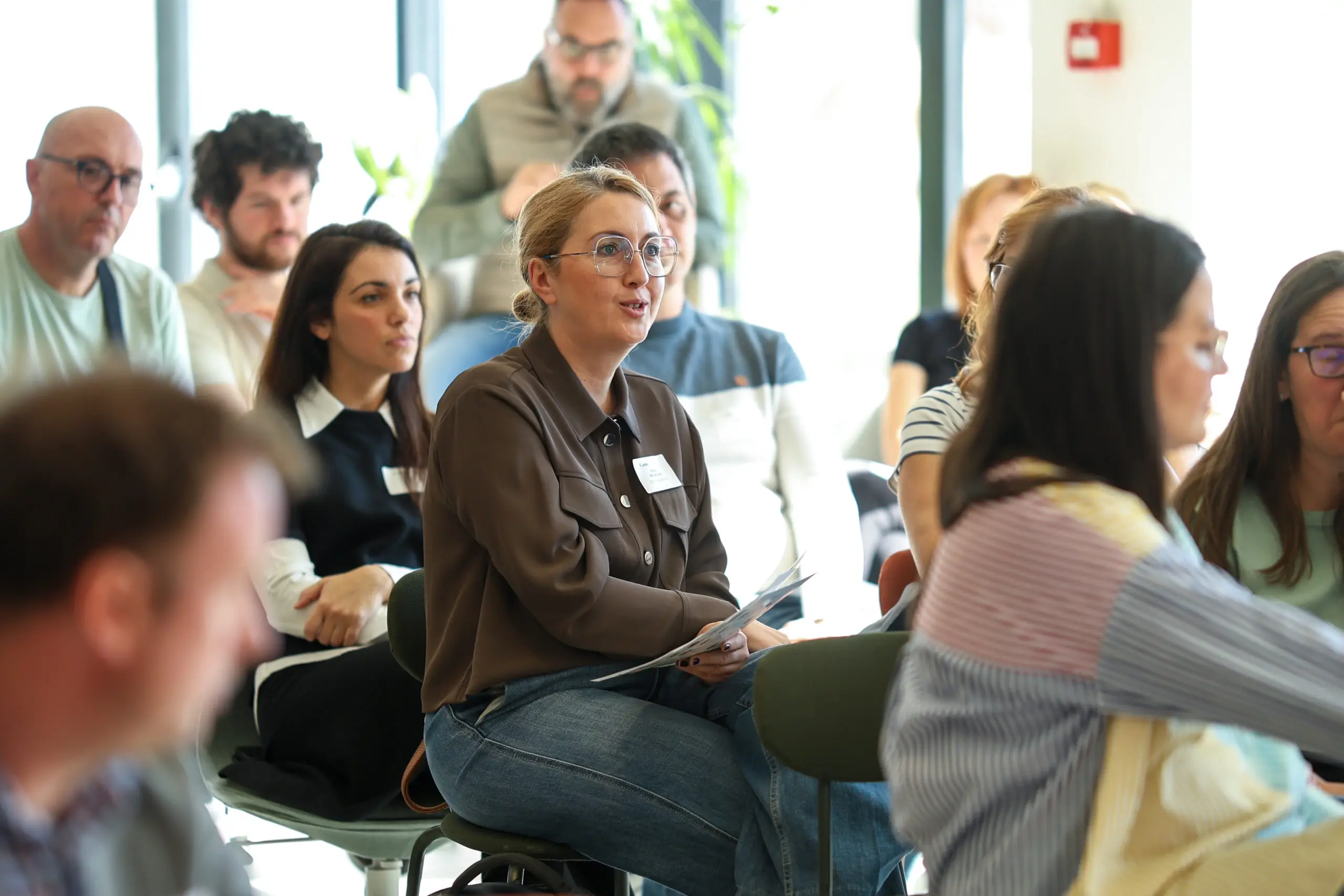
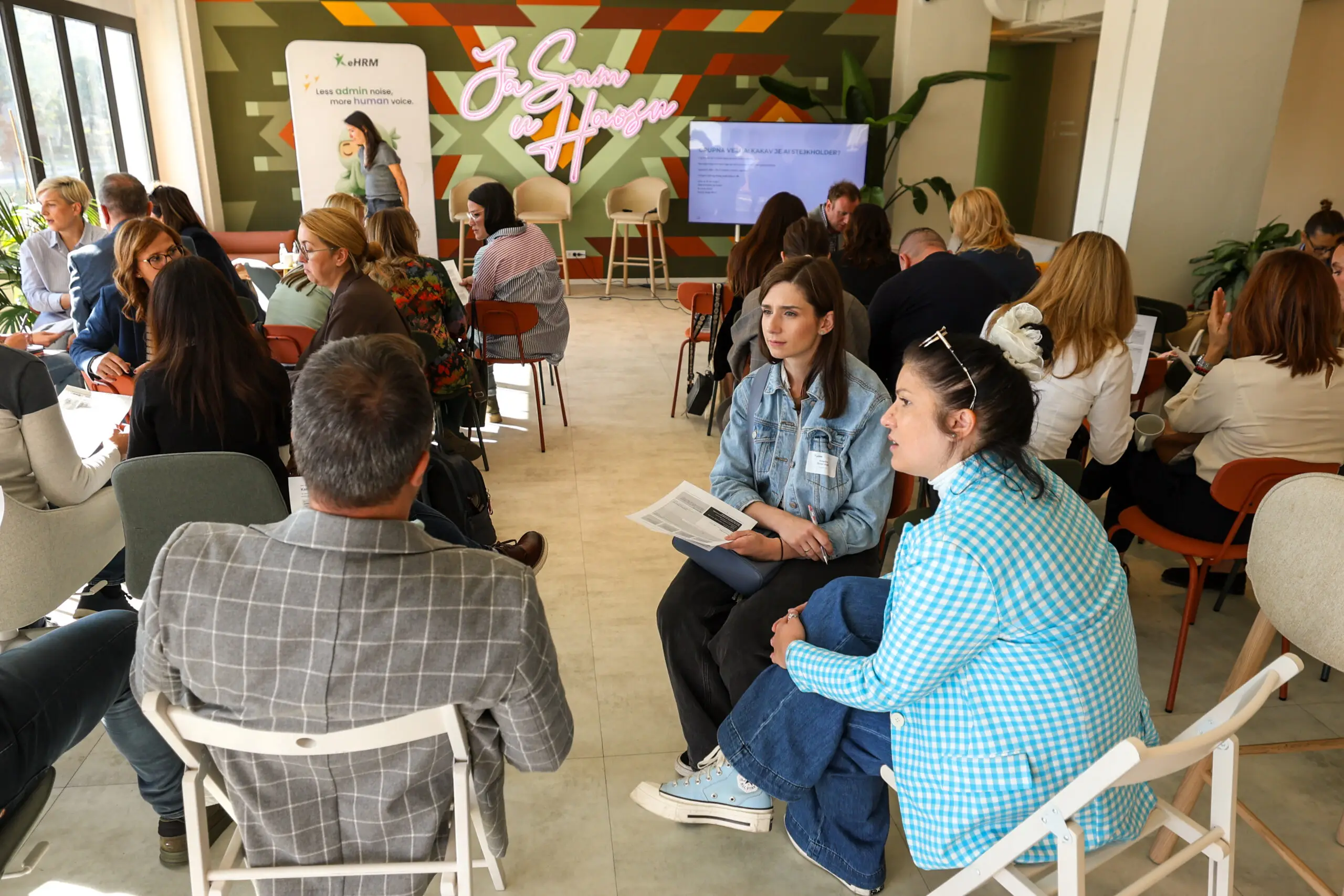
Putting change management into practice through an interactive exercise.
But what does this look like in practice? During an interactive exercise, participants explored real AI initiatives and mapped out the stakeholders involved: those who support the change, those who are still on the fence, and those who resist it.
Then came an interesting question: Where does AI fit on this stakeholder map?
AI doesn’t have interests of its own, yet it can significantly influence who gets a say, who makes decisions, and who carries the risks during organizational change. So perhaps the more important question isn’t where AI belongs on the stakeholder map, but how it changes the map itself.
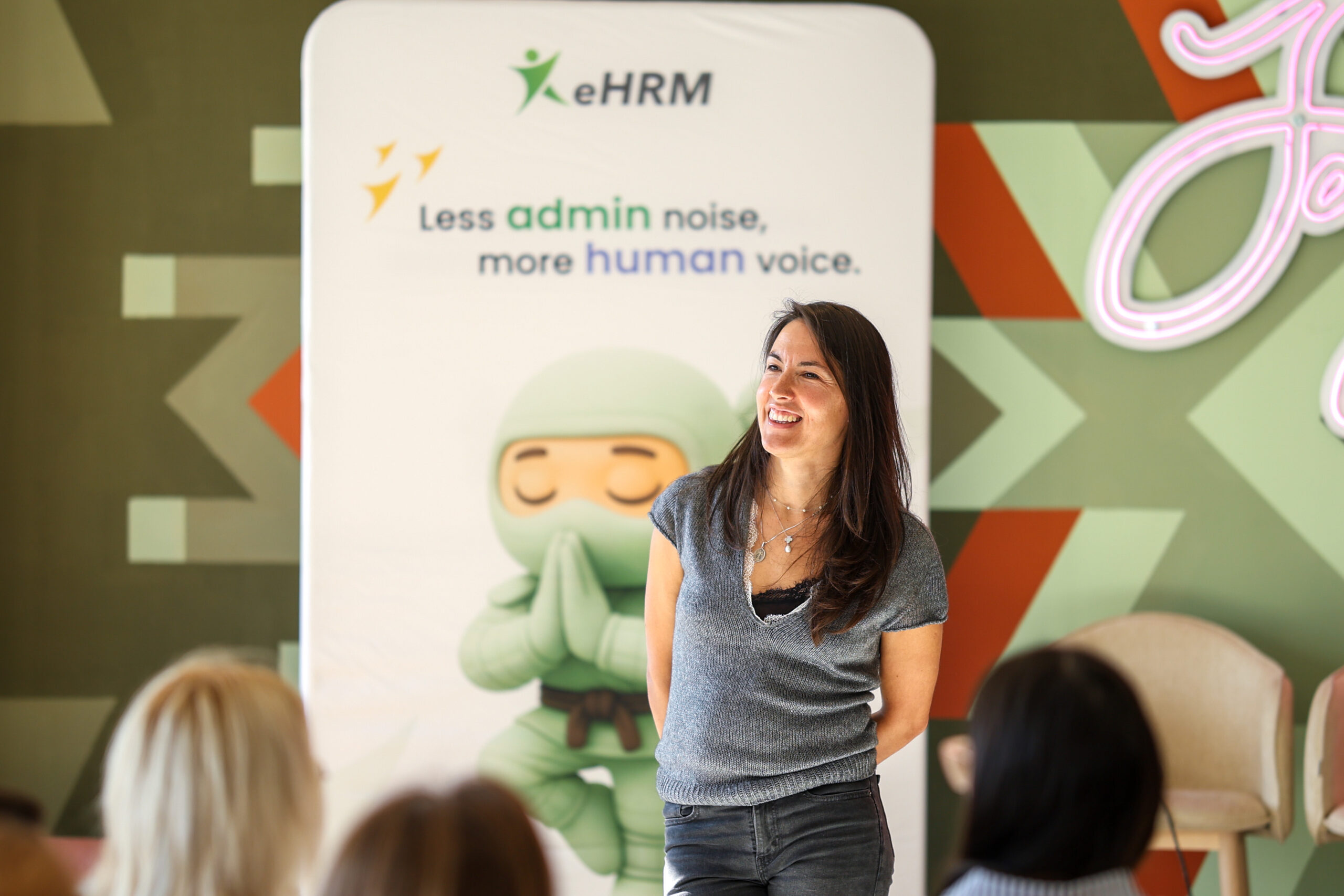
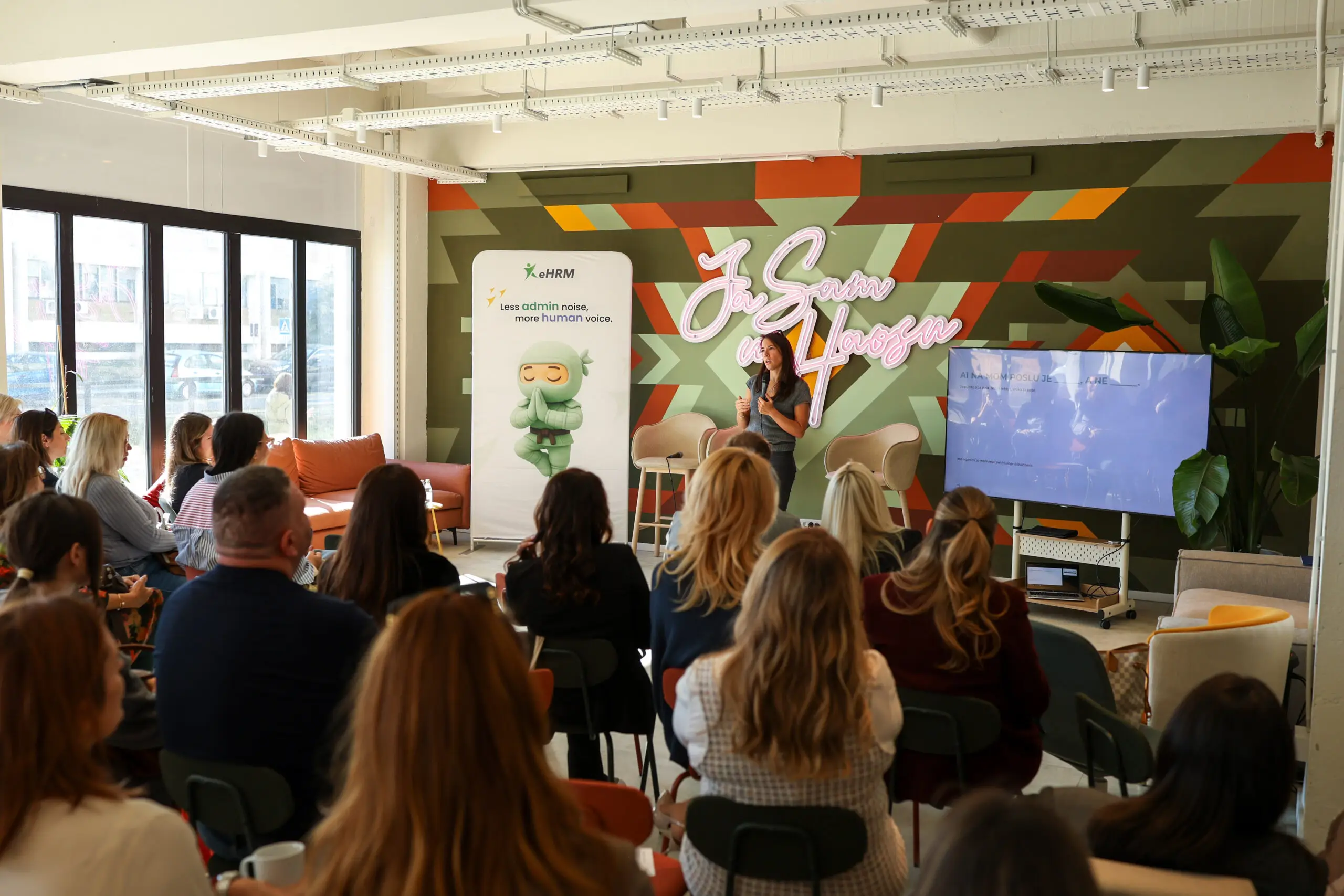
Dr. Jelena Pavlović on how AI is changing the way we manage change.
The key takeaway? When introducing AI, we need to think beyond technology and consider the people and relationships it affects.
From idea to implementation: Making HR digitalization work in practice
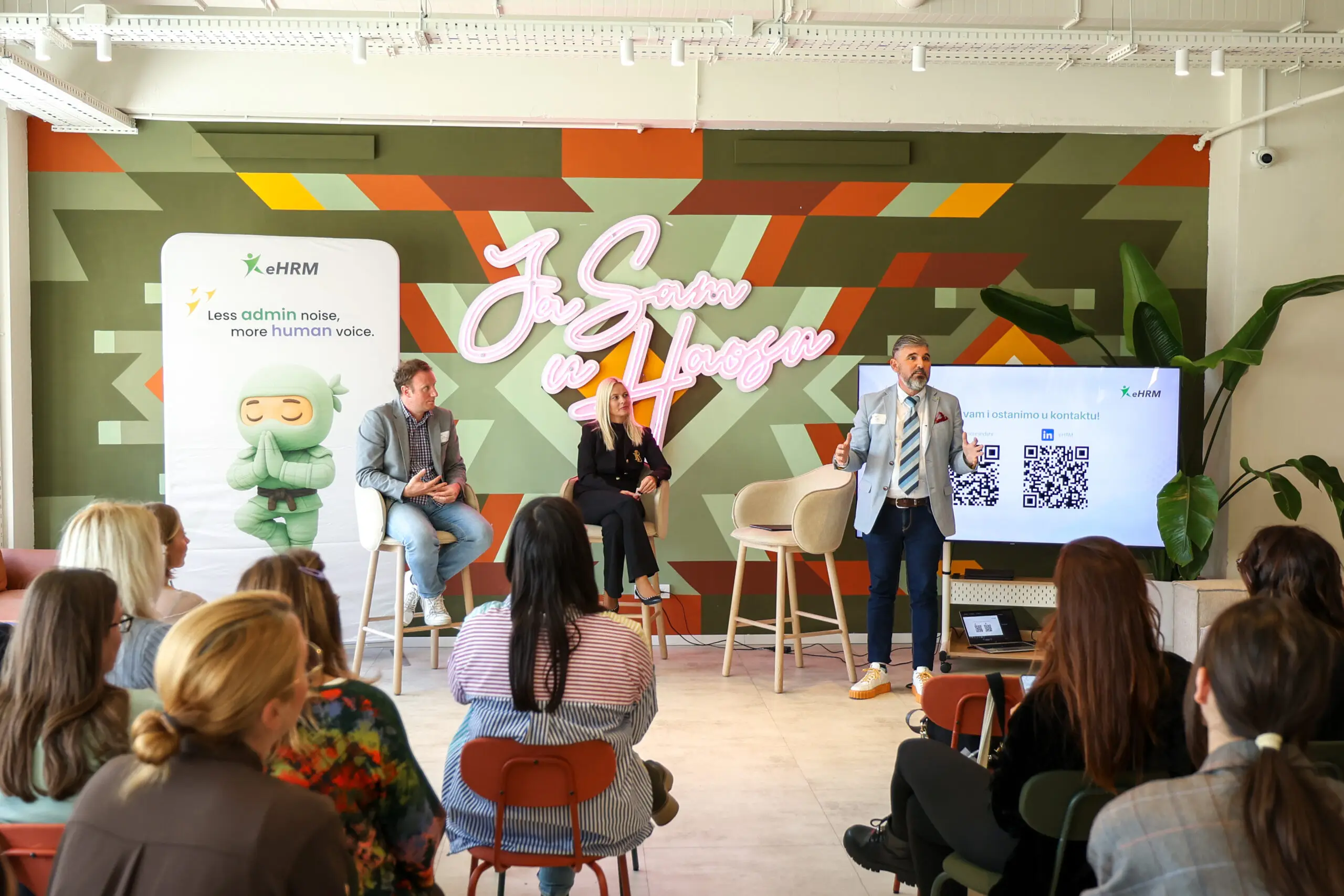
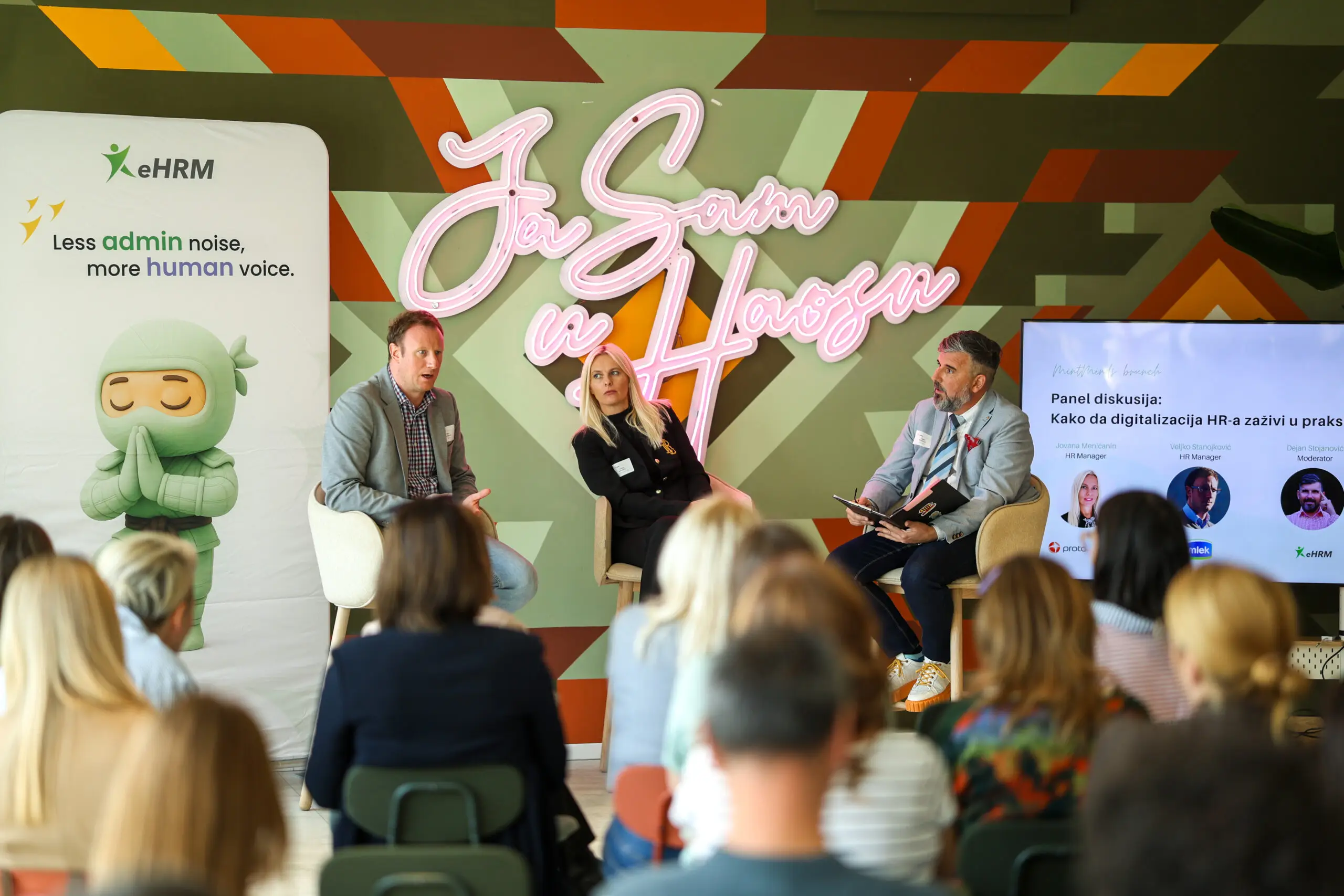
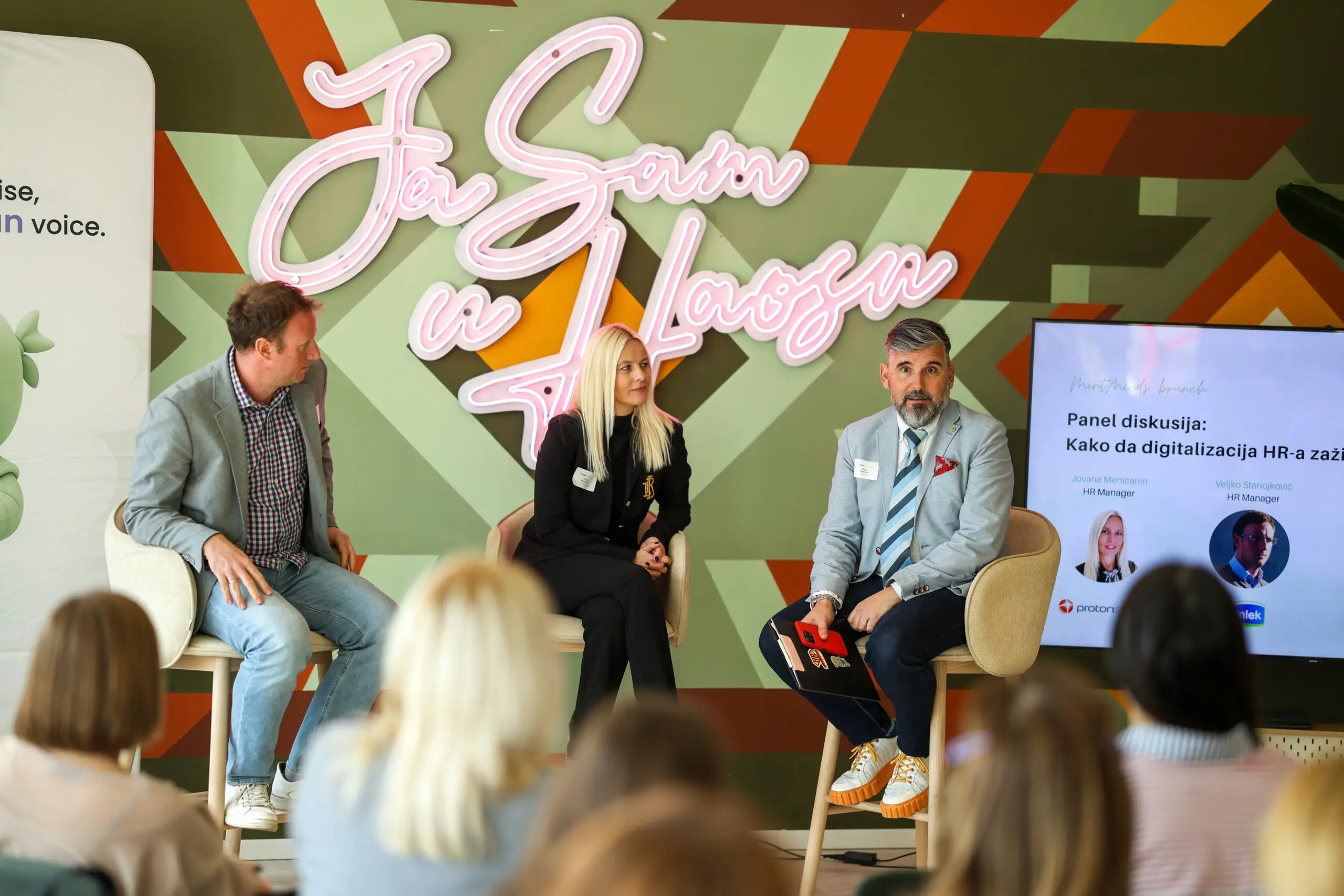
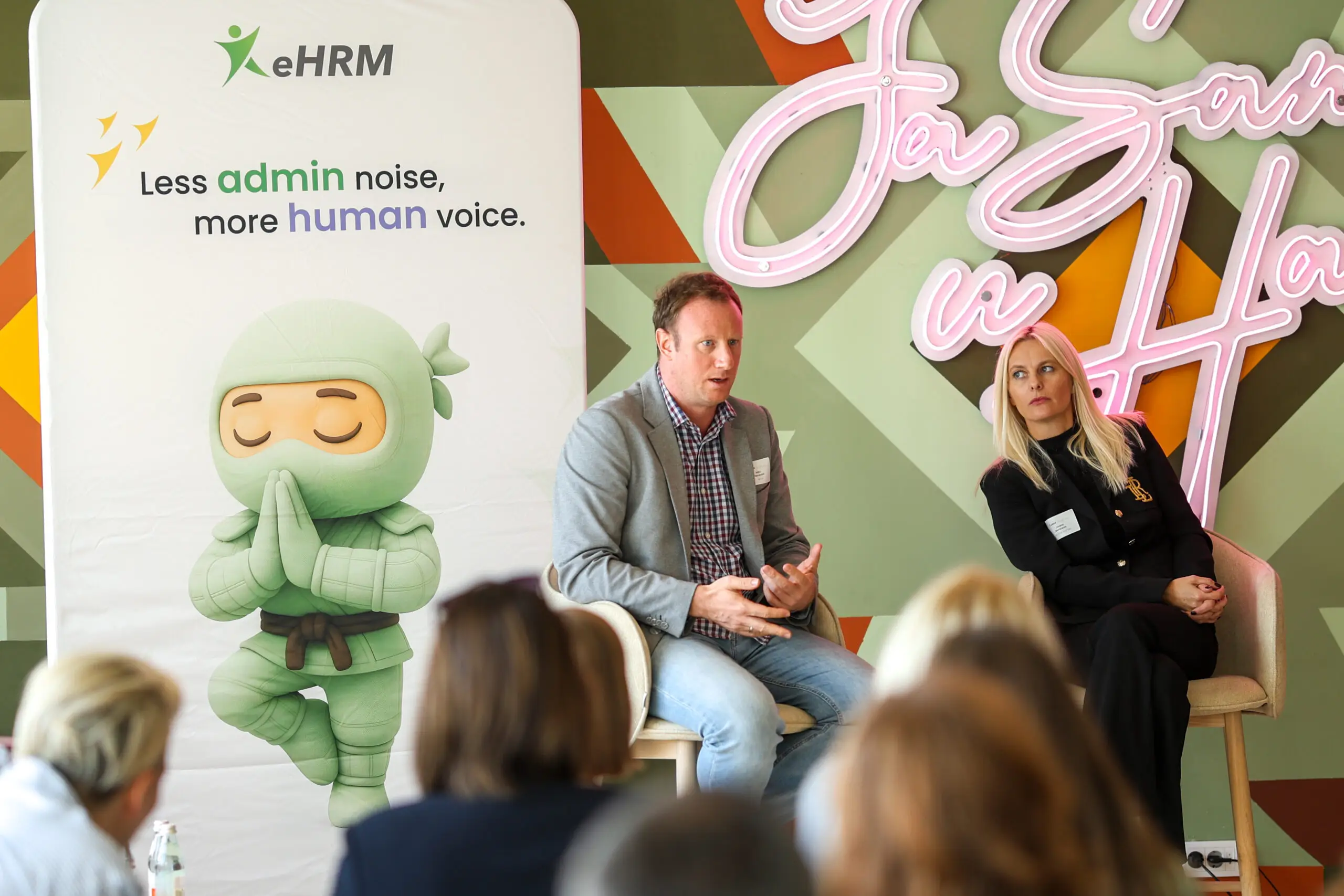
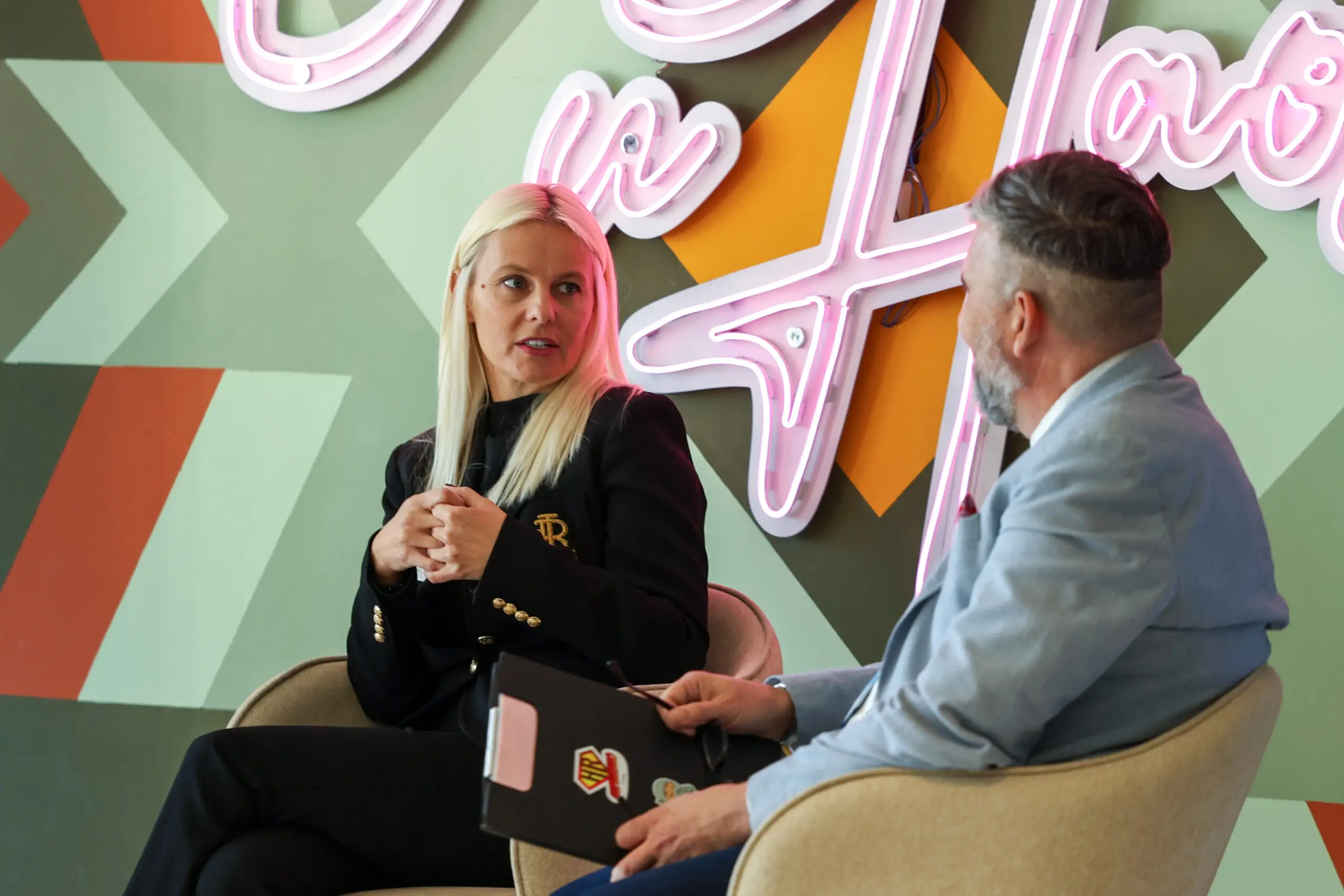
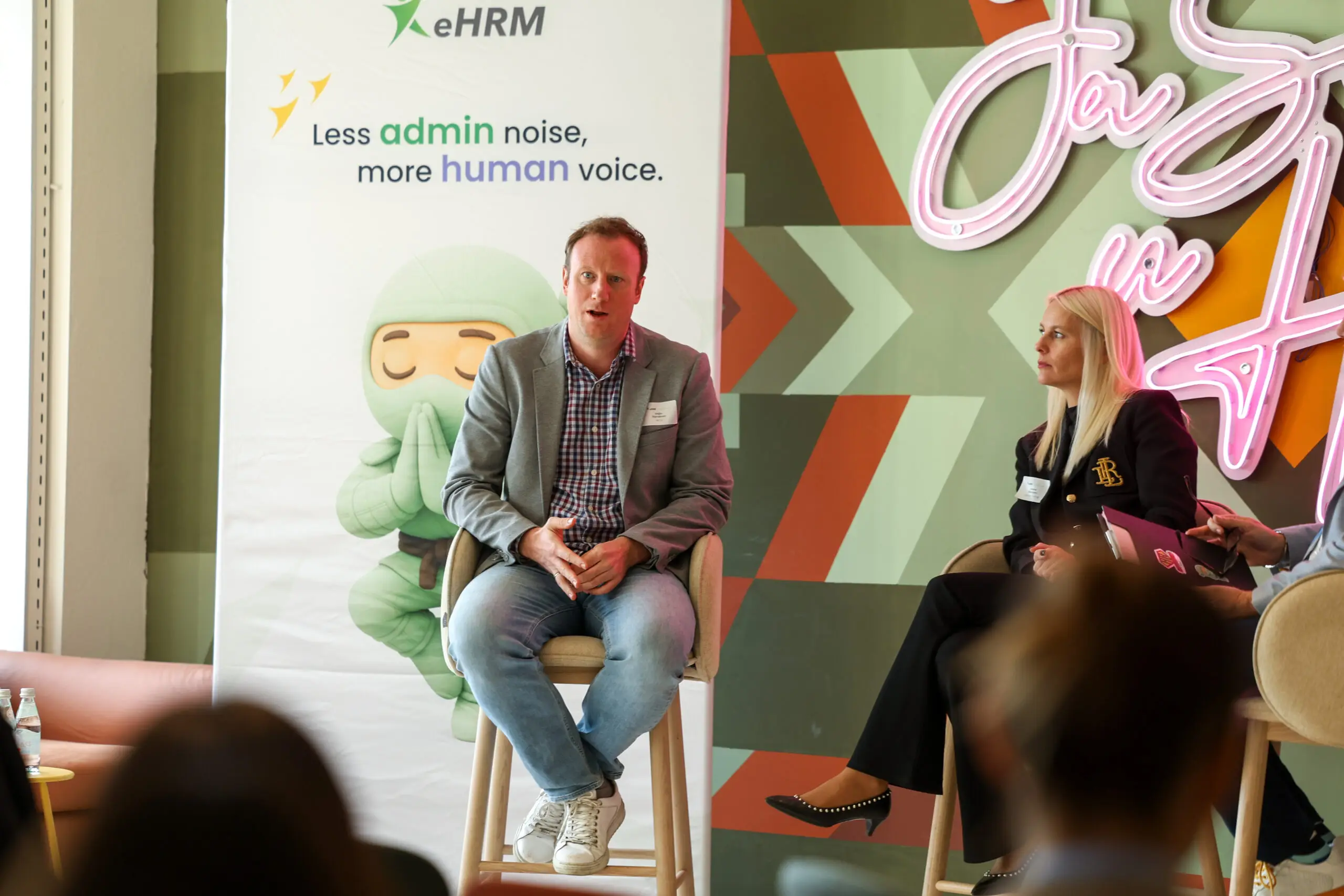
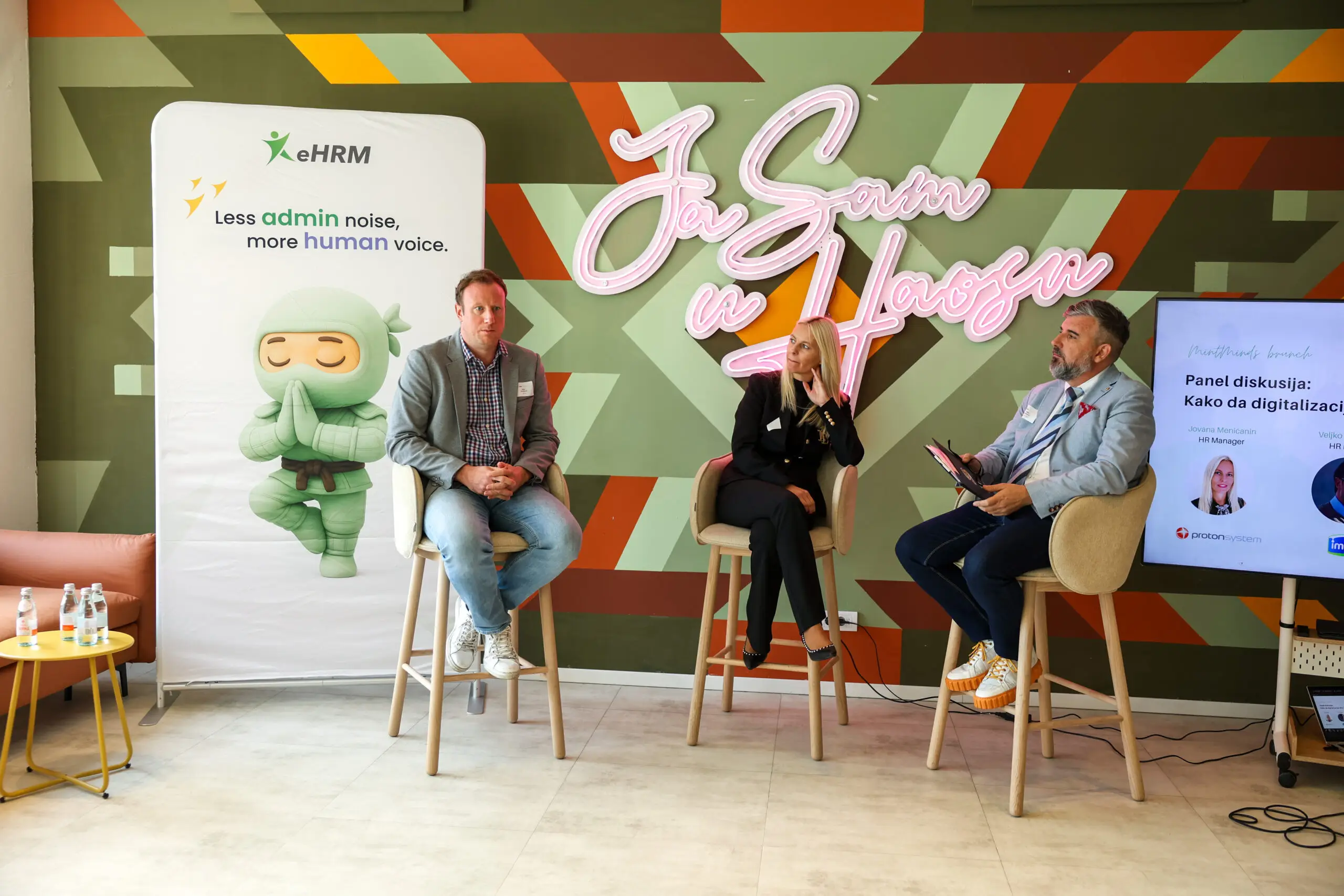
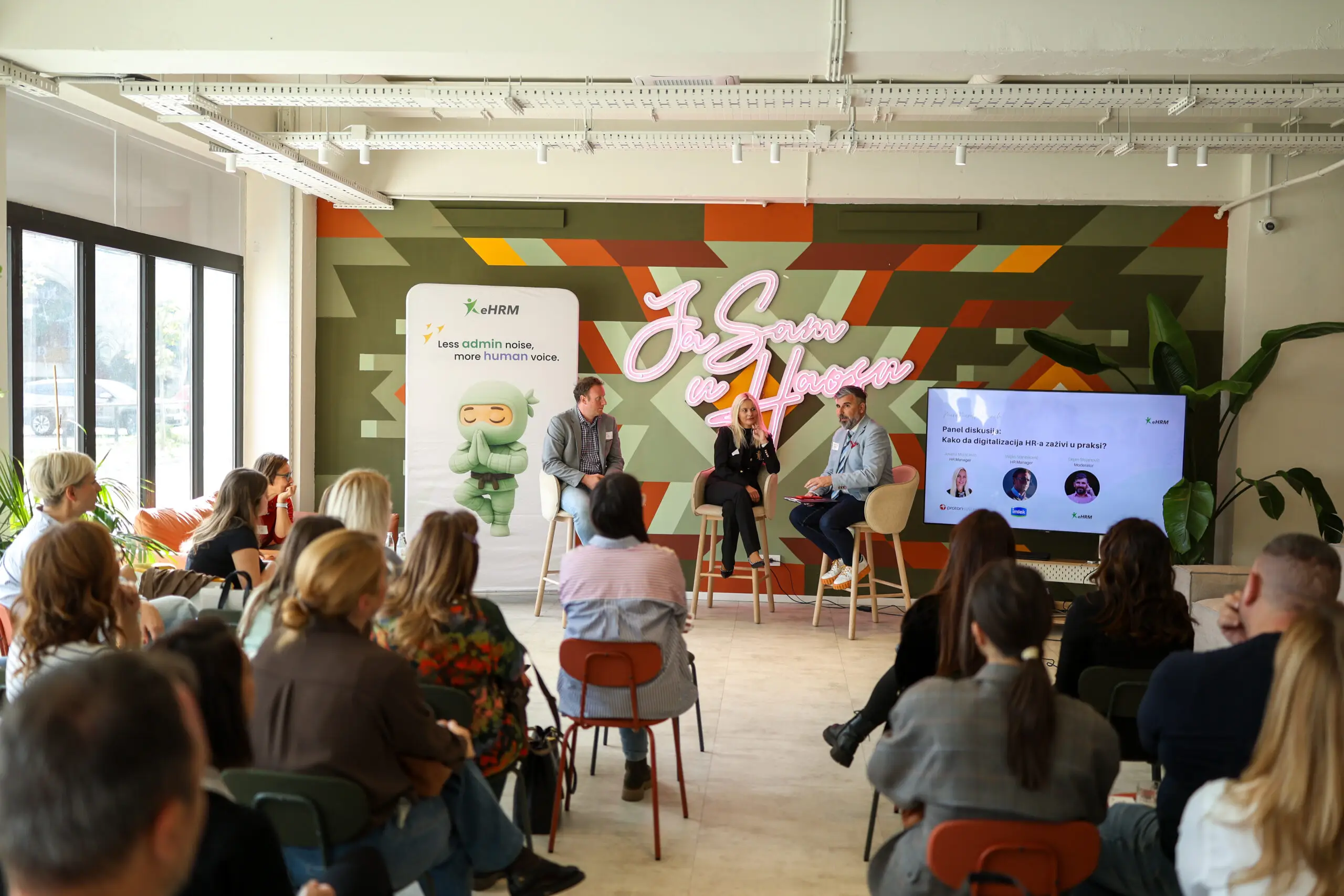
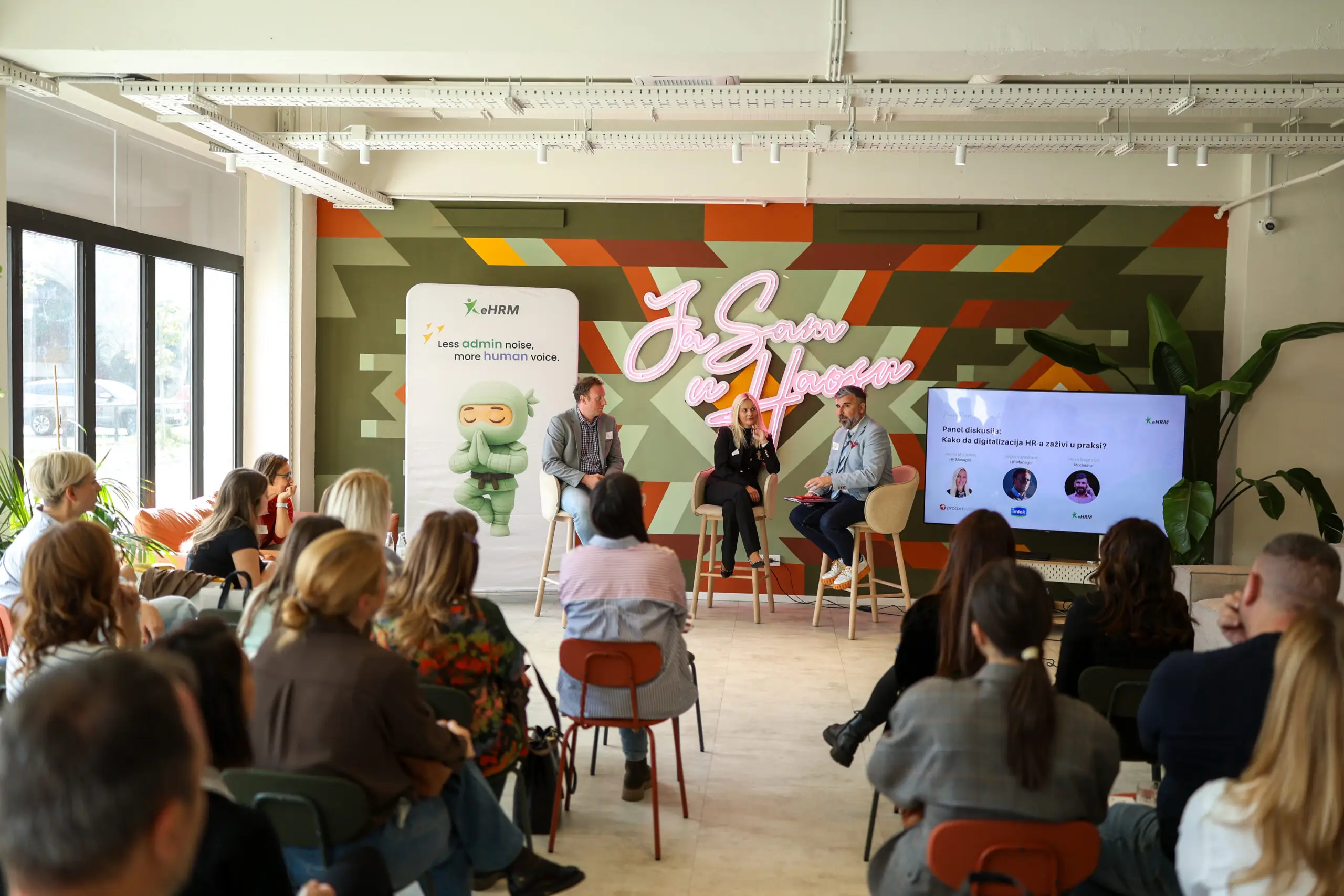
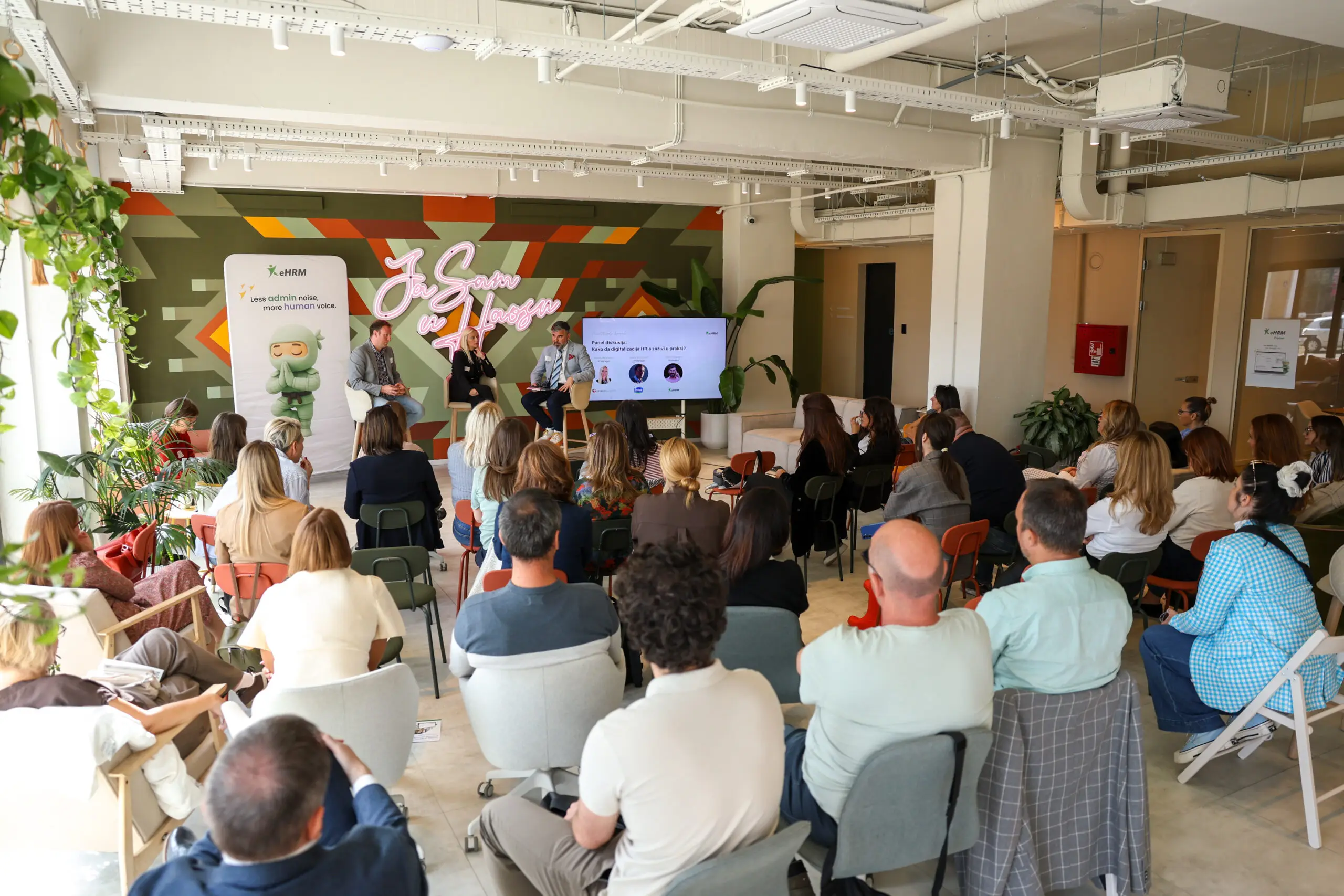
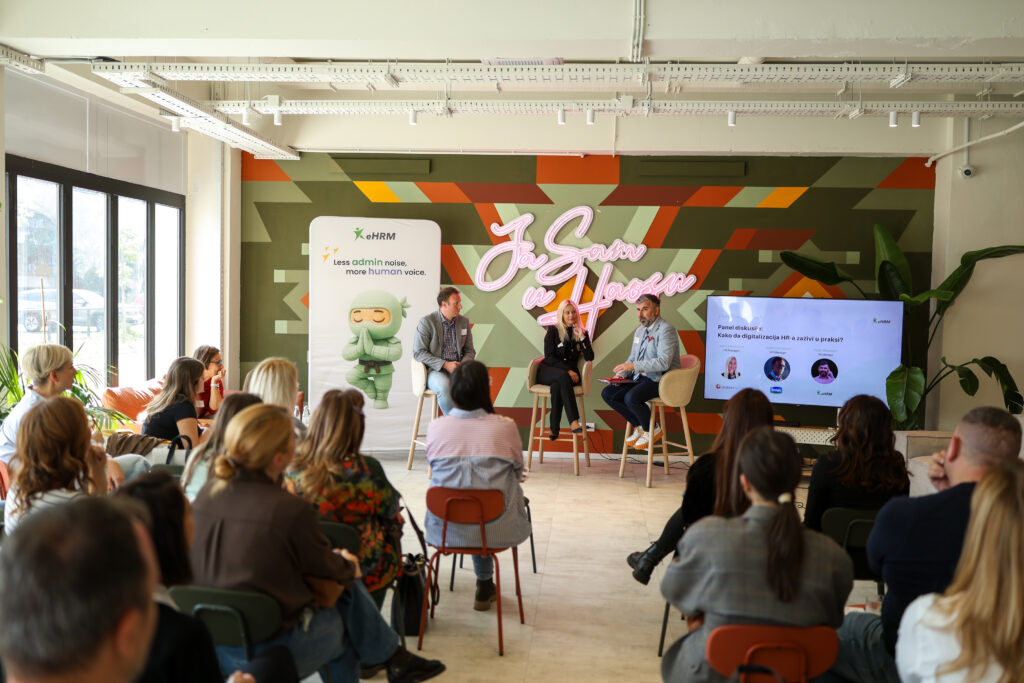
Following the keynote and a presentation on how eHRM supports change management, we continued with a panel discussion. Jovana Menićanin from Proton System and Veljko Stanojković from IMLEK shared their experiences of digitalizing HR processes, with Dejan Stojanović from eHRM moderating the conversation.
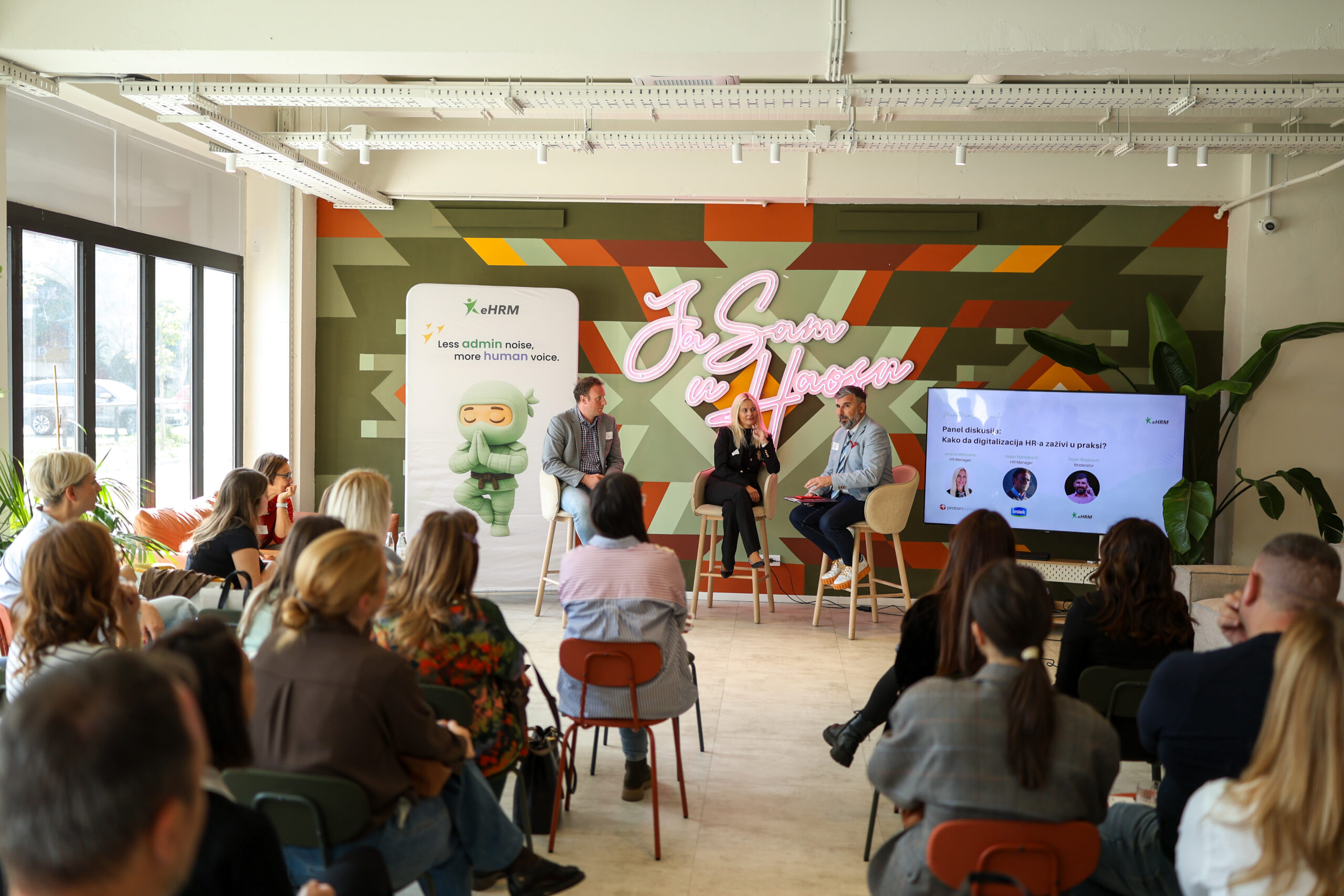
Real-life HR digitalization experiences from Proton System and IMLEK.
“We’ve been doing it this way for 20 years.” Now what?
One of the most memorable stories of the morning came from IMLEK. When Veljko joined the company, he encountered ways of working shaped by decades of established routines. An impressive 38 years’ worth of records were stored in physical binders. They were managed by an employee who was just two years away from retirement. The processes were familiar, everything worked from her perspective, and there seemed to be little reason to change.
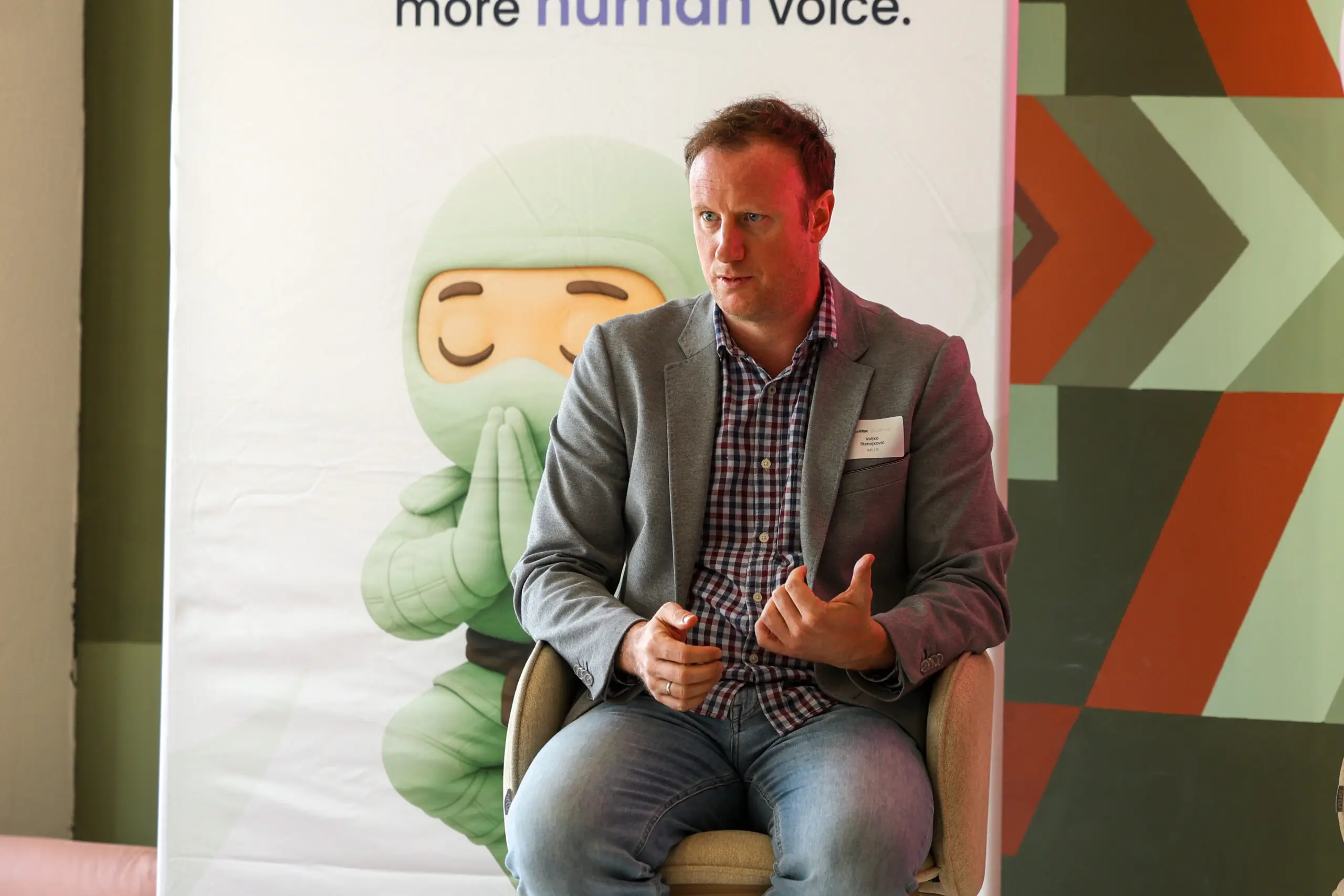
Veljko Stanojković from IMLEK shared practical lessons on navigating change and introducing new ways of working.
So why change anything? Veljko pointed out that change can create fear and uncertainty among employees. Instead of asking his colleague to abandon her established way of working, they found a compromise: she could continue keeping manual records, as long as she also entered the information into the new system.
That’s change management in practice! Not everything needs to change overnight. Sometimes, giving people the time and space to gradually adapt makes all the difference.
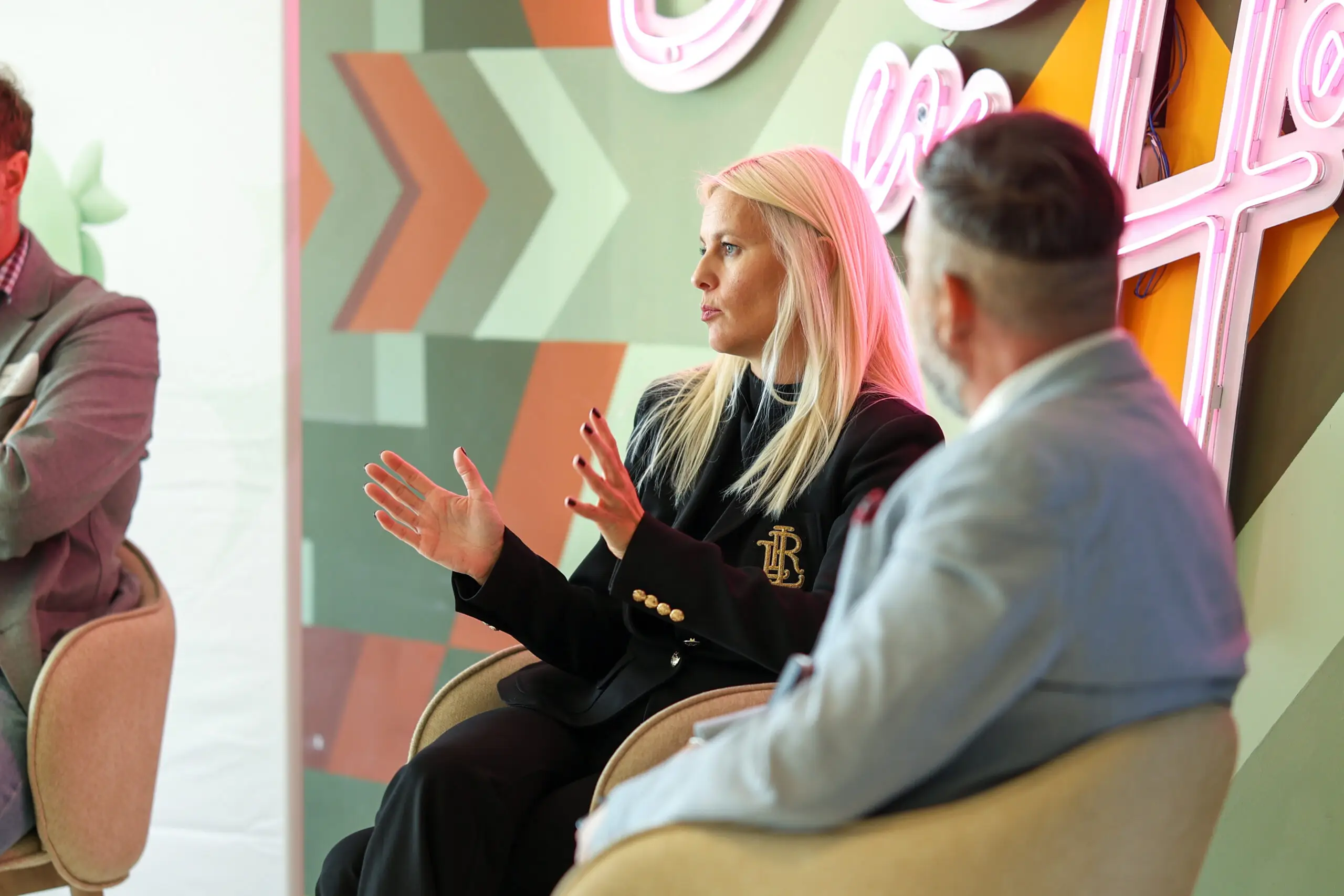
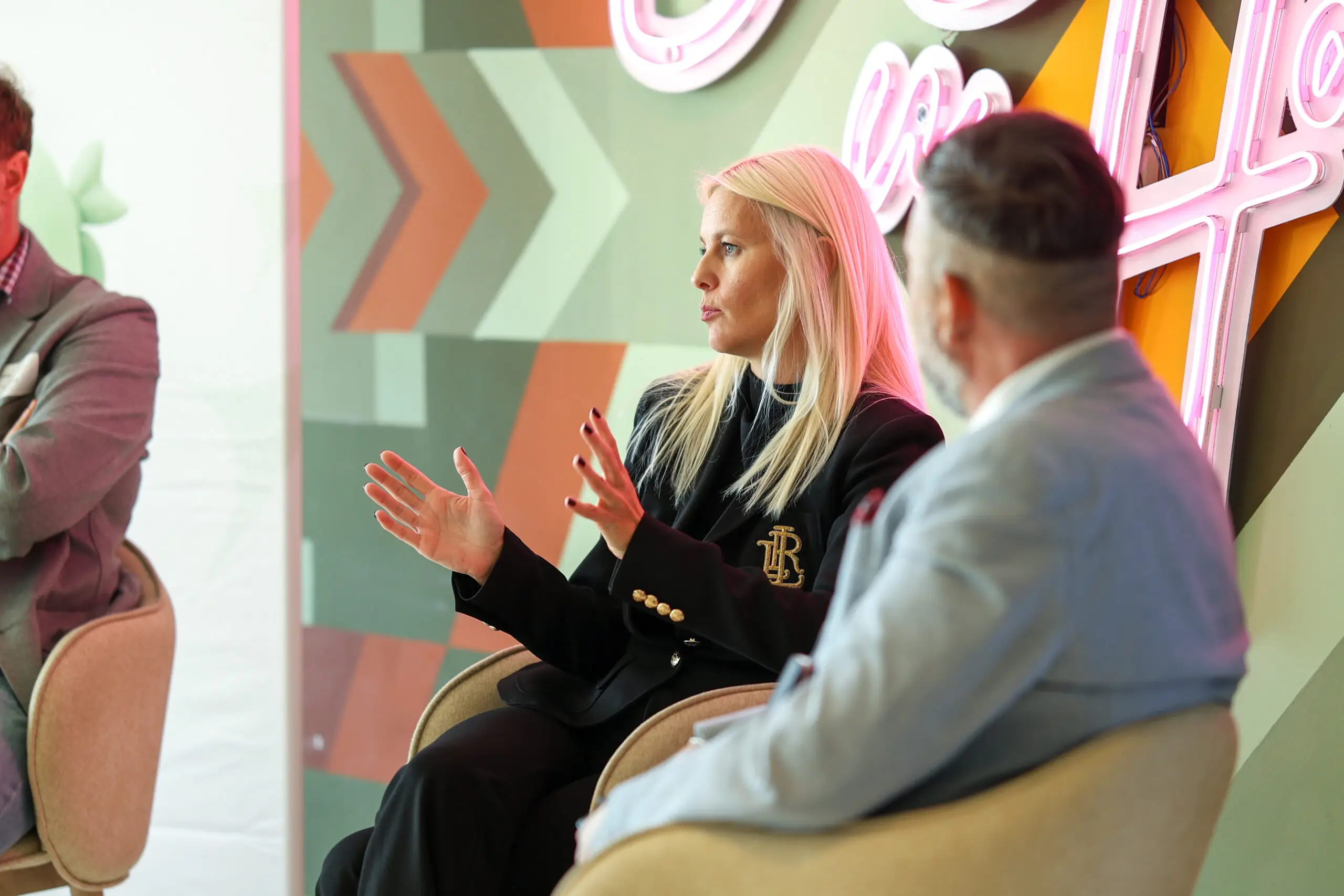
Jovana Menićanin from Proton System shared her experience of making HR digitalization happen.
Adapt the system or change the process?
Another important question we explored during the panel was whether a new HR system should adapt to existing processes or whether organizations should rethink the way they work. One practical approach is to involve employees who will actually use the system in the testing process. Their feedback can help identify where the system needs adjusting and where existing processes could be improved.
The key? Finding the right balance between adapting technology and improving the way we work.
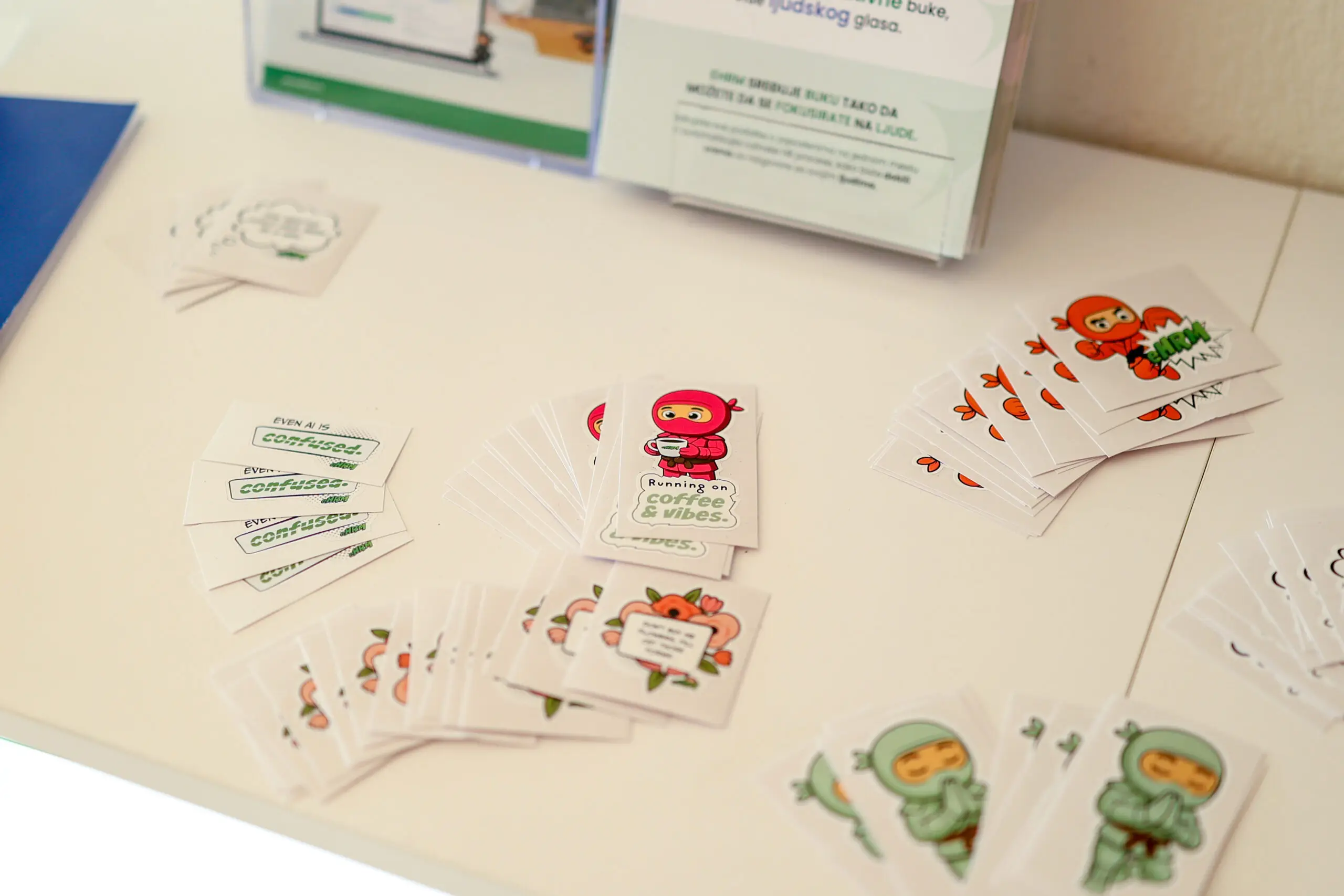
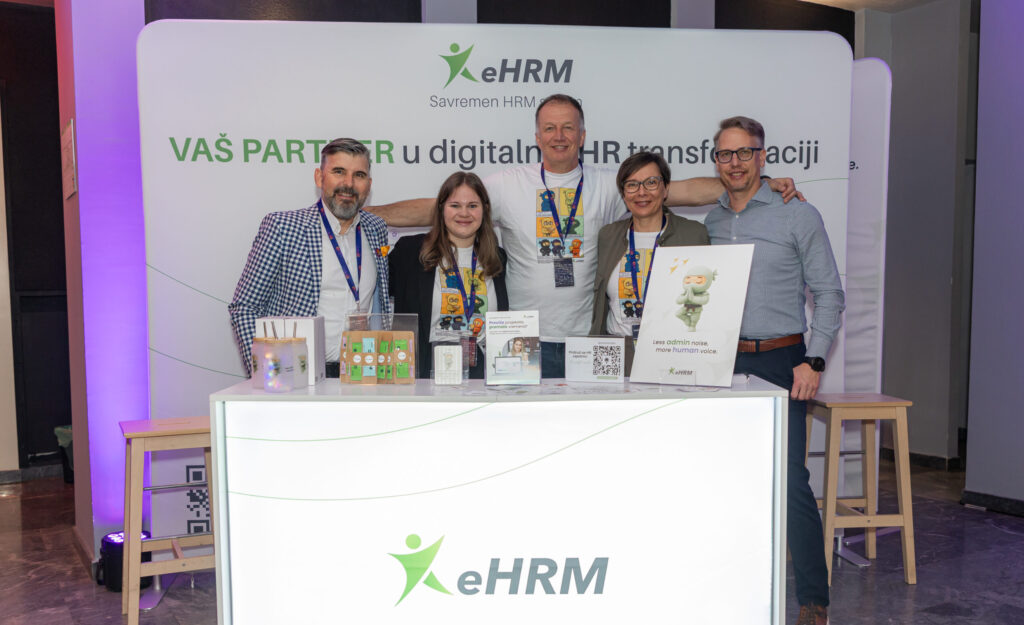
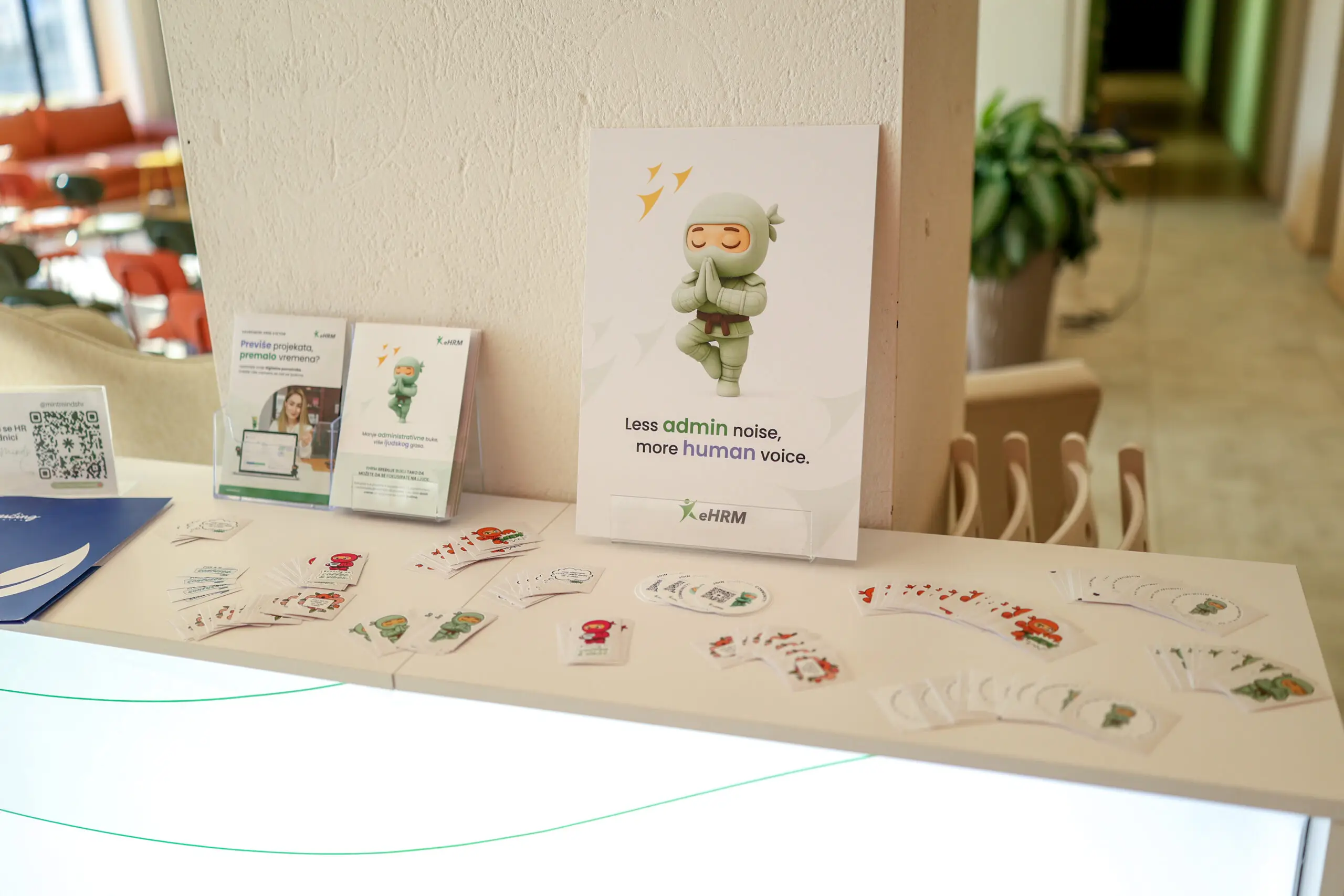
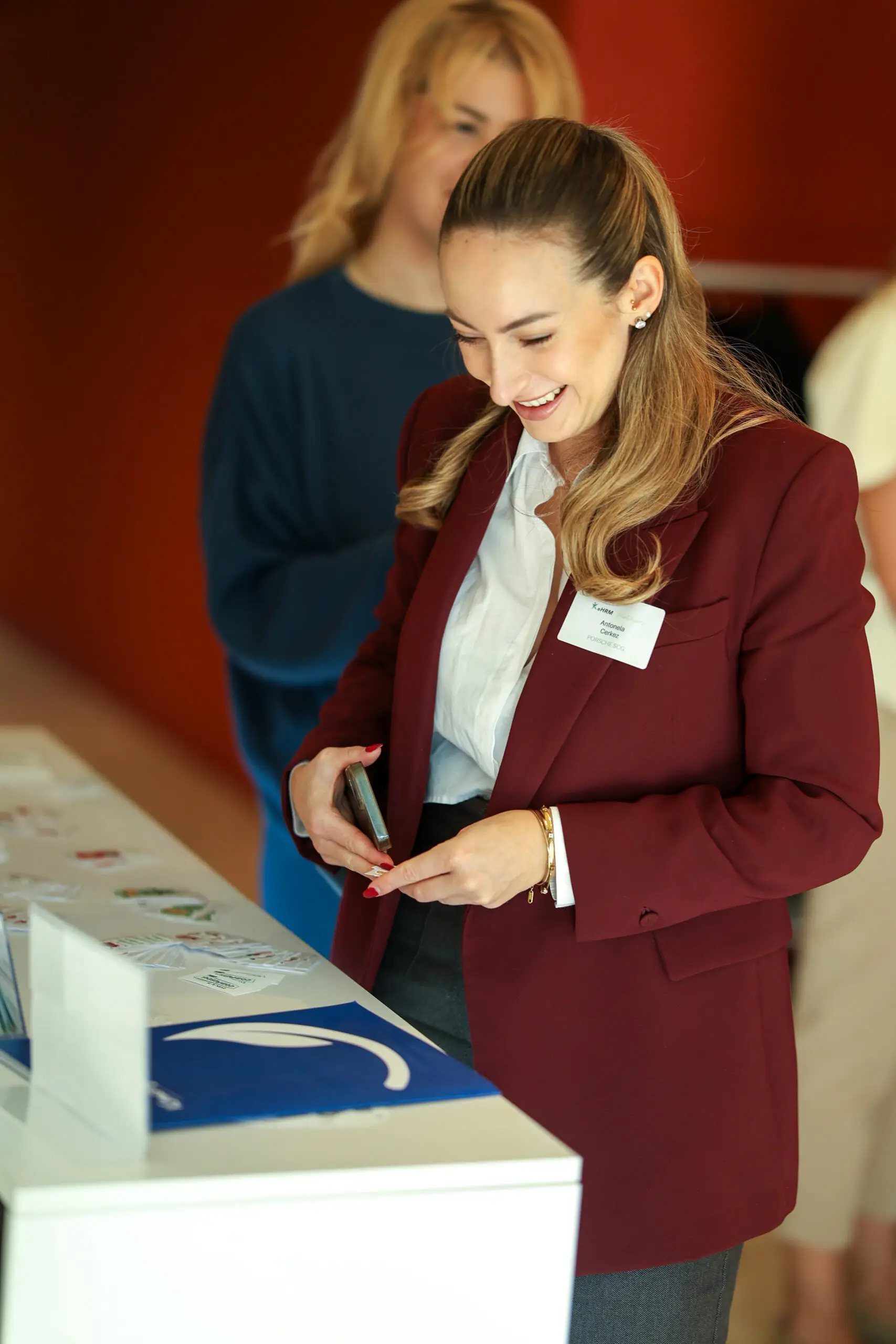
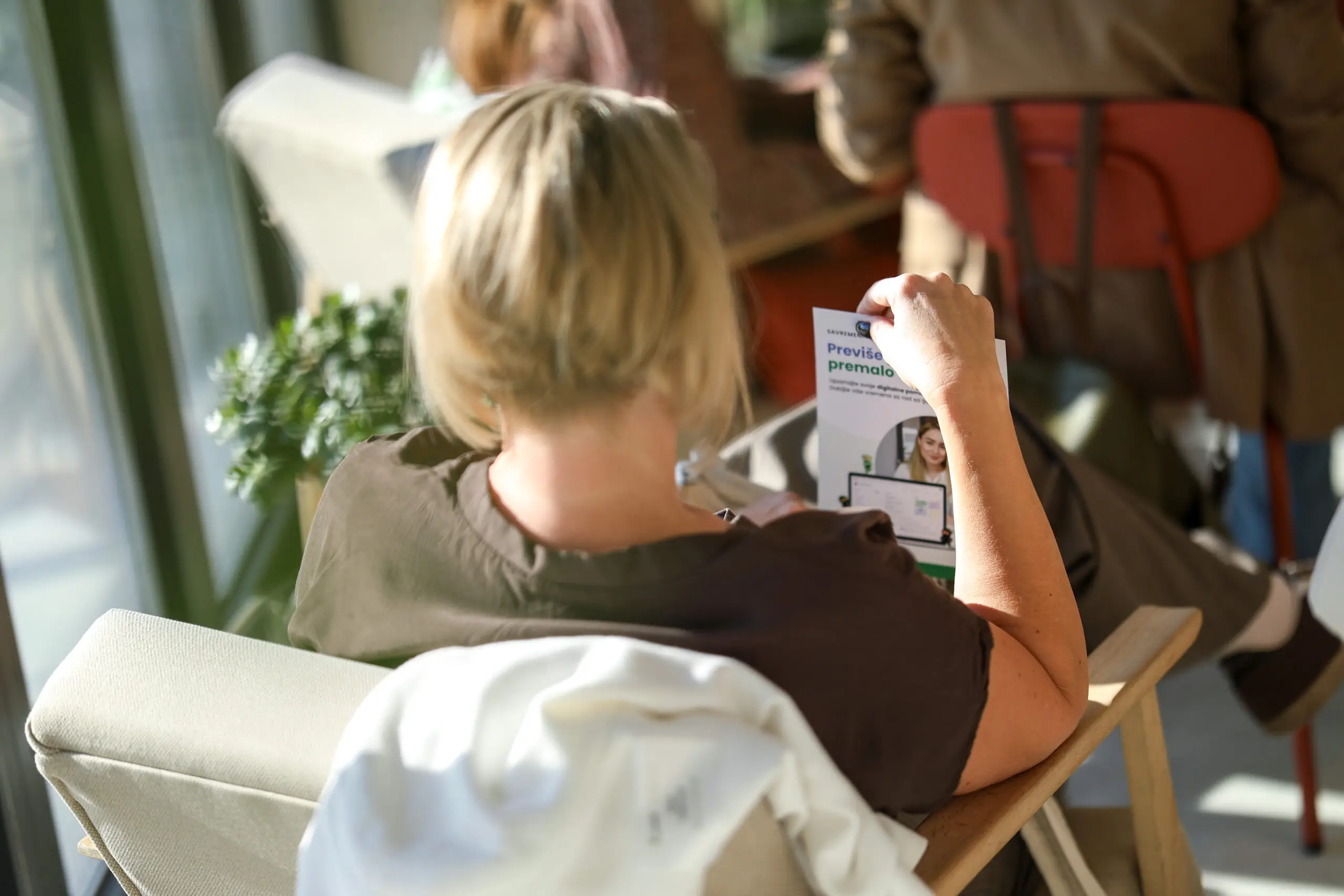
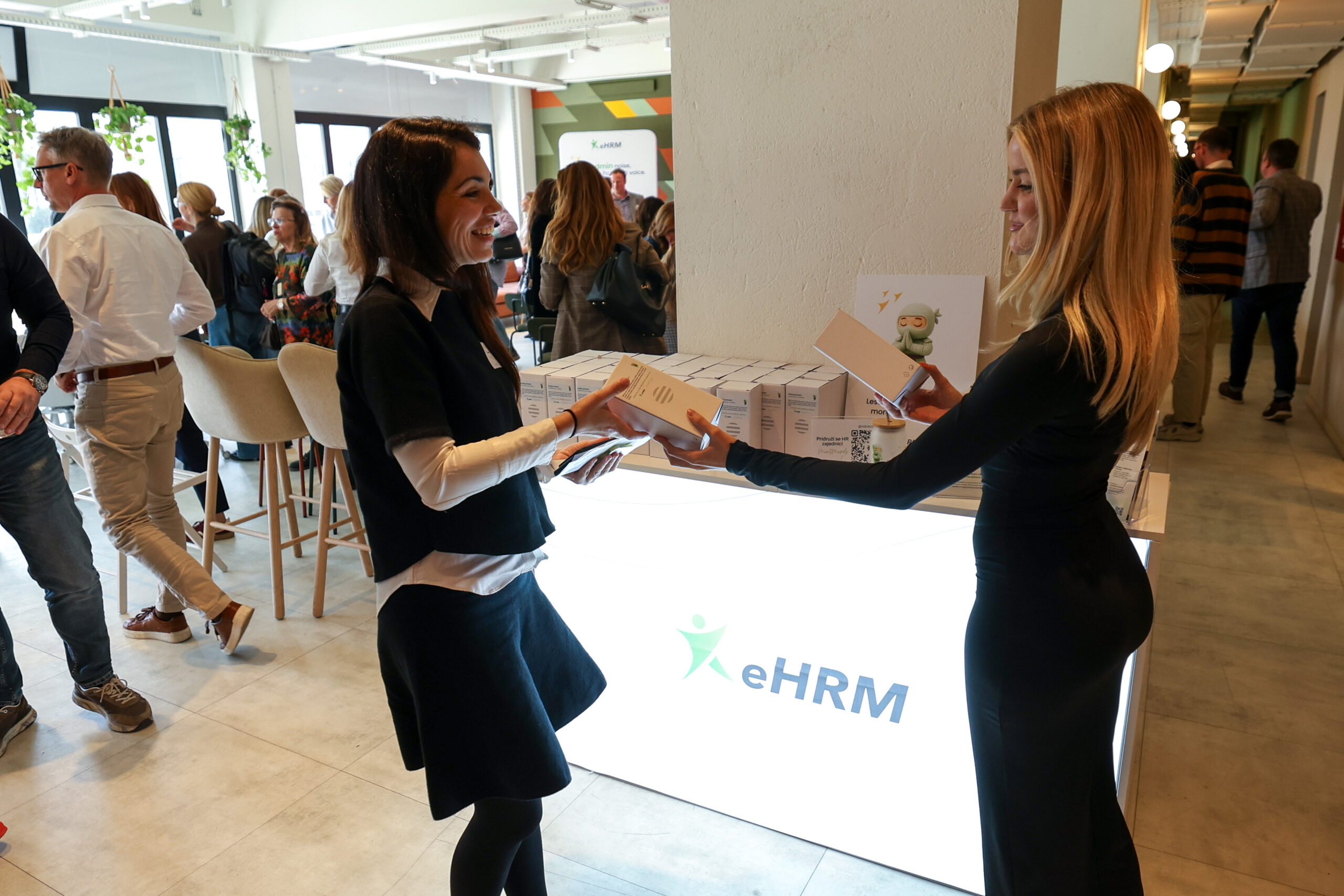
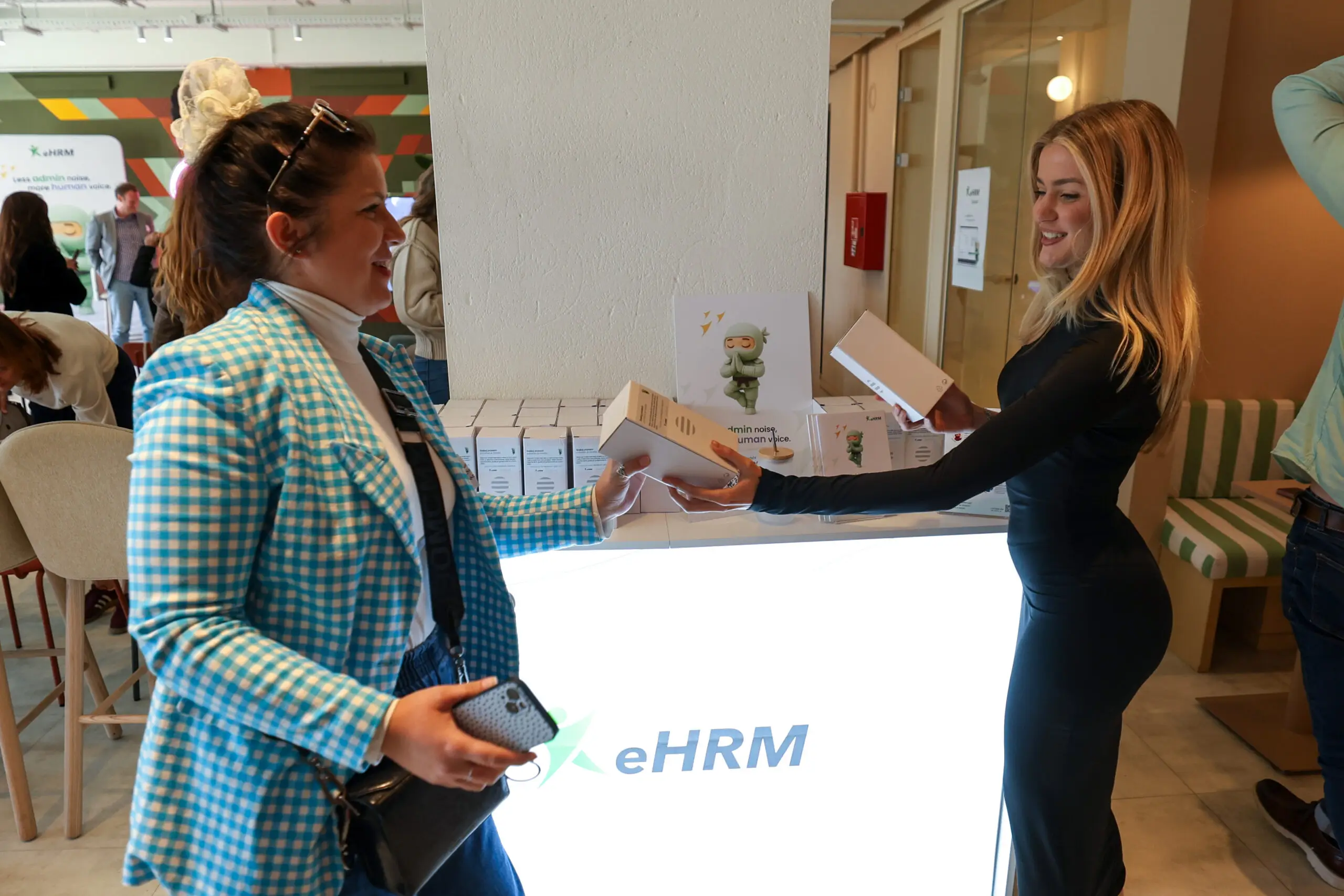
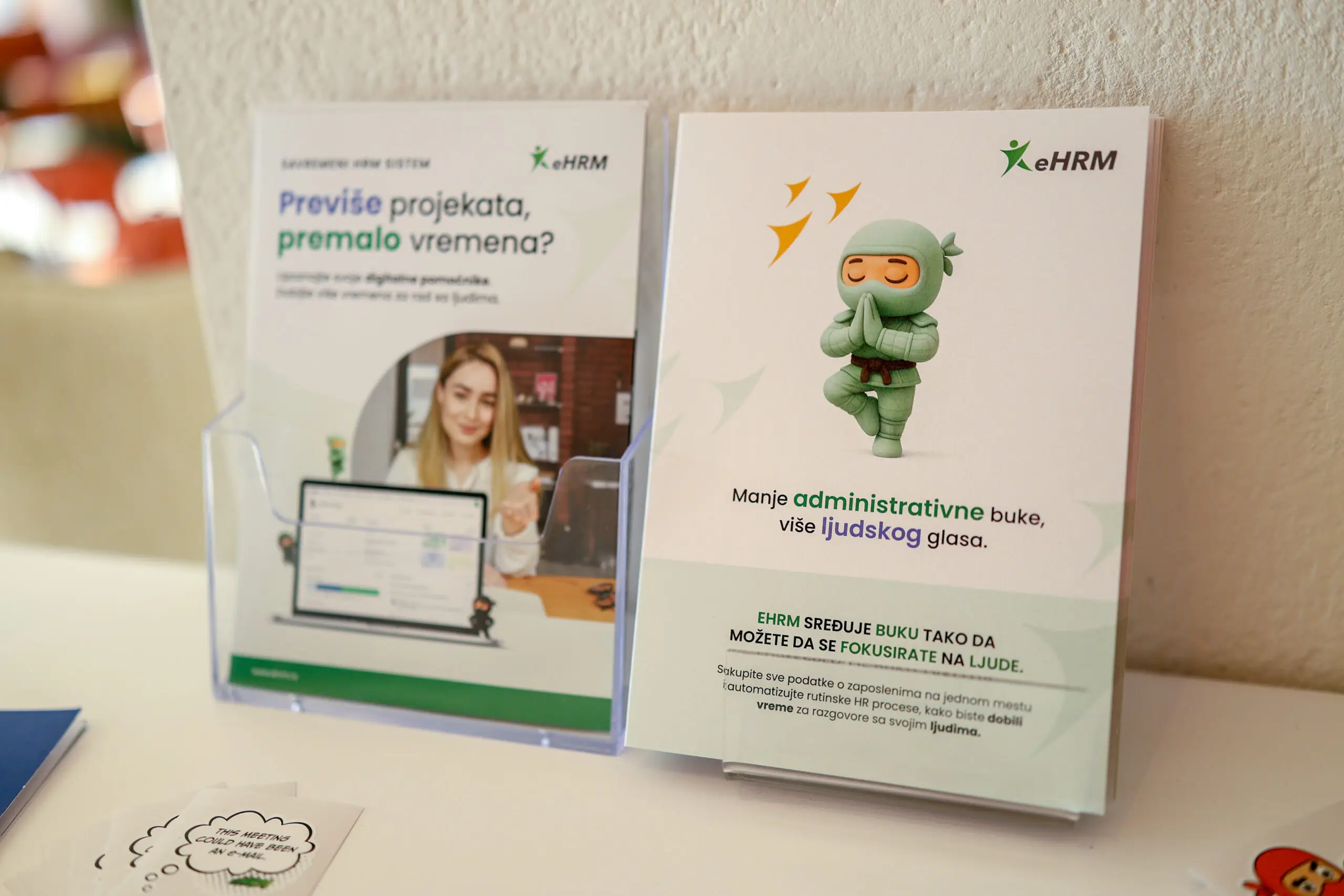
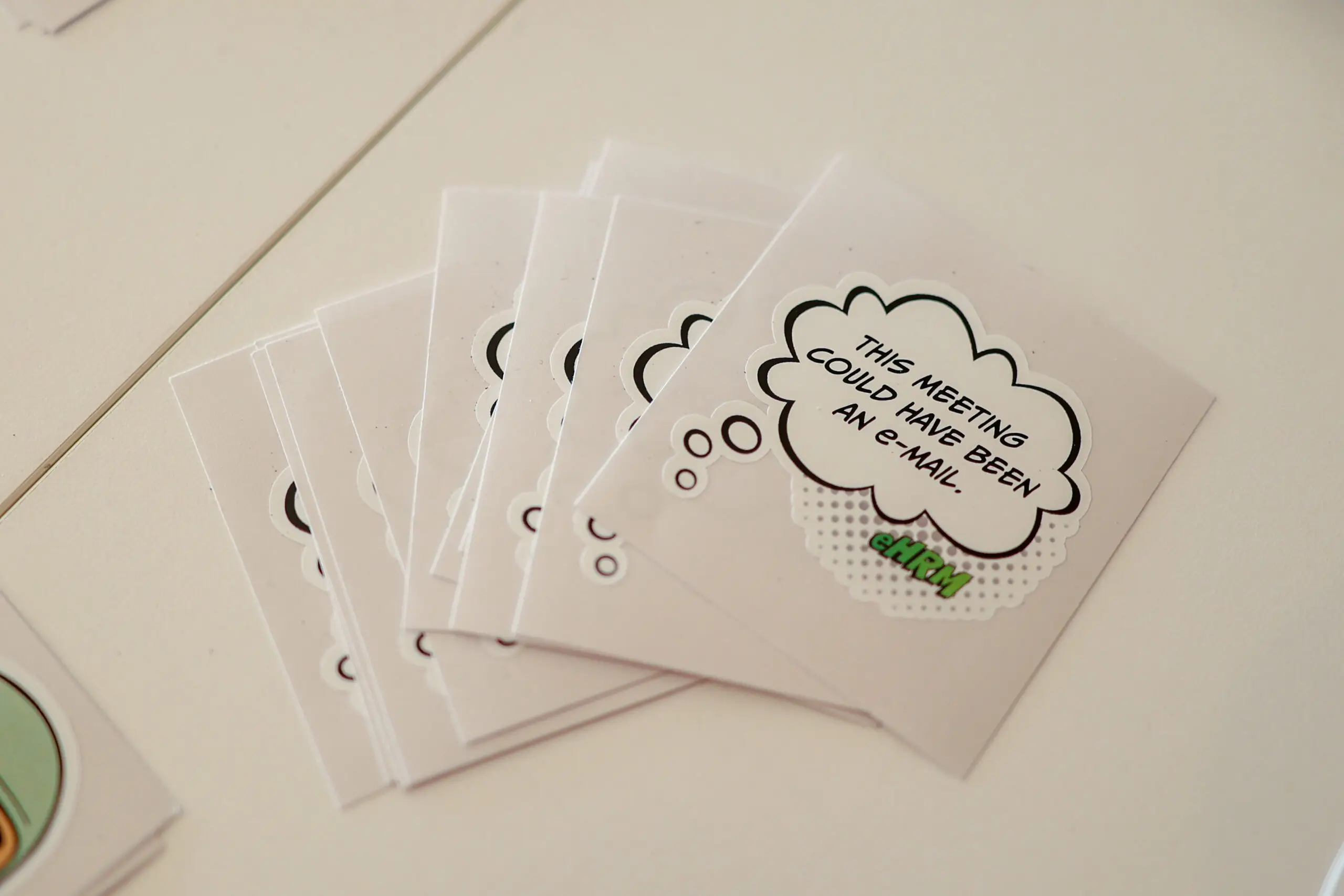
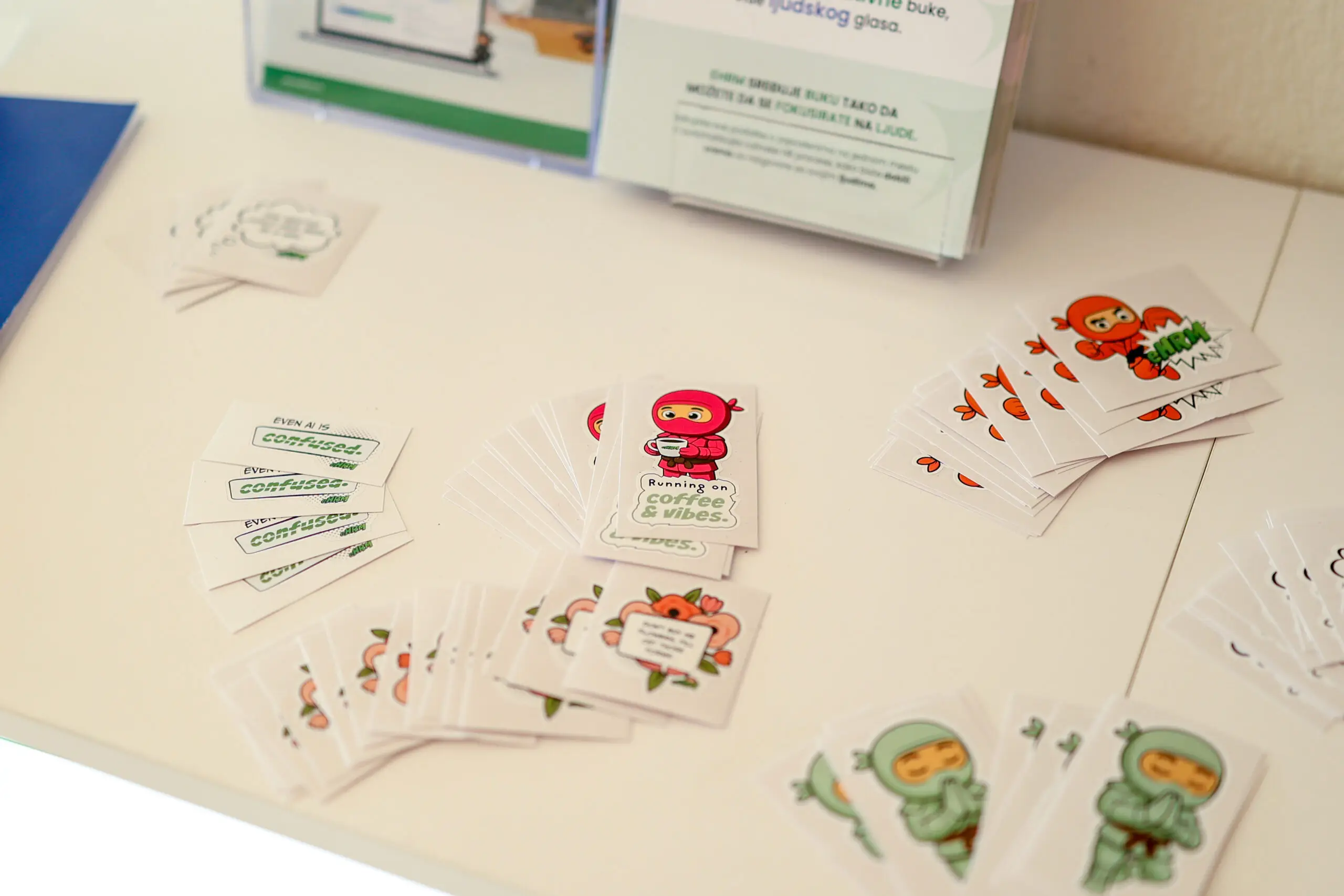
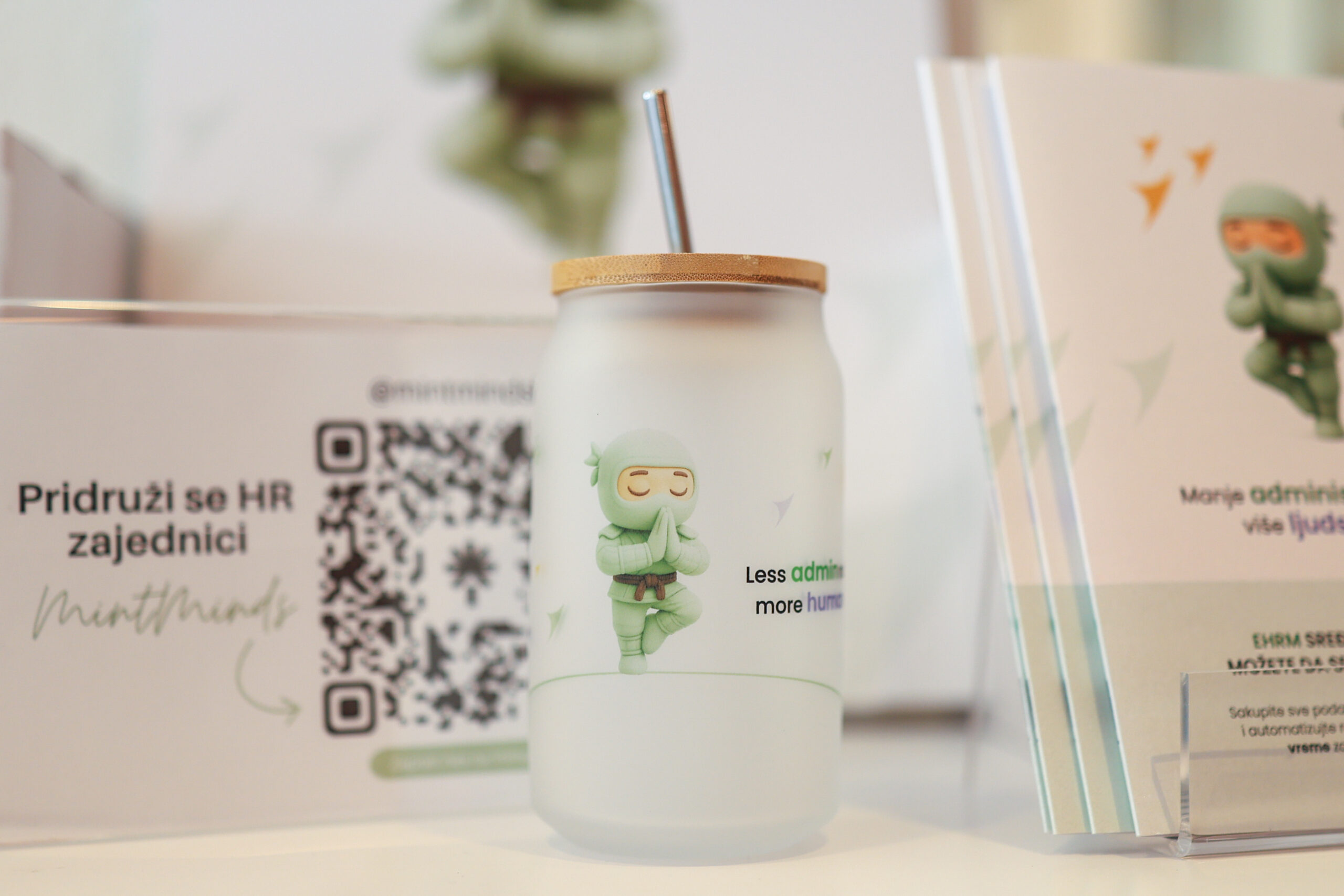
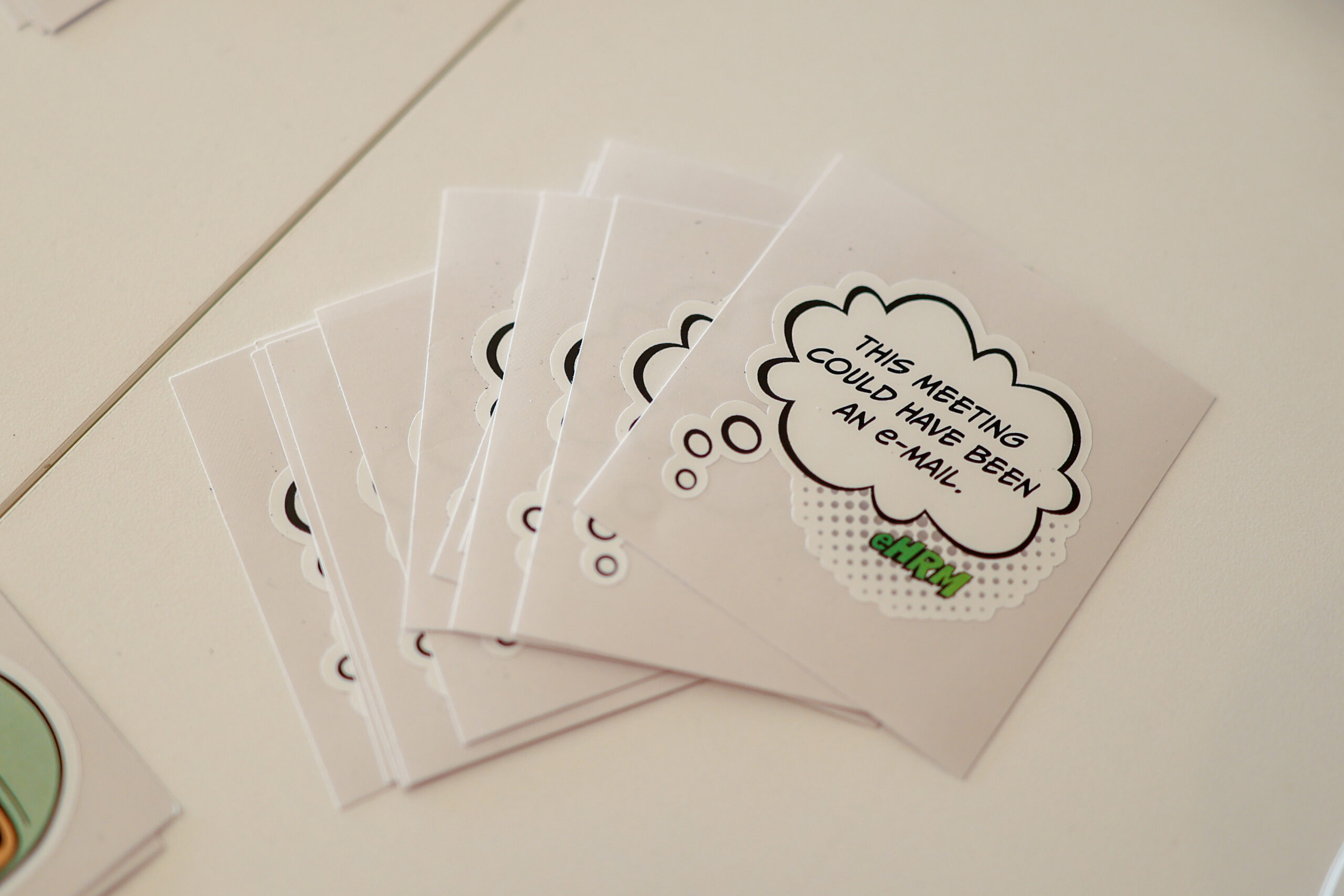
There is no event without our eHRM stickers
AI in HR: Less administration, more time for people?
Towards the end of the panel, we also explored the role of artificial intelligence in HR.
We discussed how AI can take some of the administrative workload off HR professionals’ shoulders, from preparing surveys and drafting contracts to creating other documents, freeing up more time to focus on people.
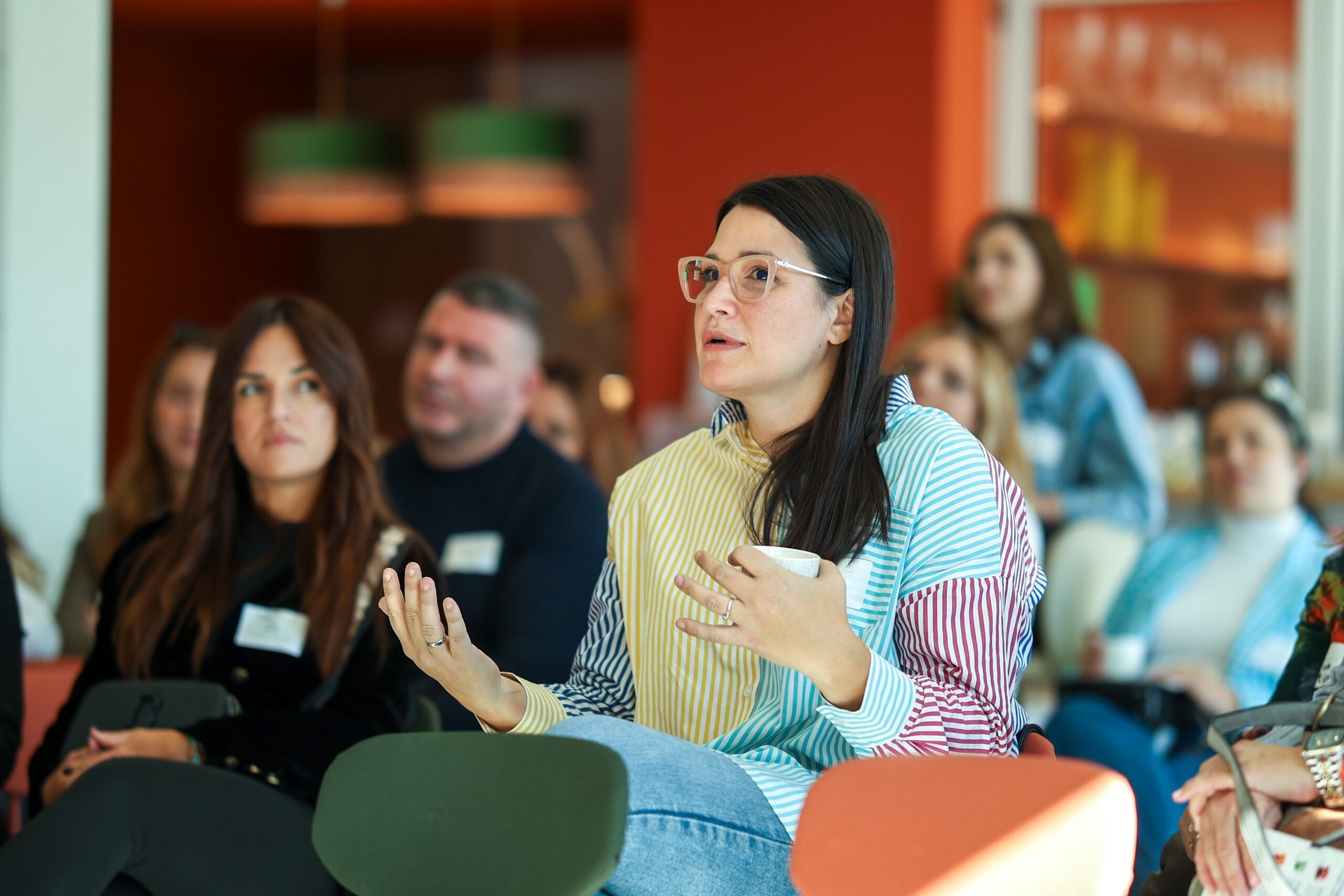
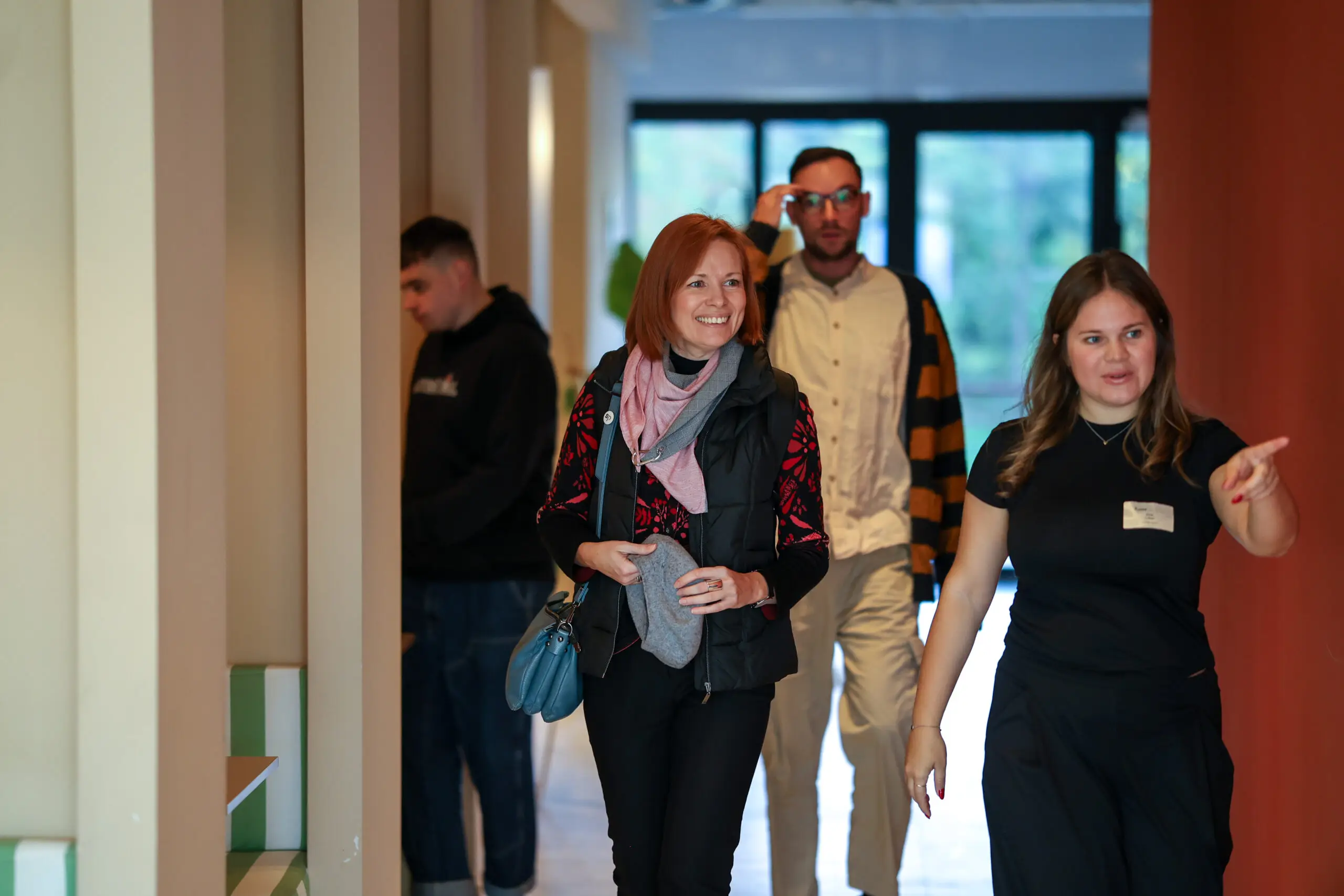
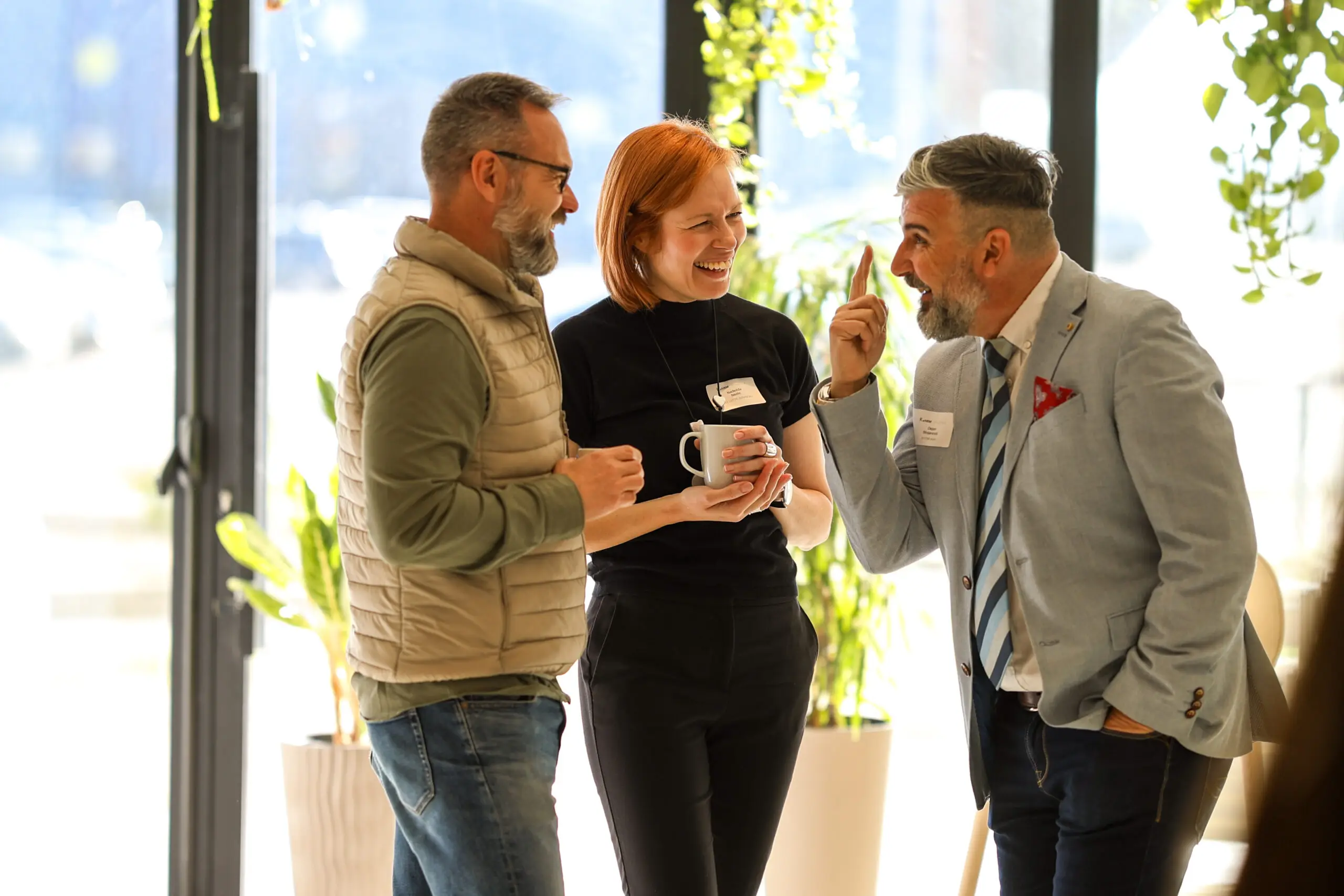
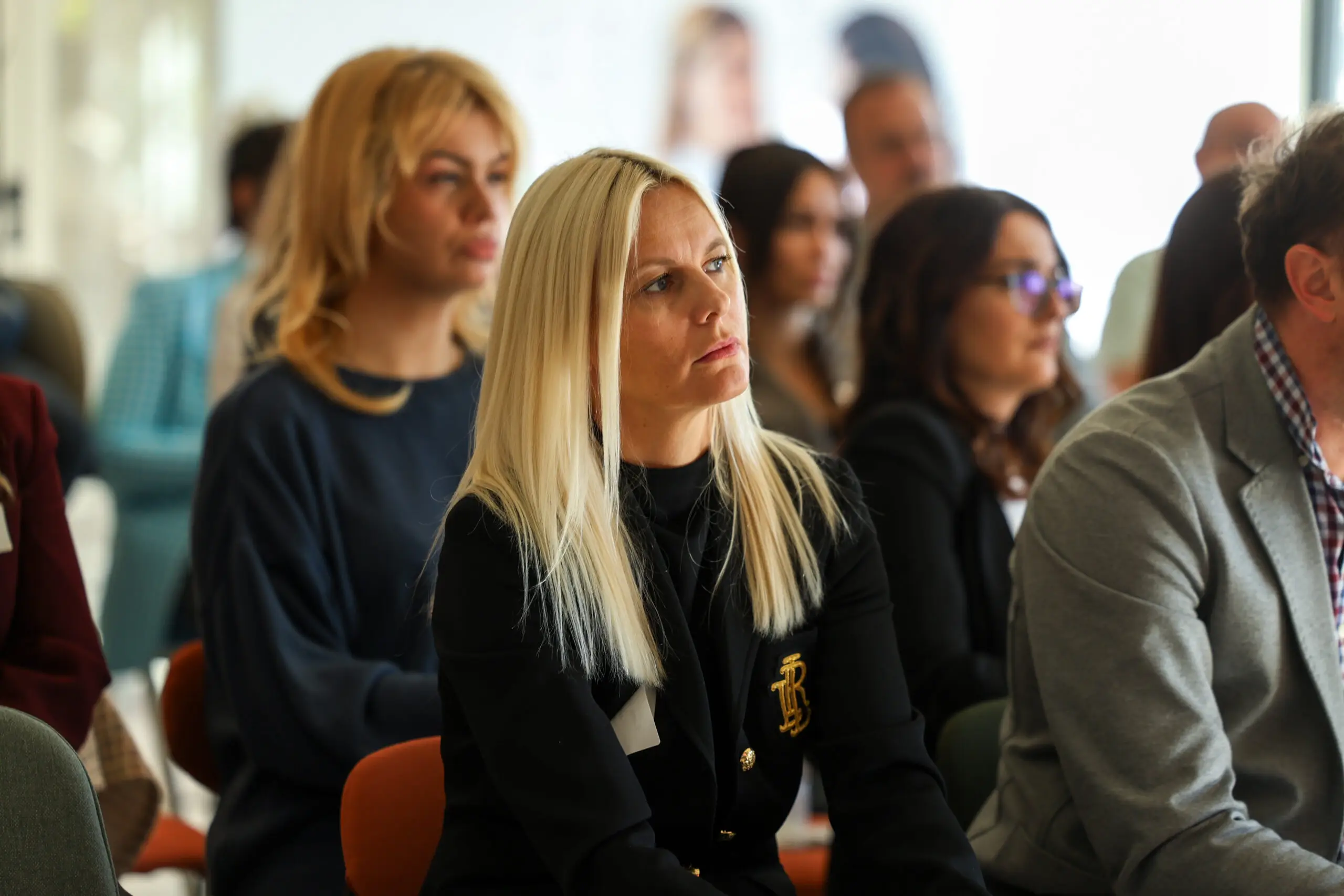
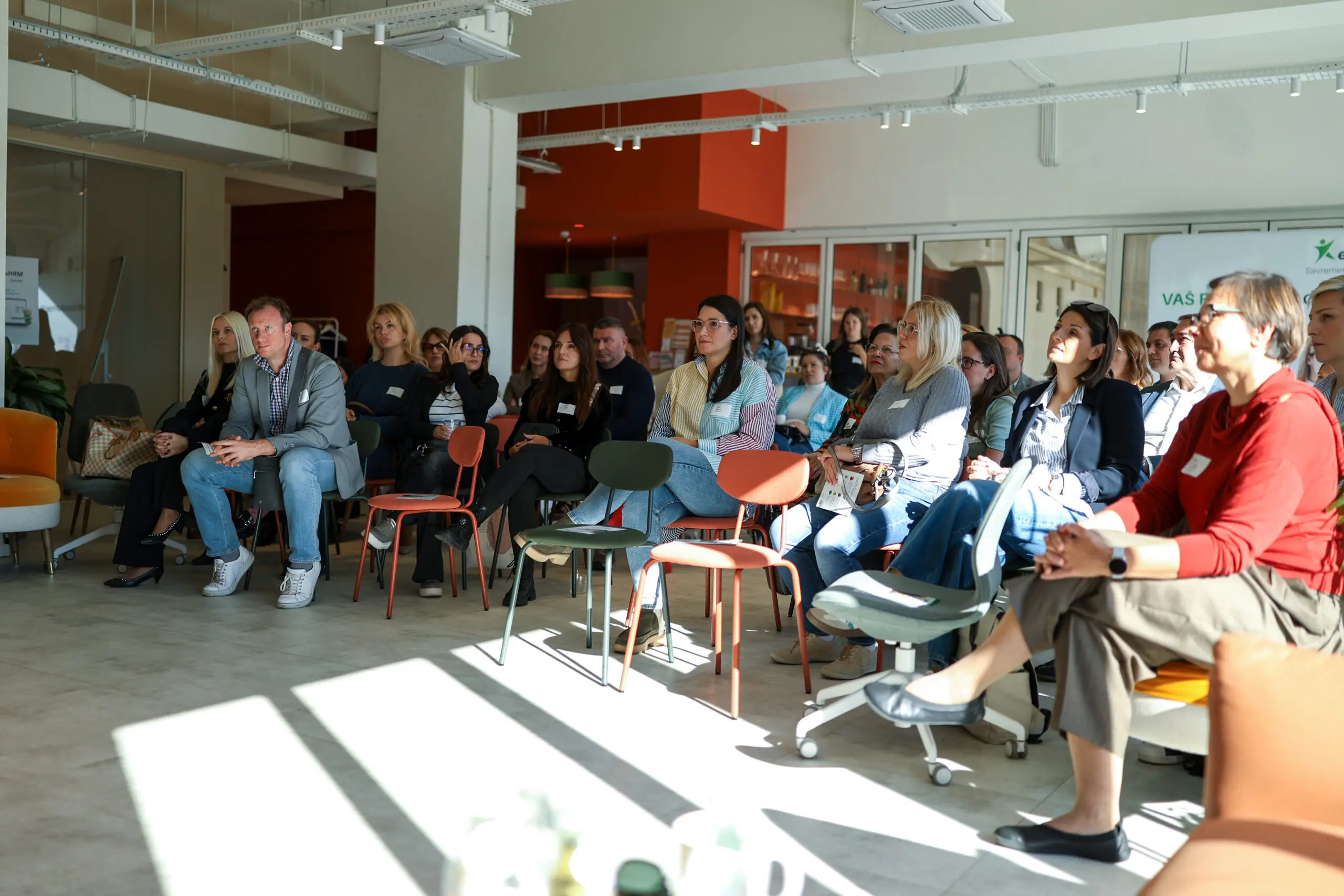
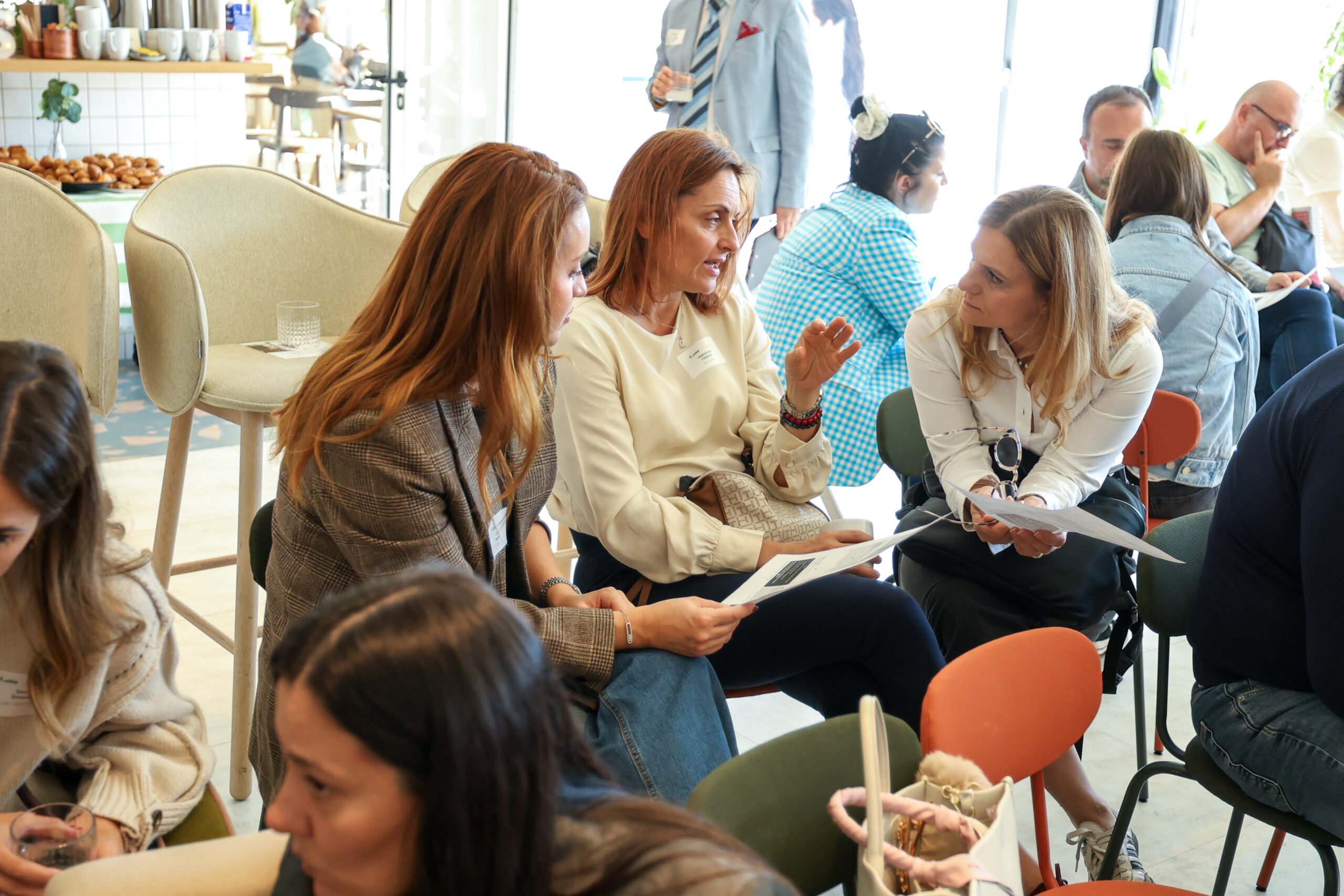
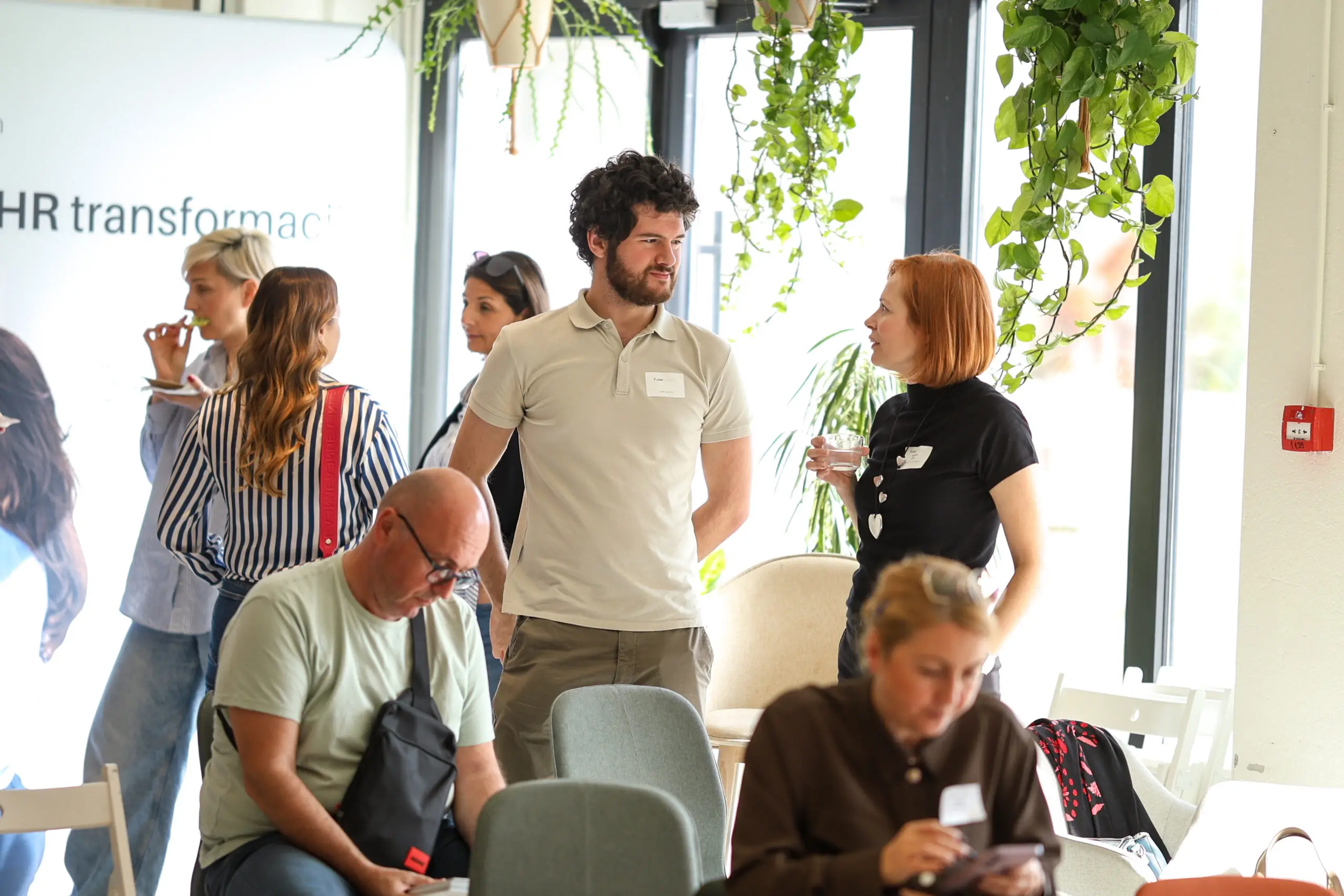
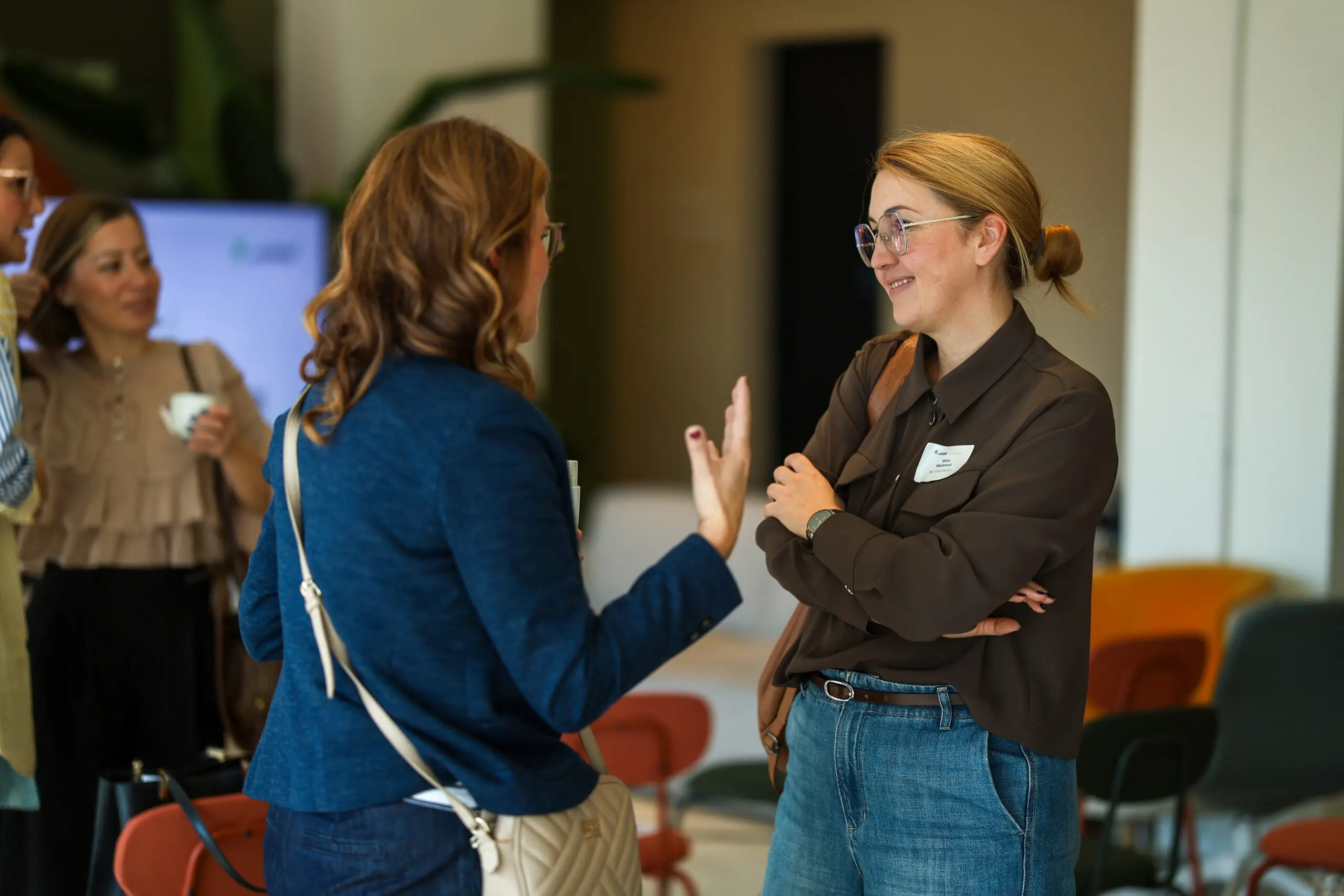
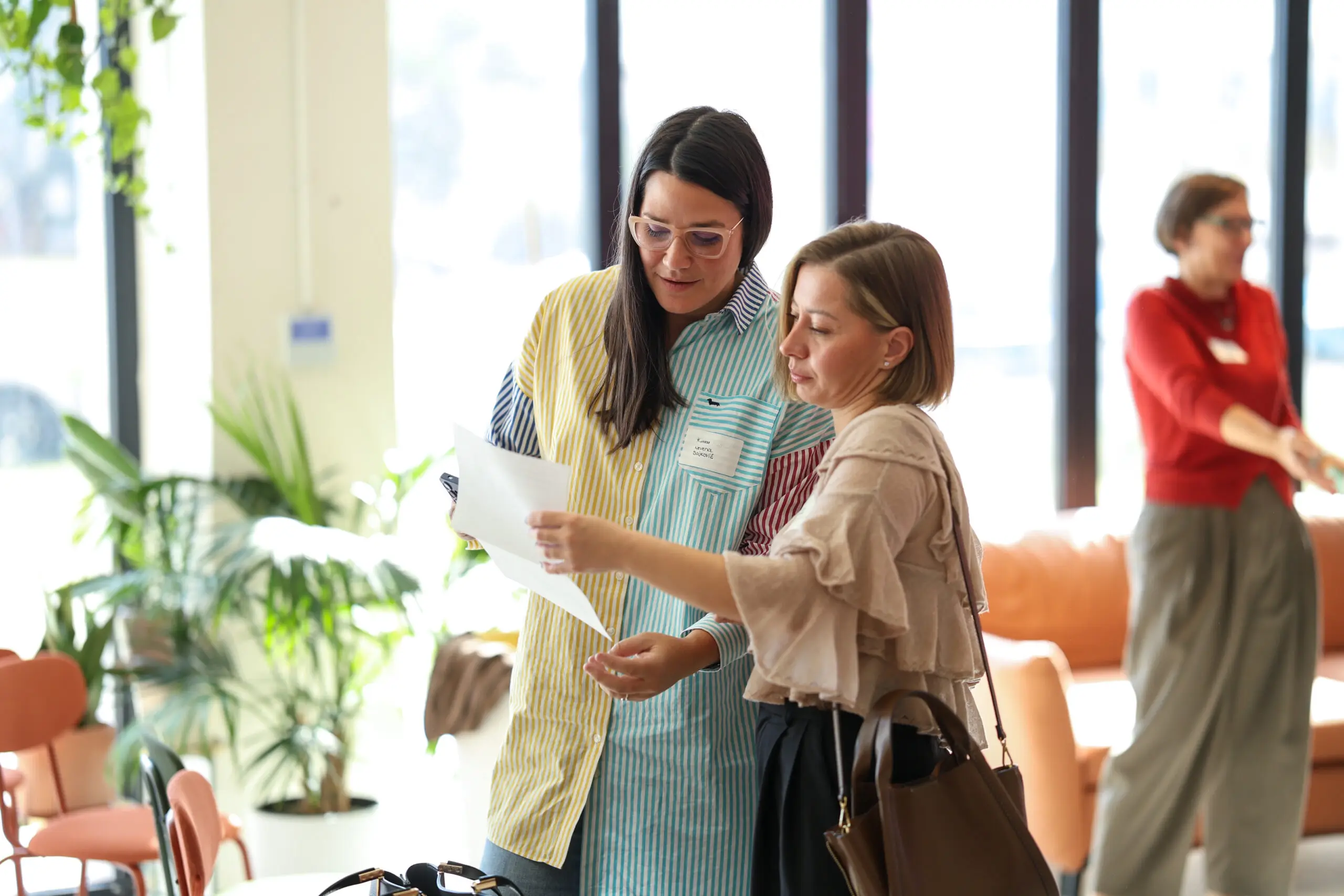
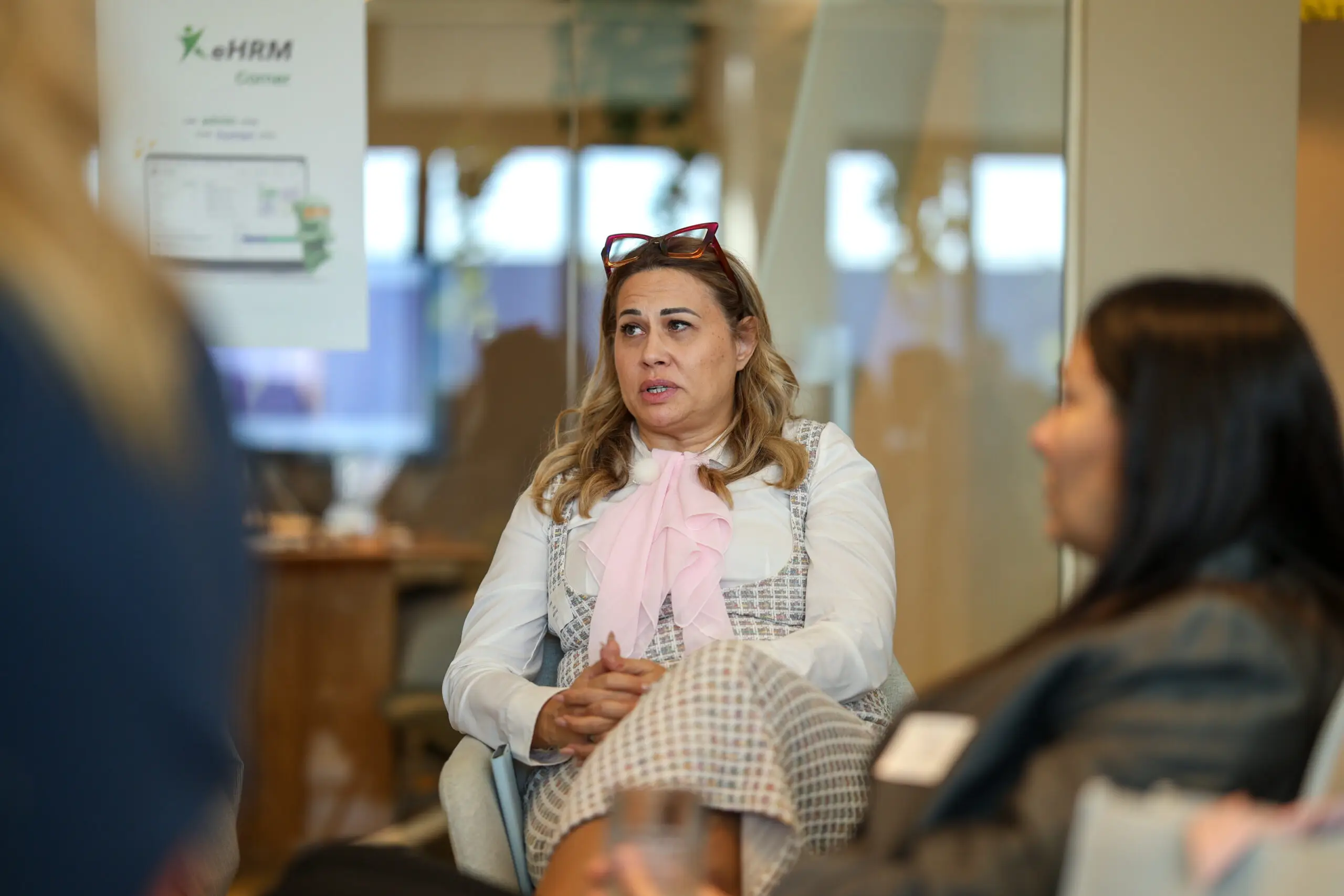
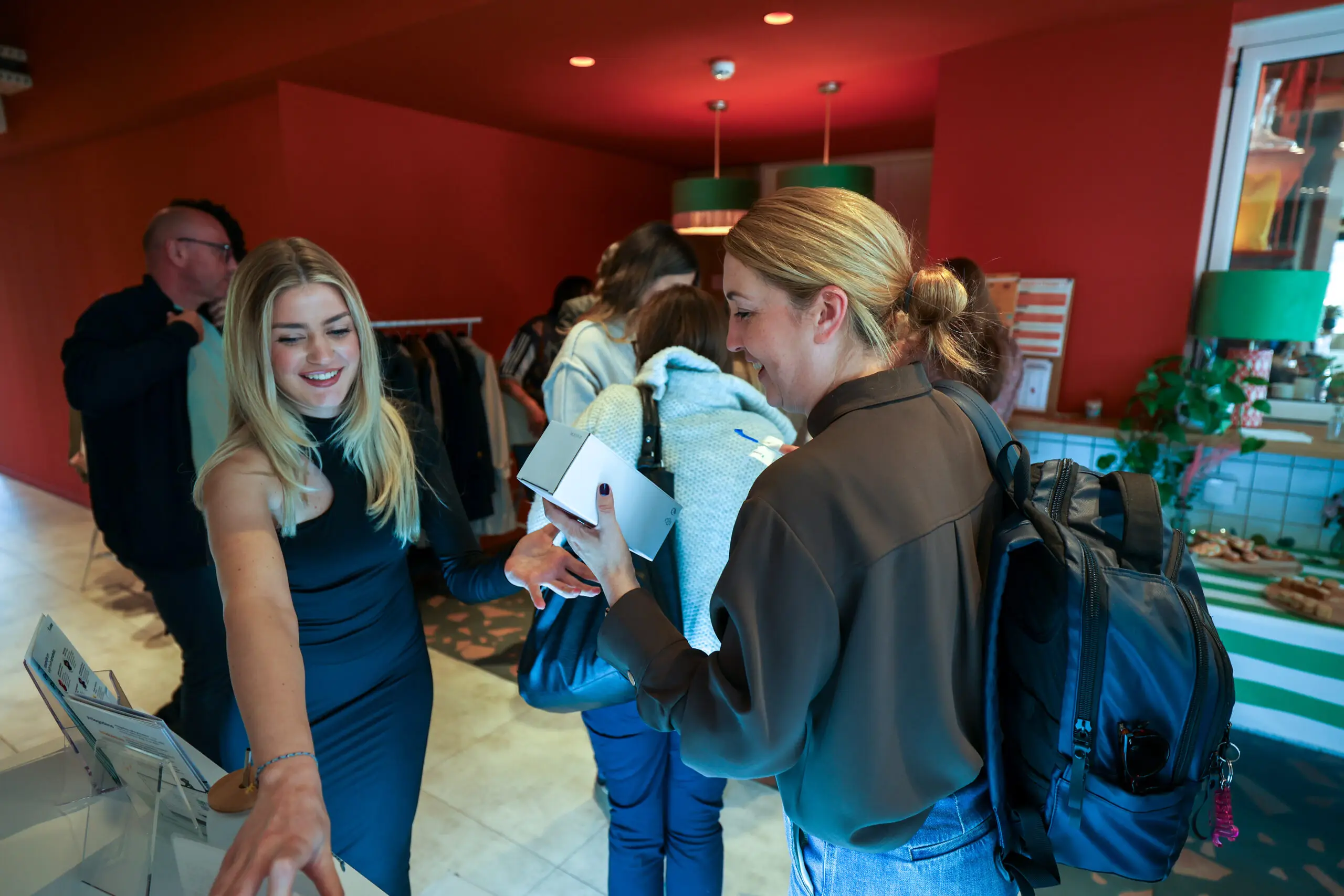
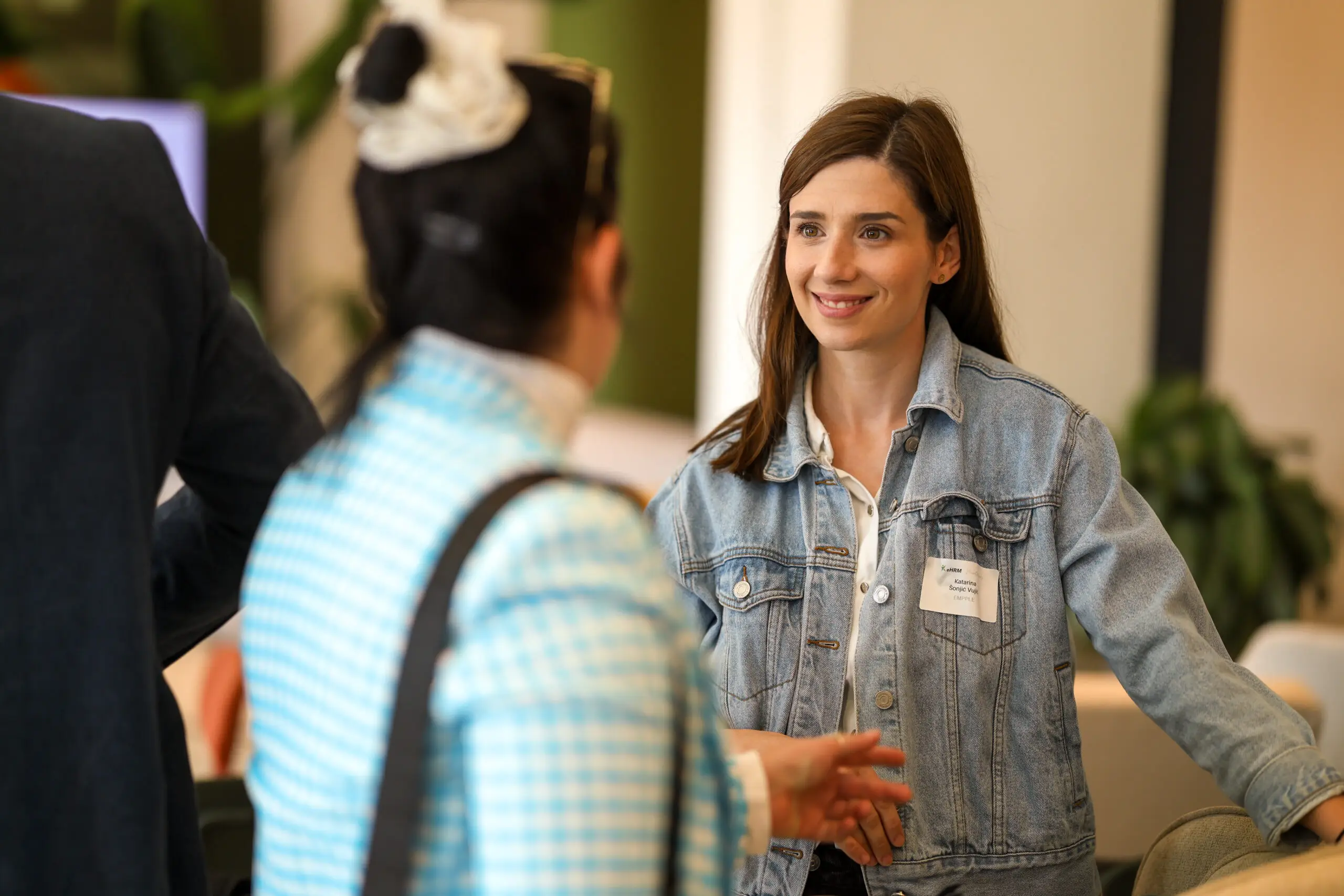
Connecting HR professionals, sharing experiences, and exchanging fresh ideas.
But we also raised the question of becoming too dependent on AI. What happens when AI creates an entire PowerPoint presentation for us, but we no longer fully understand what we’re presenting? How do we maintain independent thinking, creativity, and critical judgment as AI becomes an increasingly common part of our work?
Change starts with people
If we had to sum up the morning in one thought, it would be this: Technology can enable change, but people are the ones who make it happen.
From Jelena’s reflections on the impact of AI to Jovana’s and Veljko’s practical experiences, every conversation reminded us of the importance of listening, involving employees, communicating clearly, and being willing to find compromises.
A big thank you to all our speakers and participants for being part of our very first Mint Minds Brunch in Belgrade!
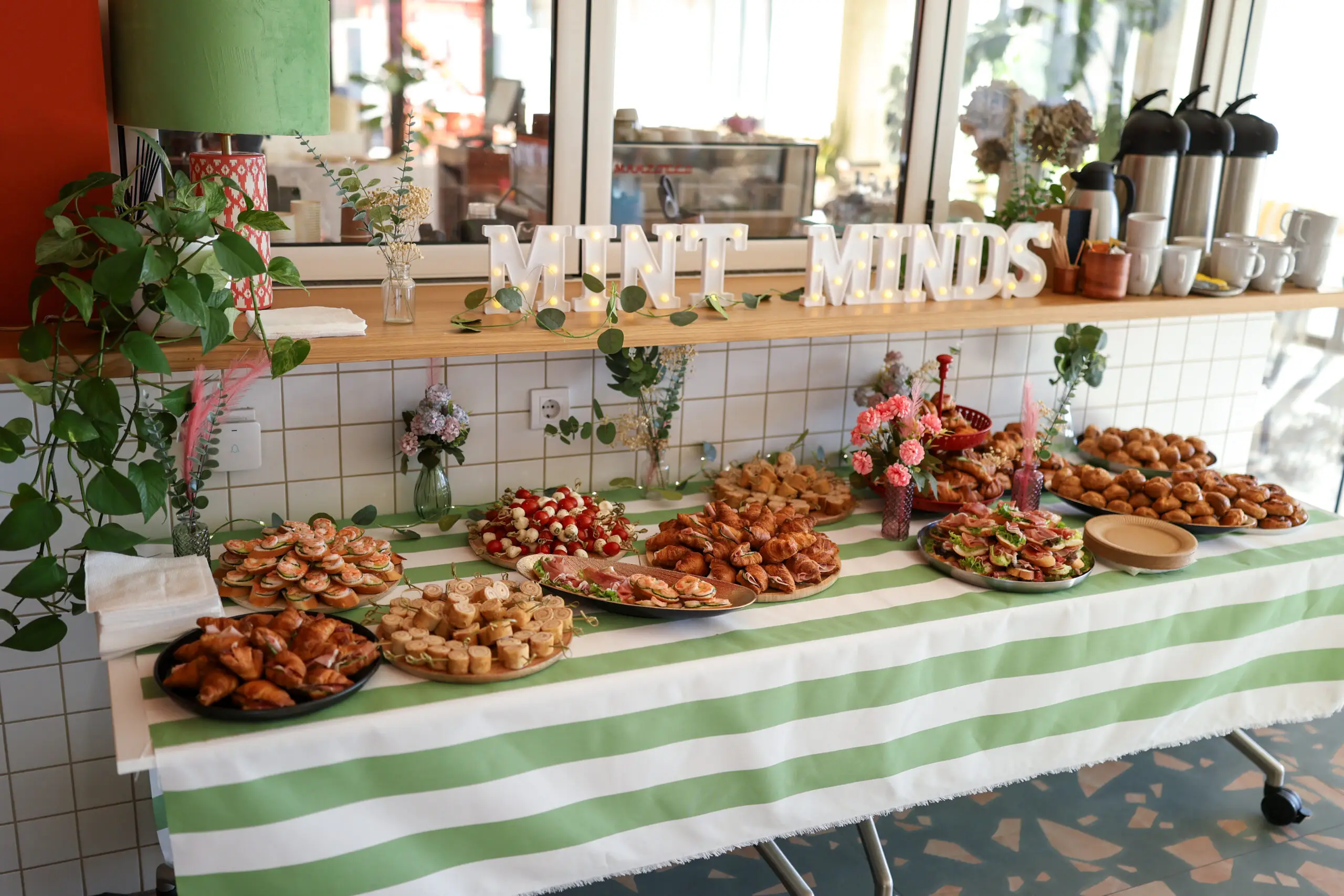
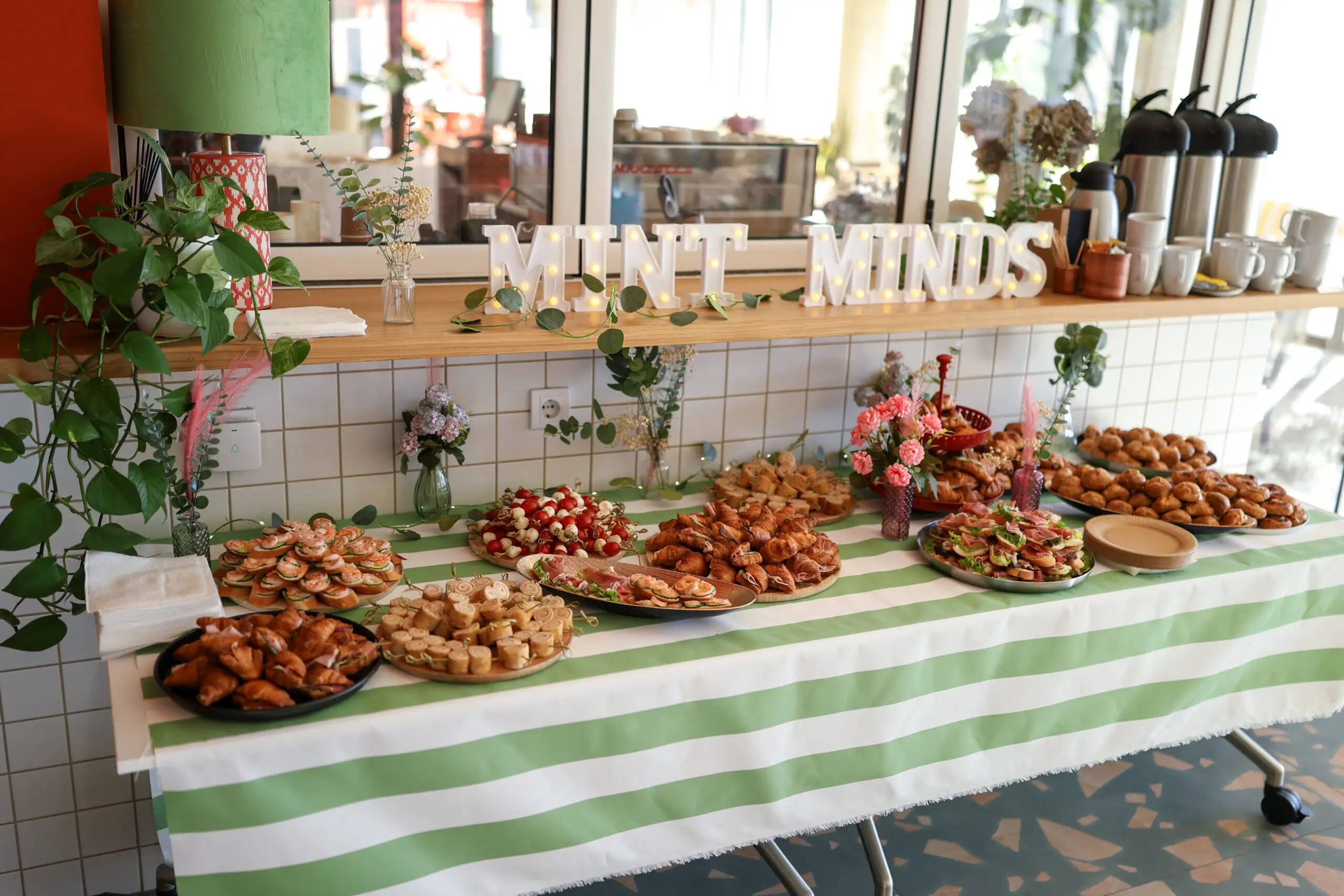
And of course, amazing brunch!
We’re already looking forward to more opportunities to connect, share experiences, and keep the conversation going.
Highlights from our first MintMinds Brunch in Belgrade!